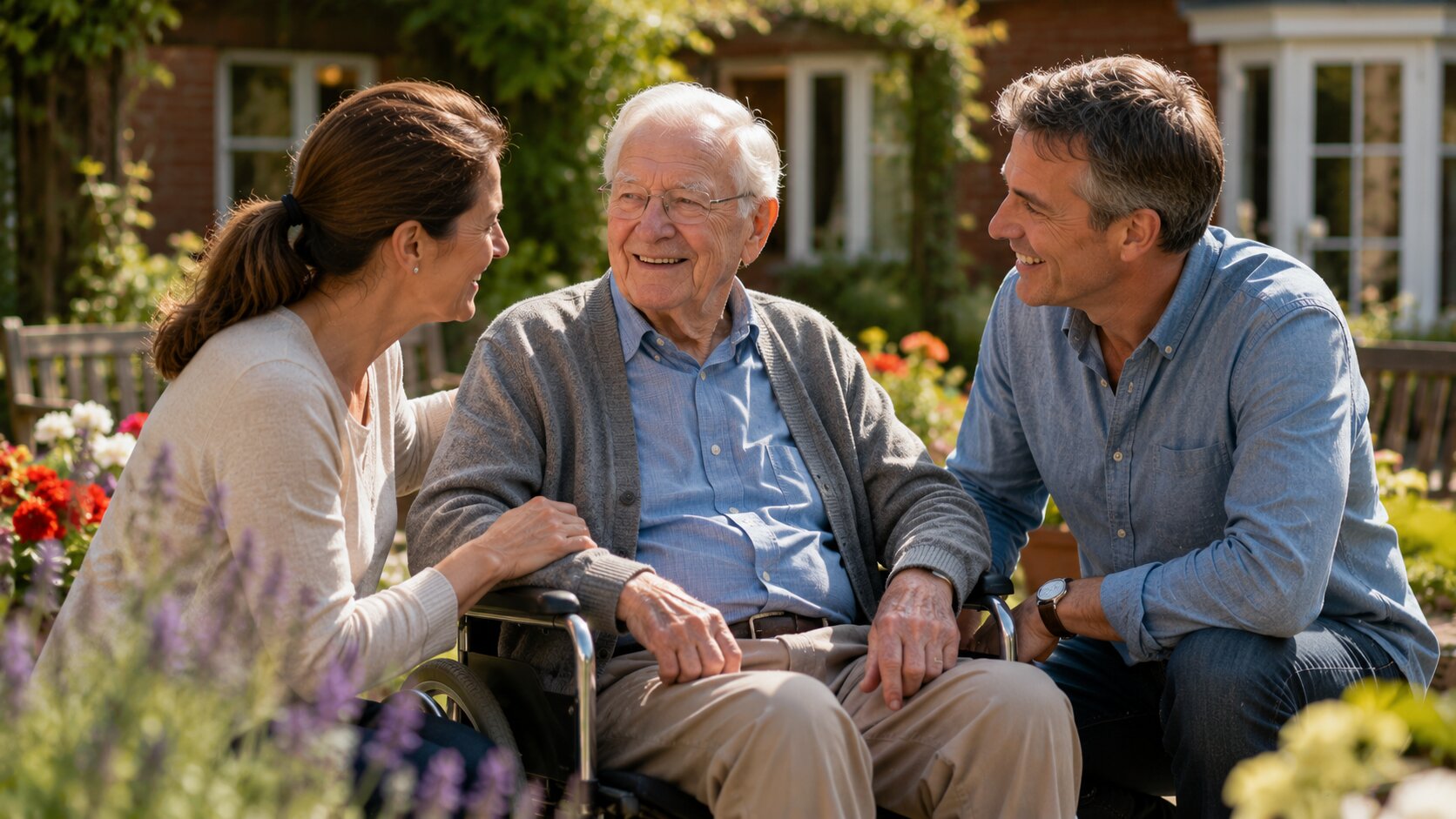
Illustrative image. Photographs of this home have not yet been added.
Ash Grange Nursing Home
Nursing Care
23 June 2026
HC-One Limited
42 beds
How this home compares nearby
Of 58 care homes for older people within 5 miles, 1 is rated higher by CQC, 36 are the same and 21 are lower.
1 of these nearby homes has been inspected more recently than this one.
Based on CQC ratings, updated 22 October 2026. How we compare homes | See the nearby homes
Rating history
- Jul 2015
- Sept 2016
- Oct 2017
- Apr 2018
- May 2019
- Sept 2026
Improved from Requires Improvement to Good in 2019. CQC has rated this home 6 times since 2015.
Source: CQC inspection reports. Contains CQC data licensed under the Open Government Licence v3.0.
Costs and who runs this home
Run by HC-One Limited, which runs 114 care homes in England: 2 rated Outstanding, 66 Good, 13 Requires Improvement and 33 not yet rated.
Average care home fees in the West Midlands: £912 a week for residential care and £1,308 for nursing care (2024-25 averages). Self-funders usually pay more. See our care home costs guide.
- NHS-funded Nursing Care pays £267.68 a week to the home towards registered nursing care for eligible residents (2026/27). A quoted fee may already exclude it.
- This home lists dementia care, which usually costs more than standard residential care. See dementia care home costs. NHS Continuing Healthcare may apply where someone's needs are primarily health needs.
- How to pay for a care home explains the council means test, what counts as capital and the funding you can ask to be assessed for.
About Ash Grange Nursing Home
Ash Grange Nursing Home is a nursing home located in Walsall, West Midlands. Its registered care categories include dementia, older people, physical disabilities, and younger adults. The home has 42 beds. CQC records an overall rating of Good, published in September 2026. The home is operated by HC-One Limited.
Specialist Care
Fees and availability
We have not verified a current weekly fee for this home. Ask for a written quote based on the room and care needed, including any extra charges.
Check current vacancies, the admission assessment and visiting arrangements directly with the home.
Care and inspection details
Checked against the CQC register on 20 September 2026. This is a check of published information, not a visit to the home.
- Registered service
- Care home service with nursing
- Registered capacity
- 42 places — this is not a vacancy count
- Registration checked
- Registered · WS3 3ER
Registered care categories
Caring for adults over 65 yrs; Caring for adults under 65 yrs; Dementia; Physical disabilities.
These describe the registration. The home must assess whether it can meet the individual person's needs and whether a place is available.
CQC ratings in more detail
Overall rating shown by CQC: .
Assessment published 3 September 2026. Assessment date recorded: 23 June 2026.
Read CQC's assessment overview
The following is CQC's published account of its assessment, published 3 September 2026. References to “we” mean CQC. It describes findings at that time.
About the service
The service is a nursing home which has 2 floors, each providing care and support to people with nursing needs. There were 35 people using the service at the time of the inspection.
Who the service is for
This service provides support to younger and older people with nursing needs, physical disabilities and dementia.
Key findingsWe carried out this assessment on 11 August 2026. This service was previously rated as good at our last inspection which was published on 19 March 2021. We carried out this assessment to confirm whether the rating of good remains accurate. This report does not provide detailed information on areas where we found practice continues to meet a good standard. Instead, our findings focus on any areas where the service needs to improve or where we found exceptional practice.
People can only be deprived of their liberty to receive care and treatment with appropriate legal authority. In care homes, this can be done through a procedure called the Deprivation of Liberty Safeguards (DoLS), which is part of the Mental Capacity Act 2005 (MCA). We checked whether the service was working within the principles of the MCA and how they managed DoLS within the service. We found that staff and management worked within the MCA. DoLS authorisations were appropriately applied for and overseen. People were not subject to unlawful or excessive restrictions they had choice, control and freedom over their lives.
The provider’s systems ensured where people required a DoLS these were in place and individual care plans reflected the content. Not everyone was subject to a DoLS. The system ensured assessments were completed and applications were made. There was a process to track these to ensure any new applications were made in a timely way. Staff could describe who had a DoLS in place and what this meant for each person.
Systems are in place to review all incidents and learn lessons when things went wrong. The registered manager told us, “Learning from incidents report are completed following an event and we share the lessons learned with staff.” Staff confirmed they received information in meetings and supervisions about lessons learned. We saw incident analysis considered a range of factors to determine if there were any lessons to be learned. Where lessons had been identified relevant updates were made and staff were informed. For example, following a complaint being considered the registered manager had made changes to hospital admissions processes.
Staff understood how to recognise abuse and could describe the actions they would take to report any concerns. Staff had received training to support their practice and there was a whistleblowing policy in place. Where incidents had happened, the registered manager had reported these to the appropriate body, and we saw all incidents were monitored to track the outcomes and internal reviews were undertaken to identify any wider themes or learning.
There was a system in place to assess risks to people’s safety. Where risks were identified these were assessed and management plans were put in place. We saw people had different risk assessments depending on their assessed needs, these included risks relating to mobility, falls, skin integrity, eating, drinking and for specific health conditions such as diabetes and Parkinson’s disease. Staff could describe the support people needed to minimise the risks to their safety and our observations confirmed staff followed peoples plans. Risks relating to the environment were also considered and systems were in place to ensure the home and equipment were well maintained.
People received their medicines as prescribed. Medicines administration records were also in place and accurately completed. Guidance was in place for where people needed as required medicines and medicines were stored safely. Nurses were observed seeking consent from people to accept their medicines and administering these safely.
People had an initial assessment which identified their needs and outcomes. Staff told us they received information about people’s needs through the electronic assessment and care plan. We saw the system identified people’s individual needs and preferences and documented the outcomes they wanted to achieve. The system then produced a care plan to guide staff on how to meet these for each person. The electronic record also ensured people had regular reviews of their needs and outcomes, and evidence-based tools were included in the system. Staff told us they had a good summary included of people’s needs and the record was also used to document the care people received. A staff member said, “These are good and updated regularly we all know what is in place for people, it flags and tells you what needs to be done when. It is easy to record on the system when we deliver peoples care.” Where people could not consent to their care, we saw mental capacity assessments were completed and decisions were taken in people’s best interests.
Staff knew people well and could describe how they supported people to meet their needs. Staff were observed supporting people to remain independent. For example, people were given adapted cups to be able to drink themselves. Staff were consistently offering people choices throughout the day. People were given a choice of where to sit, what activities they wanted to do and what meals they would like. The registered manager told us they had various systems in place to check on how well staff engaged with people during their care. They described spot checks where observations were completed, regular feedback from people and their relatives and the nursing team having continuous oversight of staff practice. The registered manager also told us, “We have a culture of staff being able to share any concerns anonymously with me so these can be addressed in supervision with staff.”
People’s individual needs and preferences were understood by staff. Staff could describe in detail the information they needed to provide peoples care in the way they needed and preferred. For example, staff could tell us about preferences for how personal care should be delivered, preferences around frequency and which toiletries people liked to have and how they got these. Staff could tell when people needed support, they were observed being responsive when people needed help. A staff member told us, “Bedtimes are agreed with people and what time they get up. Some people decline on the day, and this is always respected. Personal care is done as the care plan tells us to and this gives us all the detail we need. All areas of protected characteristics are covered in peoples care plans for example, it will say about cultural needs or religion.”
Staff understood how to support people to raise concerns and told us they would have no hesitation in doing so. A staff member told us, “If someone made a complaint or anything else I would report this to the nurse in charge for action or the manager.” We saw there was a complaint log in place which detailed any concerns raised, the investigation undertaken and the outcome. The registered manager told us learning from complaints was in place and provided an example of how they looked for themes and trends when receiving concerns.
Systems to check people received their care were operating effectively and audits were in place to check medicines administration was done safely. The registered manager had systems in place which supported learning and there was a clear understanding of the providers vision for the service.
Some improvements were needed to safe staffing levels were maintained. For example, we observed staff were not consistently available in communal areas which meant people sometimes had to wait for their support. The registered manager explained the service had experienced staffing shortages on the day of the inspection and this had impacted peoples experience on the day. The registered manager confirmed action had been taken to prevent this from happening again.
Systems to ensure there were sufficient staff available to support people were not consistently effective. We found despite systems being in place to check and determine staffing levels based on individual dependency on the day of the inspection these had not been effective and there were not enough staff to meet people’s needs in a timely way.
- Safe
- Effective
- Caring
- Responsive
- Well-led
Contains Care Quality Commission information under the Open Government Licence v3.0. Ratings and registration details can change after the date checked.
5 Questions to Ask on Your Visit
When visiting Ash Grange Nursing Home, consider asking...
- 1.What specific dementia training do staff receive and how recently?
- 2.How do you support a resident who becomes distressed or confused?
- 3.How does the home keep a record of a resident's life history and personal preferences?
- 4.How do you involve families as dementia progresses and communication becomes harder?
- 5.What happens when a resident's dementia reaches an advanced stage?
5 Things to Look For on Your Visit
When you visit Ash Grange Nursing Home, look out for...
- 1.Is the environment calm, uncluttered and easy to navigate?
- 2.Do staff speak to residents with patience and dignity, even if they repeat themselves?
- 3.Are there memory cues around the home -- photos, familiar objects, clear signage?
- 4.Do residents seem settled and safe, or agitated and unsupervised?
- 5.Is there meaningful activity happening, or are residents just sitting quietly with nothing to do?
Could the NHS fund Ash Grange Nursing Home's fees?
The average nursing home costs £1,535 per week. That's £79,820 a year. NHS Continuing Healthcare could cover all of it. No means test, no contribution from you.
Location
80 Valley Road, Bloxwich, Walsall, West Midlands, WS3 3ER

Ash Grange Nursing Home
CQC overall rating
Assessment date: 23 June 2026
Helpful Guides
Have a question about this care home?
Ask in our Community Forum and get a real answer from someone who's been through it.
Share what's on your mindFind Out If Ash Grange Nursing Home Is Right for You
Start the conversation and request a callback from this home.
A free daily companion for someone with dementia
Shows the date, weather, family photos, and a daily question. Set up in 10 minutes.
Other Care Homes Near WS3 3ER
Listings with similar recorded care types and specialisms are shown first. Confirm care needs and availability directly with each home.

The Cottage Nursing Home
57-58 Blakenall Heath, Walsall, West Midlands
Nursing care
0.1 miles away (straight-line distance)

Parklands Court Care Home
56 Park Road, Bloxwich, Walsall, West Midlands
Nursing care
0.5 miles away (straight-line distance)
Woodcross Healthcare Services
23 Reeves Street, Walsall, West Midlands
Nursing care
0.6 miles away (straight-line distance)
Arboretum Nursing Home
Forest Lane, Walsall, West Midlands
Nursing care
1.1 miles away (straight-line distance)
Rushall Care Home
204 Lichfield Road, Walsall, West Midlands
Nursing care
1.5 miles away (straight-line distance)
Lakeview Care Home
Stafford Road, Great Wyrley, Nr Walsall, Staffordshire
Nursing care
1.6 miles away (straight-line distance)