
Understanding CQC Ratings
CQC ratings classify care homes in England as Outstanding (4.0% of homes), Good (72.4%), Requires Improvement (15.1%), or Inadequate (0.9%). The rating is based on five areas: safe, effective, caring, responsive, and well-led. A Good rating means a home is meeting expected standards, most families will be well served by a Good-rated home, and a Requires Improvement rating doesn't automatically mean poor care.
Last updated: March 2026
Every care home in England is inspected by the Care Quality Commission (CQC), the independent regulator of health and social care. After each inspection, the CQC gives the care home an overall rating. But what do these ratings actually mean in practice?
Important: A Good rating is a solid indicator. Most families will be well-served by a Good-rated care home. Don't dismiss a home simply because it isn't Outstanding.
The Five Key Questions
The overall rating is based on five separate assessments. The CQC asks five key questions about every care home:
Shares are of all 14,780 CQC-registered care homes in England as at May 2026, including the 1,111 that hold no current rating. Counted against rated homes only, Good rises to 78.3%. See our analysis of CQC care home ratings for the full dataset.
1. Is it safe?
Covers safeguarding procedures, medication management, infection control, staffing levels, and risk management.
2. Is it effective?
Assesses staff training, nutrition and hydration, access to healthcare, and compliance with the Mental Capacity Act.
3. Is it caring?
Examines how staff interact with residents, whether privacy is maintained, and if residents are involved in decisions.
4. Is it responsive?
Looks at care planning, activities and engagement, complaint handling, and end-of-life care.
5. Is it well-led?
Assesses the registered manager, governance, staff culture, quality monitoring, and learning from mistakes.

A care home can score differently across these five areas. For example, a home might be rated Good overall but have a Requires Improvement rating for "safe" while scoring Good or Outstanding in "caring." The full inspection report breaks this down.
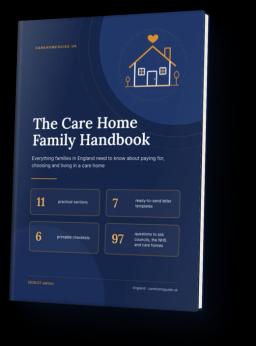
The Care Home Family Handbook
Choosing a home? The handbook includes a visit checklist, a practical needs checklist and 13 questions to ask the manager.
See what's inside£47, 14-day money back guarantee
How Often Are Care Homes Inspected?
The CQC doesn't inspect every home on a fixed schedule. Instead, they use a risk-based approach:
- Outstanding and Good homes are typically re-inspected every 2-3 years, unless concerns are raised
- Requires Improvement homes are usually re-inspected within 12 months
- Inadequate homes are re-inspected within 6 months
The CQC can also carry out unannounced inspections at any time if they receive concerns from families, staff, or other agencies.
How Much Weight Should You Give CQC Ratings?
CQC ratings are a useful starting point, but they shouldn't be the only factor in your decision. Here's why:
Ratings are a snapshot in time. A home inspected 2 years ago may have improved or declined since. Staff change, management changes, and ownership changes all affect quality.
Your experience may differ. The CQC assesses against regulatory standards. Your priorities might be different (maybe the garden matters more to your mum than the medication procedures), even though both affect the rating.
The report matters more than the headline. A Requires Improvement home with one minor issue in documentation might be a better choice than a Good-rated home where you didn't feel welcome during a visit.
What to Do With This Information
Step 1: Use the CQC rating to create a shortlist. Filter for Good and Outstanding homes in your area.
Step 2: Read the full inspection report for homes on your shortlist. Look at the five key question ratings, not just the overall score. Pay attention to the areas that matter most to you.
Step 3: Visit in person. No rating can tell you how a place feels. Visit at different times of day. Talk to residents and staff. Trust your instincts.
Step 4: Ask questions. Good care homes welcome scrutiny. Ask about staffing ratios, staff turnover, activities, how they handle complaints, and what's changed since the last inspection.
A Note on Ratings and Our Listings
Every care home listed on CareHomeGuide displays its current CQC rating. We pull this data directly from the CQC and update it regularly. You can filter search results by rating to find Outstanding and Good-rated homes in your area. We also link directly to the full CQC inspection report on every listing.
Frequently Asked Questions
What do CQC ratings mean for care homes?
How often are care homes inspected by the CQC?
Should I avoid care homes rated Requires Improvement?
What are the 5 CQC key questions?
The Care Home Family Handbook
Choosing a home? The handbook includes a visit checklist, a practical needs checklist and 13 questions to ask the manager.
See what's inside£47, 14-day money back guarantee
Have a question this guide didn't answer?
Ask in our Community Forum and get a real answer from someone who's been through it.
Share what's on your mindRelated Guides
Find care homes in your area
Browse CQC-registered care homes by region, with ratings, inspection dates, care types and contact details. Free to search, no sign-up.
The Care Home Family Handbook
Choosing a home? The handbook includes a visit checklist, a practical needs checklist and 13 questions to ask the manager.
See what's inside£47, 14-day money back guarantee