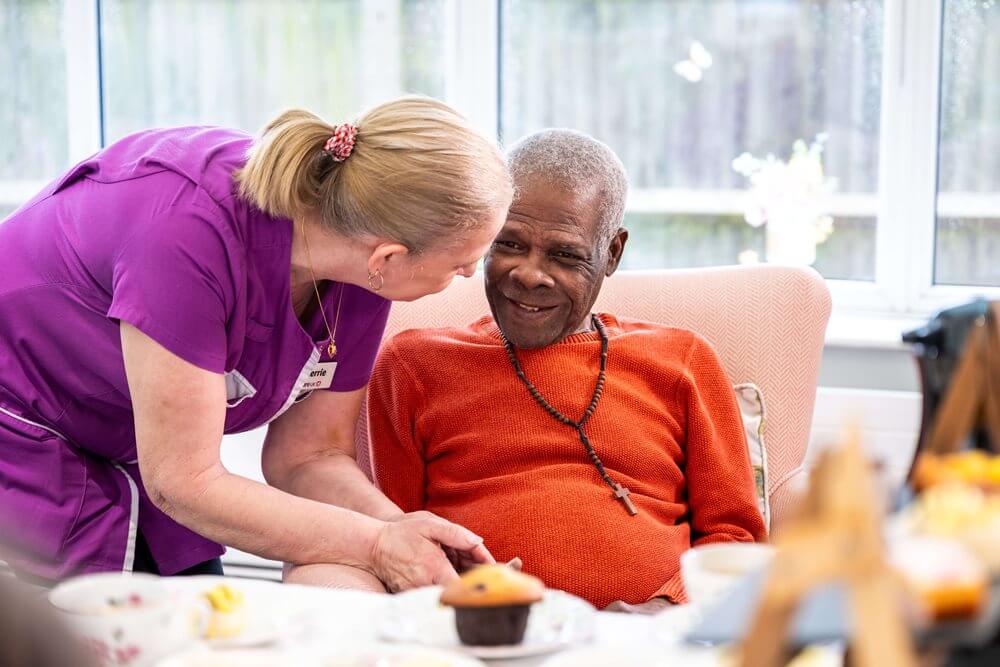
Illustrative image. Photographs of this home have not yet been added.
Howards Residential Home
Residential Care
22 July 2026
Greydales Limited
21 beds
About Howards Residential Home
Howards Residential Home is a residential care home located in Surrey, South East. Its registered care categories include dementia, older people, and sensory impairments. The home has 21 beds. CQC records an overall rating of Good, published in August 2026. The home is operated by Greydales Limited.
Specialist Care
Facilities & Amenities
Practical details from the provider
- The provider describes 21 rooms, many with en-suite facilities. Rooms have a staff-call system, TV point and optional private telephone facilities.
- Shared spaces include two lounges, a dining area and a sensory garden with ponds.
Published on the provider's website, checked 20 September 2026. Confirm arrangements with the home before deciding.
Fees and availability
We have not verified a current weekly fee for this home. Ask for a written quote based on the room and care needed, including any extra charges.
Check current vacancies, the admission assessment and visiting arrangements directly with the home.
Care and inspection details
Checked against the CQC register on 20 September 2026. This is a check of published information, not a visit to the home.
- Registered service
- Care home service without nursing
- Registered capacity
- 21 places — this is not a vacancy count
- Registration checked
- Registered · KT15 1EY
Registered care categories
Caring for adults over 65 yrs; Dementia; Sensory impairment.
These describe the registration. The home must assess whether it can meet the individual person's needs and whether a place is available.
CQC ratings in more detail
Overall rating shown by CQC: .
Assessment published 12 August 2026. Assessment date recorded: 22 July 2026.
Read CQC's assessment overview
The following is CQC's published account of its assessment, published 12 August 2026. References to “we” mean CQC. It describes findings at that time.
About the serviceThe service is a residential care home registered to provide care for up to 21 people. There were 20 people using the service at the time of the inspection.Who the service is for The service supports older people and people living with dementia and/or sensory impairments.We carried out this assessment on 24 July 2026. This service was previously rated as good. We carried out this assessment to confirm whether the rating of good remains accurate. This report does not provide detailed information on areas where we found practice continues to meet a good standard. Instead, our findings focus on any areas where the service needs to improve or where we found exceptional practice.People can only be deprived of their liberty to receive care and treatment with appropriate legal authority. In care homes, this can be done through a procedure called the Deprivation of Liberty Safeguards (DoLS), which is part of the Mental Capacity Act 2005 (MCA). We checked whether the service was working within the principles of the MCA and how they managed DoLS within the service. We found that staff and management worked within the MCA. DoLS authorisations were appropriately applied for and overseen.People were not subject to unlawful or excessive restrictions. They had choice, control and freedom over their lives. One person told us, “They accept me for me.” A relative commented, “They don’t force you or if you don’t want to join in then don’t.” A member of staff said, “You should not assume until they’ve had the [mental capacity] assessments. Maybe they don’t have capacity for where they live but they can still choose what they want.”People were supported by enough staff with the skills and knowledge to support them safely. Staff were recruited safely. Risks were assessed and people were involved in the process. There were systems in place to safeguard people from abuse. Staff understood how to recognise signs of abuse and how to raise concerns externally. One member of staff told us, “People can be physically abused, slapping which can bruise. [I would tell] the social care team, safeguarding team, registered manager or 999.”There were systems in place to ensure the environment was safe. Regular health and safety checks were undertaken by suitably qualified professionals, for example in relation to fire safety and the wider premises. People’s medicines were generally managed safely. However, we found gaps in storage temperature monitoring records and the outcomes of ‘when required’ medicines were not always recorded. The registered manager told us they would address this.People’s needs were assessed before they moved into the service. Assessments considered the person’s health, care, wellbeing, and communication needs. Staff used nationally recognised tools when reviewing people’s care, for example in relation to weight loss and skin integrity. Staff received training in line with national guidelines and they worked well with healthcare professionals to monitor and improve people’s outcomes. One healthcare professional told us, “The home is fantastic to have and all medications queries/order are dealt [with] promptly.”Staff understood how to promote people’s independence and ensure people were empowered to have control over their lives. Comments from staff included, “[People] get three to four choices per meal”, “It’s very person-centred. It means for the individual, for the person. They can have what they want. It’s their home. It’s like a big family”. There was a choice of activities available, and people were able to choose what activities should be offered, and whether they wished to attend.People’s care plans contained sufficient information about their history and how to support the person. These were completed by involving people in the process and people were empowered to give staff their views. Staff told us the service was inclusive and that leaders understood barriers that people and staff may face.Leaders regularly completed staff supervisions to monitor performance and provide support, and staff told us they felt valued and supported by the registered manager. One member of staff said, “I do feel very valued. This home is like a big family but you can say if something is wrong.” Another member of staff said, “[Supervisions] are about the residents, teamwork, I would like to do NVQ (national vocational qualification) level 2. I’m waiting to start it.”The registered manager understood their legal responsibilities in relation to governance and to ensure people consistently had positive outcomes. For example, they had recognised the garden required levelling to ensure all people could easily access this. They regularly undertook audits to monitor the quality of the service and make improvements. Audits were completed for a range of areas, for example in relation to care records and falls management.We found the registered manager was motivated to make the improvements we identified during our assessment. They told us they would work with external organisations for additional support, such as the local authority quality assurance team.
- Safe
- Effective
- Caring
- Responsive
- Well-led
Contains Care Quality Commission information under the Open Government Licence v3.0. Ratings and registration details can change after the date checked.
5 Questions to Ask on Your Visit
When visiting Howards Residential Home, consider asking...
- 1.What specific dementia training do staff receive and how recently?
- 2.How do you support a resident who becomes distressed or confused?
- 3.How does the home keep a record of a resident's life history and personal preferences?
- 4.How do you involve families as dementia progresses and communication becomes harder?
- 5.What happens when a resident's dementia reaches an advanced stage?
5 Things to Look For on Your Visit
When you visit Howards Residential Home, look out for...
- 1.Is the environment calm, uncluttered and easy to navigate?
- 2.Do staff speak to residents with patience and dignity, even if they repeat themselves?
- 3.Are there memory cues around the home -- photos, familiar objects, clear signage?
- 4.Do residents seem settled and safe, or agitated and unsupervised?
- 5.Is there meaningful activity happening, or are residents just sitting quietly with nothing to do?
Could the NHS fund Howards Residential Home's fees?
The average nursing home costs £1,535 per week. That's £79,820 a year. NHS Continuing Healthcare could cover all of it. No means test, no contribution from you.
Location
24 Rowtown, Addlestone, Surrey, KT15 1EY
Howards Residential Home
CQC overall rating
Assessment date: 22 July 2026
Helpful Guides
Have a question about this care home?
Ask in our Community Forum and get a real answer from someone who's been through it.
Share what's on your mindFind Out If Howards Residential Home Is Right for You
Start the conversation and request a callback from this home.
A free daily companion for someone with dementia
Shows the date, weather, family photos, and a daily question. Set up in 10 minutes.
Other Care Homes Near KT15 1EY
Listings with similar recorded care types and specialisms are shown first. Confirm care needs and availability directly with each home.
St Augustine's Care Home
Firfield House, Simplemarsh Road, Addlestone
Residential care
1.1 miles away (straight-line distance)
Church Farm Bungalow
Guildford Road, Ottershaw, Surrey
Residential care
1.1 miles away (straight-line distance)
Sheerwater House
Sheerwater Road, Woodham, Addlestone, Surrey
Residential care
1.4 miles away (straight-line distance)
The Chestnuts
42-44 Chertsey Road, West Byfleet, Surrey
Residential care
1.8 miles away (straight-line distance)
West Hall
Parvis Road, West Byfleet, Surrey
Residential care
2.0 miles away (straight-line distance)

The Pines
6 Windsor Walk, Weybridge, Surrey
Residential care
2.7 miles away (straight-line distance)