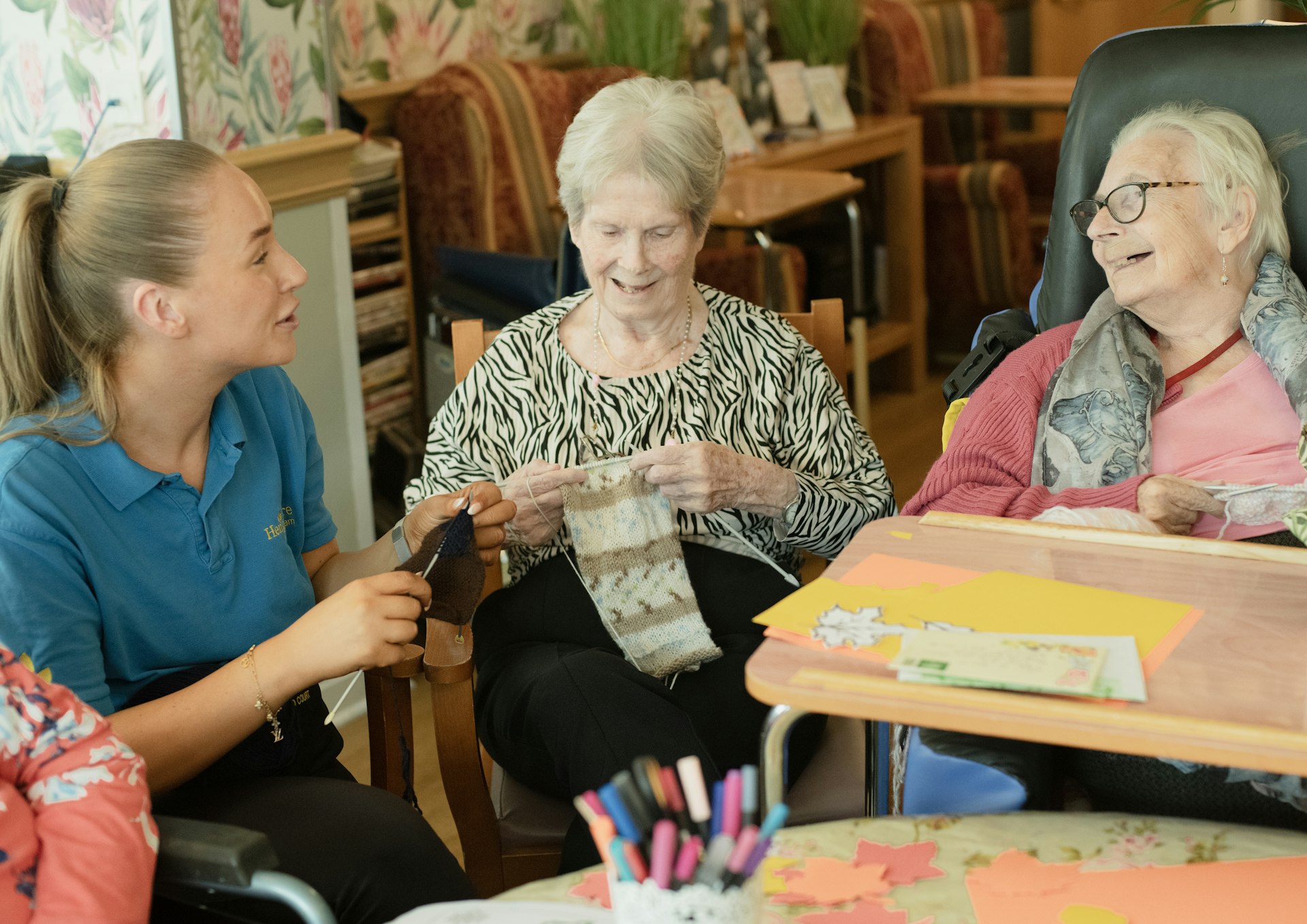
Illustrative image. Photographs of this home have not yet been added.
Cameron Lodge
Residential Care
10 June 2026
Cameron Lodge Limited
12 beds
About Cameron Lodge
Cameron Lodge is a residential care home located in Kent, South East. Its registered care categories include learning disabilities, mental health, older people, and physical disabilities. The home has 12 beds. CQC records an overall rating of Good, published in August 2026. The home is operated by Cameron Lodge Limited.
Specialist Care
Fees and availability
We have not verified a current weekly fee for this home. Ask for a written quote based on the room and care needed, including any extra charges.
Check current vacancies, the admission assessment and visiting arrangements directly with the home.
Care and inspection details
Checked against the CQC register on 20 September 2026. This is a check of published information, not a visit to the home.
- Registered service
- Care home service without nursing
- Registered capacity
- 12 places — this is not a vacancy count
- Registration checked
- Registered · CT14 9TU
Registered care categories
Caring for adults over 65 yrs; Learning disabilities; Mental health conditions; Physical disabilities.
These describe the registration. The home must assess whether it can meet the individual person's needs and whether a place is available.
CQC ratings in more detail
Overall rating shown by CQC: .
Assessment published 3 August 2026. Assessment date recorded: 10 June 2026.
Read CQC's assessment overview
The following is CQC's published account of its assessment, published 3 August 2026. References to “we” mean CQC. It describes findings at that time.
We carried out this assessment between 16 June and 14 July 2026. This service was previously rated as good. We carried out this assessment to confirm whether the rating of good remains accurate. This report does not provide detailed information on areas where we found practice continues to meet a good standard. Instead, our findings focus on any areas where the service needs to improve or where we found exceptional practice.
We have assessed the service against ‘Right Support, Right Care, Right Culture’ guidance to make judgements about whether the provider guaranteed people with a learning disability and autistic people respect, equality, dignity, choices, independence and good access to local communities that most people take for granted.
People can only be deprived of their liberty to receive care and treatment with appropriate legal authority. In care homes, this can be done through a procedure called the Deprivation of Liberty Safeguards (DoLS), which is part of the Mental Capacity Act 2005 (MCA). We checked whether the service was working within the principles of the MCA and how they managed DoLS within the service. We found that staff and management worked within the MCA. DoLS authorisations were appropriately applied for and overseen. People were not subject to unlawful or excessive restrictions they had choice, control and freedom over their lives.
We observed people being supported to make choices in ways which were best for them, including using pictures and following the person’s preferred routine. Choices people made were respected, such as what they wished to do during the day and where they wanted to spend their time. When people lacked the capacity to make complex decisions for themselves, decisions were made in their best interests with those who knew the person well, including family members and health care professionals. Staff knew who was legally able to make decisions on people’s behalf.
The registered manager and staff knew how to identify and raise any concerns they had. They had worked with the local authority safeguarding team to protect people from the risk of harm and abuse. Accidents and incidents were rare with only 1 incident occurring this year. Detailed records were maintained and analysed to look for patterns and trends. None had been identified as accidents and incidents were so infrequent.
Risks to people had been assessed and understood so people could take positive risks, including cooking and going out without staff support. Risks related to equipment people used to keep them safe had been assessed and mitigated, such as the risk of injury from bedrails.
People were supported to spend time in their rooms alone when they wanted privacy and time alone. Alarms were fitted to some people’s doors so staff knew when they were leaving and could offer them the support they needed to remain safe. The risk of some people eating inedible things had been assessed and mitigated whilst supporting everyone to have freedom and access the things they needed or wanted throughout the day and night.
Before our inspection we received concerns about the environment from local authority staff. We found systems were in operation to manage risks to people. Regular checks had been completed on the building and equipment and any shortfalls addressed. People and staff had practiced evacuating the building and were confident to evacuate in an emergency.
Staff had been recruited safely and checks had been completed to ensure they had the skills to meet people’s needs. Staff told us and survey results showed staff felt they had developed the skills they needed to support people in a safe and supportive way. We observed staff understood what people were telling them and encouraged them to be as independent as possible.
Medicines were managed safely. At the time of our assessment leaders were updating guidance for staff around ‘when required’ medicines to make sure they always had the information they needed to administer medicines safely. When people had needed ‘when required’ medicines the reason for their administration was recorded, along with the effectiveness of the medicines to ensure they were effective and people were not taking medicines they did not need. Medicines were ordered, stored and administered safely. Safe practices were followed when people took medicines away from the service, such as when they stayed with friends or family.
Leaders completed assessments with people and others who knew them well before they were offered a service. This was to assure themselves staff had the skills to meet people’s needs. They also considered the needs and personalities of other people using the service to make sure people got along well with the people they lived with.
The registered manager worked in line with the principles of our Right Care, Right Support, and Right Culture guidance to maximise people’s independence and ensure they had a good quality of life. People used nationally recognised tools such as hospital passports and Distress and Discomfort Assessment Tools to share how they communicated their needs and emotions with healthcare staff. Recognised assessment tools, such as the Malnutrition Universal Screening Tool (MUST), were used to assess people’s health. These tools were also used by local health care professionals which ensured everyone understood the outcomes and the risks to people.
People had agreed goals with staff and were supported to achieve these. For example, 1 person no longer needed continence support and managed their needs independently.
People’s support was reviewed annually with them and their relatives. Funding authority representatives were invited but did not always attend. People discussed their achievements and any goals they had for the future. People’s care plans were reviewed with them each month to ensure they remained relevant to their needs and wishes.
People, their relatives and staff were regularly asked for their views of the service. People had said they felt safe, were listened to and involved in making decisions about their support. Relatives had fed back that the registered manager and staff were approachable and listened to any concerns they had. Staff felt there was an open culture where they could freely raise concerns and felt valued by the provider.
Staff demonstrated throughout the assessment their commitment to supporting people to live as independently as possible in their community. They valued peoples’ contribution and the skills they had. Staff told us they felt valued and supported by the registered manager and colleagues.
Staff described how they carried identification badges when they went out with people but did not wear them openly to support people to fit in with others in their community. A vehicle was available for people to use on occasions, this was not branded and looked like any other domestic vehicle. There were no indications at the exterior of the service that it was a care home and it fitted in to the local community.
Regular checks were completed on all areas of the service. Action was planned to address any shortfalls found and checked to ensure actions were complete and effective. A continuous improvement plan was in place. Reviews were completed to ensure improvements had been made and sustained. The provider had considered staff’s continued development and succession planning. One staff member was completing recognised leadership training. The registered manager gave us a number of examples of how the service had developed over time, including staff taking the lead in particular areas of support and some taking on supervision responsibilities.
- Safe
- Effective
- Caring
- Responsive
- Well-led
Contains Care Quality Commission information under the Open Government Licence v3.0. Ratings and registration details can change after the date checked.
5 Questions to Ask on Your Visit
When visiting Cameron Lodge, consider asking...
- 1.What happens if my relative's care needs increase significantly -- will they have to move?
- 2.How do you handle concerns or complaints from families?
- 3.What does the monthly fee cover and what will cost extra?
- 4.How do you keep families informed about their relative's day-to-day wellbeing?
- 5.What happens if my relative is unhappy here?
5 Things to Look For on Your Visit
When you visit Cameron Lodge, look out for...
- 1.Do staff greet residents by name and stop to chat?
- 2.Are residents dressed, up and occupied, or sitting alone in front of a TV?
- 3.Does the home smell fresh and feel clean without being clinical?
- 4.Do residents look comfortable and at ease, or anxious and withdrawn?
- 5.Does the manager answer your questions openly or deflect?
Could the NHS fund Cameron Lodge's fees?
The average nursing home costs £1,535 per week. That's £79,820 a year. NHS Continuing Healthcare could cover all of it. No means test, no contribution from you.
Location
142 Church Path, Middle Deal Road, Deal, Kent, CT14 9TU

Cameron Lodge
CQC overall rating
Assessment date: 10 June 2026
Helpful Guides
Have a question about this care home?
Ask in our Community Forum and get a real answer from someone who's been through it.
Share what's on your mindFind Out If Cameron Lodge Is Right for You
Start the conversation and request a callback from this home.
A free daily companion for someone with dementia
Shows the date, weather, family photos, and a daily question. Set up in 10 minutes.
Other Care Homes Near CT14 9TU
Listings with similar recorded care types and specialisms are shown first. Confirm care needs and availability directly with each home.
Bon Secours
250 Middle Deal Road, Deal, Kent
Residential care
0.1 miles away (straight-line distance)
Brook Lodge
68 London Road, Deal
Residential care
0.2 miles away (straight-line distance)
Milestone House
188 London Road, Deal, Kent
Residential care
0.3 miles away (straight-line distance)
St Winifreds Care Centre
236 London Road, Deal, Kent
Residential and nursing care
0.4 miles away (straight-line distance)

Westbury House
2 Blenheim Road, Deal, Kent
Residential care
0.5 miles away (straight-line distance)

Sholden Hall Residential Home
Sholden Hall, London Road, Sholden, Deal
Residential care
0.6 miles away (straight-line distance)