
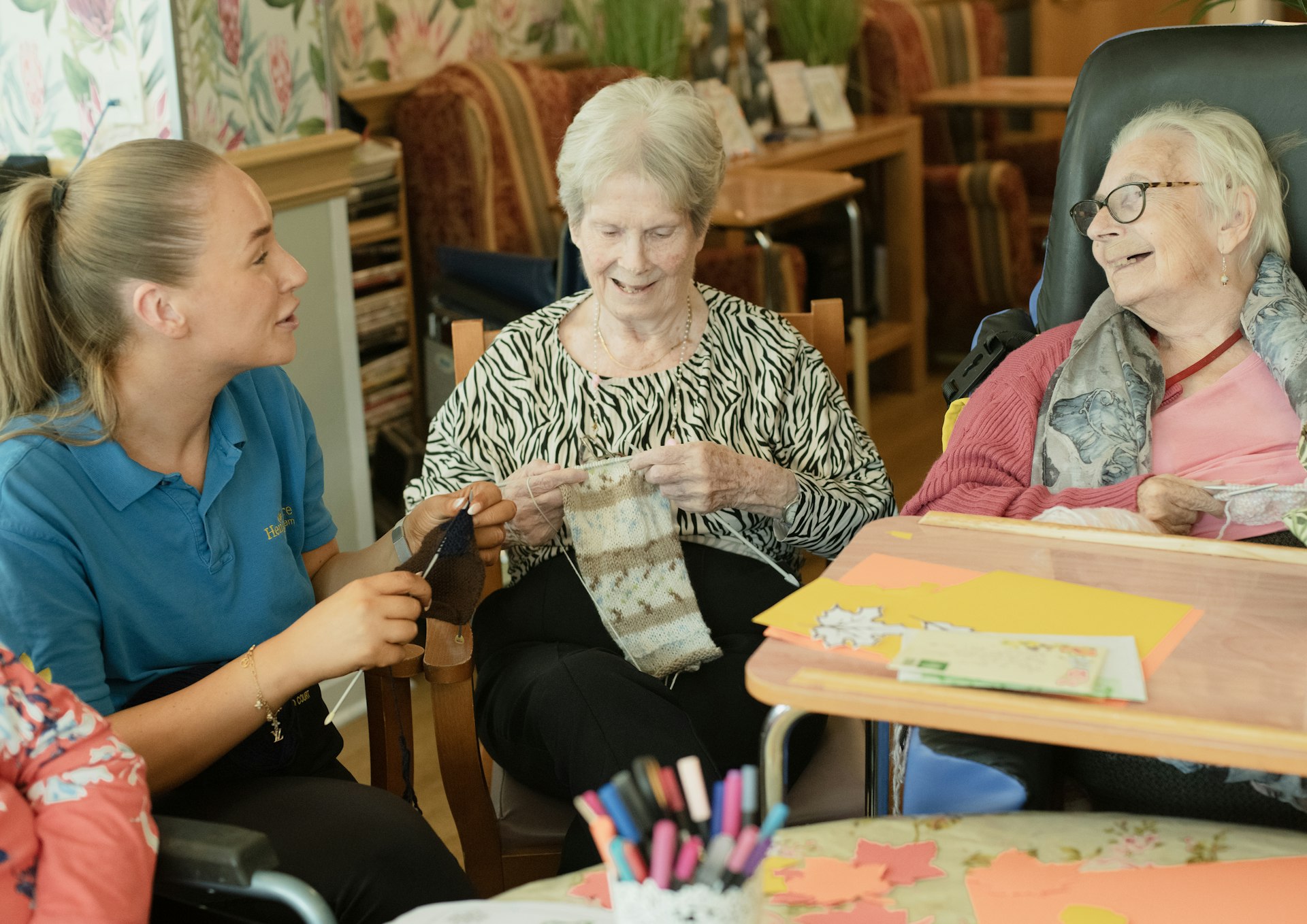
Illustrative image. Photographs of this home have not yet been added.
The Old School House
Residential Care
8 April 2026
East Riding of Yorkshire Council
40 beds
How this home compares nearby
Of 12 care homes for older people within 5 miles, none are rated higher by CQC, none are the same and 12 are lower.
None of these nearby homes has been inspected more recently than this one.
Based on CQC ratings, updated 22 October 2026. How we compare homes | See the nearby homes
Rating history
- Mar 2015
- May 2017
- Jan 2020
- Sept 2026
Improved from Good to Outstanding in 2017.
Source: CQC inspection reports. Contains CQC data licensed under the Open Government Licence v3.0.
Costs and who runs this home
Run by East Riding of Yorkshire Council, which runs 4 care homes in England: 1 rated Outstanding and 3 Good.
Average care home fees in Yorkshire and the Humber: £907 a week for residential care and £1,287 for nursing care (2024-25 averages). Self-funders usually pay more. See our care home costs guide.
- This home lists dementia care, which usually costs more than standard residential care. See dementia care home costs. NHS Continuing Healthcare may apply where someone's needs are primarily health needs.
- How to pay for a care home explains the council means test, what counts as capital and the funding you can ask to be assessed for.
About The Old School House
The Old School House is a residential care home located in East Riding of Yorkshire, Yorkshire and The Humber. Its registered care categories include dementia and older people. The home has 40 beds. CQC records an overall rating of Outstanding, published in September 2026. The home is operated by East Riding of Yorkshire Council.
Specialist Care
Fees and availability
We have not verified a current weekly fee for this home. Ask for a written quote based on the room and care needed, including any extra charges.
Check current vacancies, the admission assessment and visiting arrangements directly with the home.
Care and inspection details
Checked against the CQC register on 21 September 2026. This is a check of published information, not a visit to the home.
- Registered service
- Care home service without nursing
- Registered capacity
- 40 places — this is not a vacancy count
- Registration checked
- Registered · HU17 9EH
Registered care categories
Caring for adults over 65 yrs; Dementia.
These describe the registration. The home must assess whether it can meet the individual person's needs and whether a place is available.
CQC ratings in more detail
Overall rating shown by CQC: .
Assessment published 8 September 2026. Assessment date recorded: 8 April 2026.
Read CQC's assessment overview
The following is CQC's published account of its assessment, published 8 September 2026. References to “we” mean CQC. It describes findings at that time.
Date of Assessment: 08 June 2026 to 18 June 2026
The service is a residential care home providing accommodation and personal care for older people, including people living with dementia. At the time of our assessment, 24 people were living at the service and receiving a regulated activity.
The service provided exceptionally high-quality, person-centred care and support that consistently achieved outstanding outcomes for people. Leaders had created a culture where compassion, innovation, learning and continuous improvement were embedded throughout the service. People, relatives, staff and professionals consistently described care that exceeded expectations and focused on helping people live meaningful and fulfilling lives.
People experienced highly personalised care from staff who knew them exceptionally well. Staff understood people's histories, preferences, strengths and aspirations and used this knowledge to provide support that promoted wellbeing. This helped people to maintain identity and enabled them to continue doing things that mattered most to them. People were treated with kindness, compassion and dignity and were actively supported to maintain independence, choice and control over their lives.
The service demonstrated exceptional practice in supporting people with complex needs, including several people whose previous care placements had not been successful. The service completed detailed assessments, personalised care planning, encouraged positive risk-taking and worked in close partnership with families and professionals. People experienced improved wellbeing, greater stability, reduced distress and an enhanced quality of life. Families consistently told us the service had achieved outcomes they had not previously experienced elsewhere.
People benefitted from proactive healthcare support and strong multidisciplinary working. Staff worked in partnership with healthcare professionals to ensure care reflected current evidence, best practice guidance and individual clinical recommendations. Changes in people's health were identified quickly and acted upon without delay. This resulted in improved health outcomes, timely access to specialist services and highly coordinated care.
A significant strength of the service was its commitment to reducing restrictive practices and promoting people's rights. Leaders and staff continuously reviewed support arrangements to ensure people received the least restrictive support possible. Through careful monitoring, creative problem solving and collaboration with families and healthcare professionals, several people experienced reductions in enhanced supervision and increased independence whilst maintaining their safety and wellbeing.
People and families were actively involved in decisions about their care and the development of the service. Leaders had embedded a strong culture of co-production and sought feedback through Family and Carer Listening Events, reviews and ongoing engagement. Feedback was welcomed, acted upon and used to drive meaningful improvements.
The service demonstrated innovation and a strong commitment to learning. Staff were encouraged to contribute ideas, reflect on practice and participate in quality improvement projects. Examples included the introduction of structured handover improvements using formal quality improvement methodology and innovative end of life initiatives such as Comfort Boxes, Purple Hearts and enhanced bereavement support. These initiatives improved people's experiences and were recognised positively by families and professionals.
Leadership across the service was visible, compassionate and highly effective. Governance systems were robust and consistently used to monitor performance, identify trends and drive improvements. Staff described feeling valued, supported and empowered to contribute to service development. Strong partnerships with healthcare professionals, commissioners, community organisations and families further strengthened outcomes for people.
The service consistently placed people at the centre of decision making and care delivery, achieving outcomes that enhanced people's health, wellbeing, independence and quality of life. The provider demonstrated a distinctive culture of excellence, innovation and partnership working that resulted in experiences and outcomes that exceeded expected standards.
- Safe
- Effective
- Caring
- Responsive
- Well-led
Contains Care Quality Commission information under the Open Government Licence v3.0. Ratings and registration details can change after the date checked.
5 Questions to Ask on Your Visit
When visiting The Old School House, consider asking...
- 1.What specific dementia training do staff receive and how recently?
- 2.How do you support a resident who becomes distressed or confused?
- 3.How does the home keep a record of a resident's life history and personal preferences?
- 4.How do you involve families as dementia progresses and communication becomes harder?
- 5.What happens when a resident's dementia reaches an advanced stage?
5 Things to Look For on Your Visit
When you visit The Old School House, look out for...
- 1.Is the environment calm, uncluttered and easy to navigate?
- 2.Do staff speak to residents with patience and dignity, even if they repeat themselves?
- 3.Are there memory cues around the home -- photos, familiar objects, clear signage?
- 4.Do residents seem settled and safe, or agitated and unsupervised?
- 5.Is there meaningful activity happening, or are residents just sitting quietly with nothing to do?
Could the NHS fund The Old School House's fees?
The average nursing home costs £1,535 per week. That's £79,820 a year. NHS Continuing Healthcare could cover all of it. No means test, no contribution from you.
Location
13 New Walkergate, New Walkergate, Beverley, Humberside, HU17 9EH

The Old School House
CQC overall rating
Assessment date: 8 April 2026
Helpful Guides
Have a question about this care home?
Ask in our Community Forum and get a real answer from someone who's been through it.
Share what's on your mindFind Out If The Old School House Is Right for You
Start the conversation and request a callback from this home.
A free daily companion for someone with dementia
Shows the date, weather, family photos, and a daily question. Set up in 10 minutes.
Other Care Homes Near HU17 9EH
Listings with similar recorded care types and specialisms are shown first. Confirm care needs and availability directly with each home.
Town View
The Causeway, Beverley, Humberside
Residential care
0.2 miles away (straight-line distance)
Chapter House Care Home
Keldgate, Beverley
Residential care
0.5 miles away (straight-line distance)
Beverley Grange Nursing Home
Lockwood Road, Molescroft, Beverley, Humberside
Residential and nursing care
0.9 miles away (straight-line distance)
Beverley Parklands Care Home
Beverley Parklands, Beverley, North Humberside
Residential care
1.0 miles away (straight-line distance)
Claremont House
Wingfield Way, Beverley, North Humberside
Residential care
1.5 miles away (straight-line distance)
Cedar Grange
Main Street, Cherry Burton, Beverley, North Humberside
Residential care
3.0 miles away (straight-line distance)