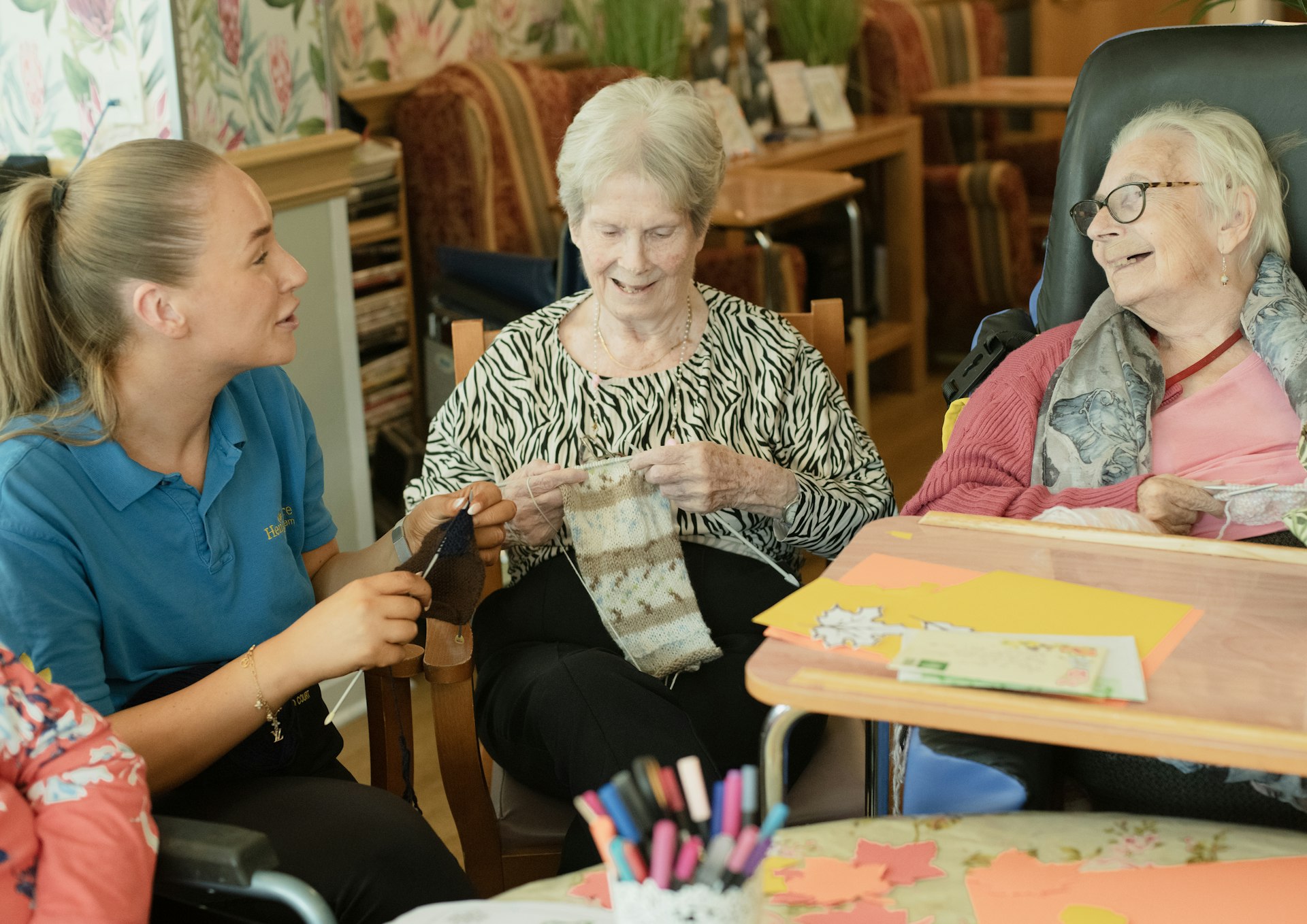
Illustrative image. Photographs of this home have not yet been added.
Manorfield Residential Home
Residential Care
4 June 2026
CC Care Home Limited
28 beds
How this home compares nearby
Of 11 care homes for older people within 5 miles, none are rated higher by CQC, 10 are the same and 1 is lower.
9 of these nearby homes have been inspected more recently than this one.
Based on CQC ratings, updated 23 October 2026. How we compare homes | See the nearby homes
Rating history
- Aug 2016
- Feb 2019
- Aug 2026
Rated Good at every inspection since 2016.
Source: CQC inspection reports. Contains CQC data licensed under the Open Government Licence v3.0.
Costs and who runs this home
This is the only care home CC Care Home Limited runs in England.
Average care home fees in the South East: £1,243 a week for residential care and £1,579 for nursing care (2024-25 averages). Self-funders usually pay more. See our care home costs guide.
- This home lists dementia care, which usually costs more than standard residential care. See dementia care home costs. NHS Continuing Healthcare may apply where someone's needs are primarily health needs.
- How to pay for a care home explains the council means test, what counts as capital and the funding you can ask to be assessed for.
About Manorfield Residential Home
Manorfield Residential Home is a residential care home located in West Sussex, South East. Its registered care categories include dementia, older people, and younger adults. The home has 28 beds. CQC records an overall rating of Good, published in August 2026. The home is operated by CC Care Home Limited.
Specialist Care
Fees and availability
We have not verified a current weekly fee for this home. Ask for a written quote based on the room and care needed, including any extra charges.
Check current vacancies, the admission assessment and visiting arrangements directly with the home.
Care and inspection details
Checked against the CQC register on 20 September 2026. This is a check of published information, not a visit to the home.
- Registered service
- Care home service without nursing
- Registered capacity
- 28 places — this is not a vacancy count
- Registration checked
- Registered · PO20 7JJ
Registered care categories
Caring for adults over 65 yrs; Caring for adults under 65 yrs; Dementia.
These describe the registration. The home must assess whether it can meet the individual person's needs and whether a place is available.
CQC ratings in more detail
Overall rating shown by CQC: .
Assessment published 3 August 2026. Assessment date recorded: 4 June 2026.
Read CQC's assessment overview
The following is CQC's published account of its assessment, published 3 August 2026. References to “we” mean CQC. It describes findings at that time.
We carried out this assessment on 30 June 2026. This service was previously rated as good. We undertook this assessment to confirm whether the rating of good remains accurate. This report does not provide detailed information on areas where we found practice continues to meet a good standard. Instead, our findings focus on any areas where the service needs to improve or where we found exceptional practice.
Improvements were required to ensure medicines were managed safely specifically the processes for ordering, storage and disposing of medicines. However, there was no evidence of impact on people. People received their medicines safely, on time and in line with their preferences and prescribers’ instructions. People received safe care from staff who understood safeguarding responsibilities and knew how to protect people from harm and abuse. People, relatives and professionals consistently told us people felt safe living at the service. One person said, “There’s nothing to worry about. The staff are very kind.” There were enough safely recruited staff with the skills, knowledge and training to meet people’s needs safely and effectively. One person told us, “They seem to be able to answer all the questions I may have. Their training is good.” Risks were assessed with people and managed in a way that promoted people’s safety and independence. The provider learned from accidents, incidents and safety events to improve practice and drive service improvements. Relevant safety alerts were communicated promptly and appropriate action was taken. For example, government guidance issued during the recent extreme heat red alert was implemented to help keep people hydrated, safe and well. The environment was clean, accessible, well maintained and free from hazards. People consistently praised the cleanliness of the service, commenting, “It’s spotless,” and “It’s always clean.”
People can only be deprived of their liberty to receive care and treatment with appropriate legal authority. In care homes, this can be done through a procedure called the Deprivation of Liberty Safeguards (DoLS), which is part of the Mental Capacity Act 2005 (MCA). We checked whether the service was working within the principles of the MCA and how they managed DoLS within the service. We found that staff and management worked within the MCA. DoLS authorisations were appropriately applied for and overseen. People were not subject to unlawful or excessive restrictions they had choice, control and freedom over their lives. For example, keypads on the front door and gate prevented those who were not safe to leave independently from doing so. This enabled people to enjoy the care home and gardens safely. Processes were in place to ensure people who were not subject to legal restrictions could access exits independently.
People's needs were comprehensively assessed before and during their stay at the service, with assessments informing person-centred care plans that reflected people’s needs and personal preferences. One person told us, “They asked a lot of questions about what you need and like,” while another said, “It was a smooth transition, there were no issues.” Care was delivered in line with people's assessed needs and current good practice guidance, supporting people to maintain their health, independence and wellbeing. For example, a person described how staff encouraged them to maintain their mobility, saying, “I’m a bit lazy with it, but they make me walk with the walker. They come behind me with the wheelchair in case I need to sit down.” Staff worked effectively with health and social care professionals to monitor people's health and improve outcomes, including ensuring people had regular access to the local GP surgery, which provided daily telephone support to the service and weekly onsite visits. People were supported to make their own decisions and their rights around consent were respected. Where people lacked capacity to make specific decisions, staff followed the principles of the MCA, completed well-documented best interest decisions and involved families and relevant professionals to ensure people's wishes and preferences remained central to the care they received. Staff demonstrated a good understanding of supporting people with fluctuating capacity and more complex decision-making needs.
People were treated with kindness, dignity and respect by staff who had developed caring and compassionate relationships with them. We observed staff interacting with people in a warm, respectful and considerate manner, maintaining people's privacy and dignity while providing support. Staff encouraged people to remain as independent as possible and supported them to make choices about their care and daily lives. The environment had signage supporting people, including those living with dementia, to navigate the home independently. One person told us, “They encourage you to wash your own face and whatever. You don’t have to, but they encourage you to,” Another person said, “They ask if I want any help and if I do, they help me,” reflecting how people remained in control of the support they received. Relatives and professionals consistently described the service as warm and welcoming and spoke positively about the caring relationships staff had developed with people, recognising the personalised and respectful approach taken to support people's wellbeing.
People received person-centred care that reflected their individual needs, preferences and wishes, and they were actively involved in decisions about how their care was planned and delivered. A person said they were consulted when, “Things crop up when you need things changed.” Staff worked in partnership with people and, where appropriate, their families to review care and respond to changing needs, ensuring people remained at the centre of decision-making. The provider encouraged people and their relatives to share feedback, raise concerns and contribute ideas about the service, and people were kept informed about changes made because of their views. Staff worked proactively with healthcare professionals to promote people's physical health and wellbeing, helping to identify concerns early, reduce risks and improve outcomes. Care records demonstrated that people's progress and outcomes were regularly monitored, reviewed and communicated effectively across the staff team, ensuring people experienced consistent, equitable care that met their individual needs.
The service was well led by a visible and supportive leadership team who promoted a positive, open and inclusive culture where people, staff and visitors felt valued, listened to and welcomed. We received consistently positive feedback about the registered manager, with 1 person saying, “She’s a very pleasant person. Very caring and sincere,” and another commenting, “She’s very good. She’s nice. She comes here and has a chat with you. “Governance systems supported oversight of the service, while feedback, shared learning and reflective practice were used to drive continuous improvement and maintain high standards of care. Learning and good practice guidance were shared through meetings, and day-to-day discussions, and staff described an open culture where they felt supported, valued. Staff said they were proud to work at the service and were committed to providing people with good care and positive experiences.
- Safe
- Effective
- Caring
- Responsive
- Well-led
Contains Care Quality Commission information under the Open Government Licence v3.0. Ratings and registration details can change after the date checked.
5 Questions to Ask on Your Visit
When visiting Manorfield Residential Home, consider asking...
- 1.What specific dementia training do staff receive and how recently?
- 2.How do you support a resident who becomes distressed or confused?
- 3.How does the home keep a record of a resident's life history and personal preferences?
- 4.How do you involve families as dementia progresses and communication becomes harder?
- 5.What happens when a resident's dementia reaches an advanced stage?
5 Things to Look For on Your Visit
When you visit Manorfield Residential Home, look out for...
- 1.Is the environment calm, uncluttered and easy to navigate?
- 2.Do staff speak to residents with patience and dignity, even if they repeat themselves?
- 3.Are there memory cues around the home -- photos, familiar objects, clear signage?
- 4.Do residents seem settled and safe, or agitated and unsupervised?
- 5.Is there meaningful activity happening, or are residents just sitting quietly with nothing to do?
Could the NHS fund Manorfield Residential Home's fees?
The average nursing home costs £1,535 per week. That's £79,820 a year. NHS Continuing Healthcare could cover all of it. No means test, no contribution from you.
Location
Clappers Lane, Earnley, Chichester, West Sussex, PO20 7JJ

Manorfield Residential Home
CQC overall rating
Assessment date: 4 June 2026
Helpful Guides
Have a question about this care home?
Ask in our Community Forum and get a real answer from someone who's been through it.
Share what's on your mindFind Out If Manorfield Residential Home Is Right for You
Start the conversation and request a callback from this home.
A free daily companion for someone with dementia
Shows the date, weather, family photos, and a daily question. Set up in 10 minutes.
Other Care Homes Near PO20 7JJ
Listings with similar recorded care types and specialisms are shown first. Confirm care needs and availability directly with each home.

Alexander House
131 Stocks Lane, East Wittering, Chichester, West Sussex
Residential care
0.4 miles away (straight-line distance)
Hooklands Care Home
West Bracklesham Drive, Bracklesham Bay, Chichester, West Sussex
Residential care
0.7 miles away (straight-line distance)

Church Farm Care Home
Church Farm Lane, East Wittering, Chichester, West Sussex
Residential care
0.8 miles away (straight-line distance)

Heathfield Care Home
Main Road, West Wittering, Chichester, West Sussex
Residential care
1.4 miles away (straight-line distance)
The Old Malthouse Care Home
33 High Street, Selsey, Chichester, West Sussex
Residential care
3.4 miles away (straight-line distance)
Sussex Grange Residential Care Home
14 Vincent Road, Selsey, Chichester, West Sussex
Residential care
3.5 miles away (straight-line distance)