
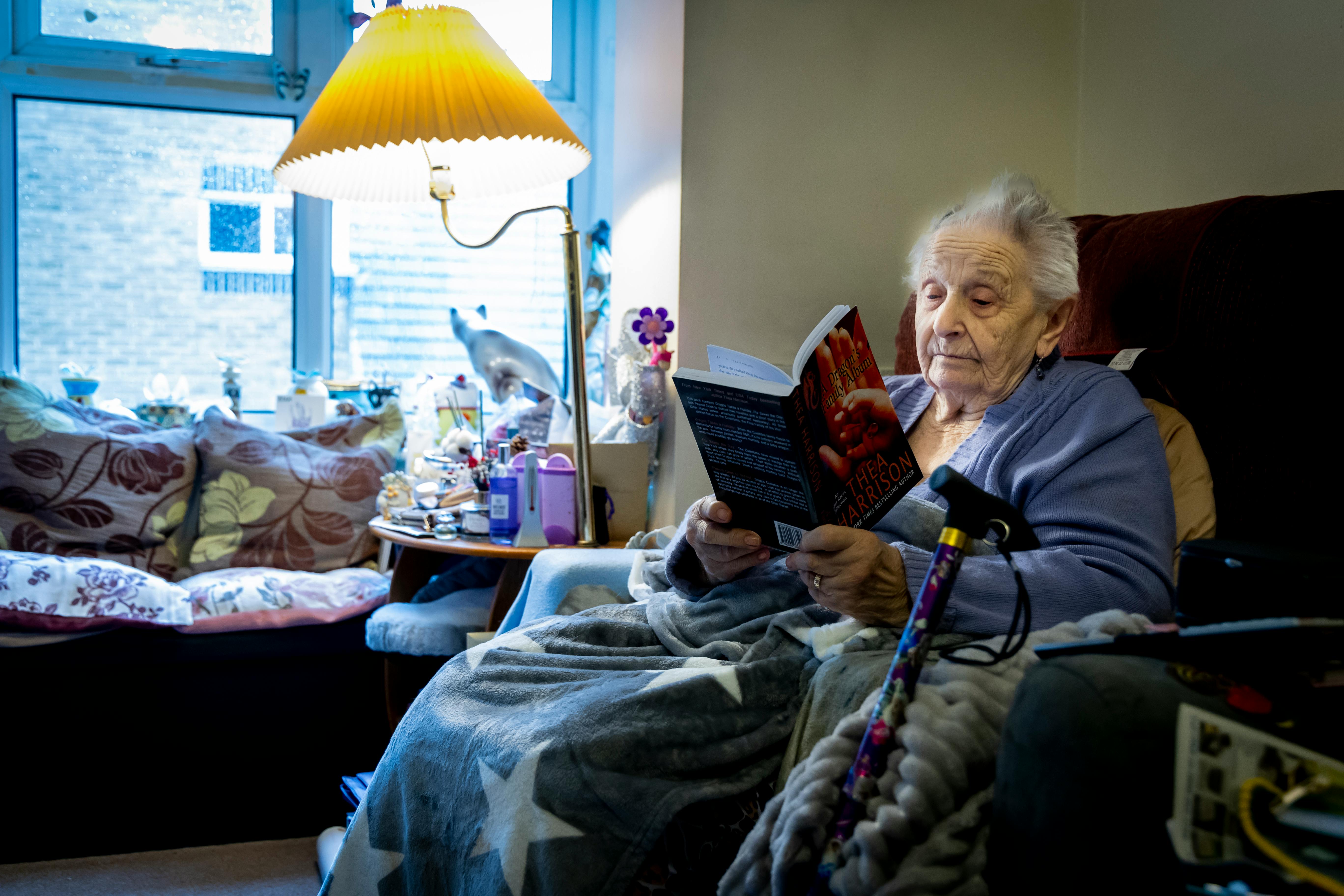
Illustrative image. Photographs of this home have not yet been added.
Longcroft
Residential Care
29 April 2025
Langley House Trust
15 beds
Rating history
- Mar 2017
- Apr 2019
- Jul 2025
Rated Good at every inspection since 2017.
Source: CQC inspection reports. Contains CQC data licensed under the Open Government Licence v3.0.
Costs and who runs this home
Run by Langley House Trust, which runs 5 care homes in England: 2 rated Good and 3 not yet rated.
Average care home fees in the North West: £882 a week for residential care and £1,196 for nursing care (2024-25 averages). Self-funders usually pay more. See our care home costs guide.
- This home lists dementia care, which usually costs more than standard residential care. See dementia care home costs. NHS Continuing Healthcare may apply where someone's needs are primarily health needs.
- How to pay for a care home explains the council means test, what counts as capital and the funding you can ask to be assessed for.
About Longcroft
Longcroft is a residential care home located in Lancashire, North West. Its registered care categories include dementia, learning disabilities, mental health, older people, physical disabilities, sensory impairments, and younger adults. The home has 15 beds. CQC records an overall rating of Good, published in July 2025. The home is operated by Langley House Trust.
Specialist Care
Fees and availability
We have not verified a current weekly fee for this home. Ask for a written quote based on the room and care needed, including any extra charges.
Check current vacancies, the admission assessment and visiting arrangements directly with the home.
Care and inspection details
Checked against the CQC register on 20 September 2026. This is a check of published information, not a visit to the home.
- Registered service
- Care home service without nursing; Domiciliary care service; Supported living service
- Registered capacity
- 15 places — this is not a vacancy count
- Registration checked
- Registered · LA1 5EF
Registered care categories
Caring for adults over 65 yrs; Caring for adults under 65 yrs; Dementia; Learning disabilities; Mental health conditions; Physical disabilities; Sensory impairment; Substance misuse problems.
These describe the registration. The home must assess whether it can meet the individual person's needs and whether a place is available.
CQC ratings in more detail
Overall rating shown by CQC: .
Assessment published 30 July 2025. Assessment date recorded: 29 April 2025.
Read CQC's assessment overview
The following is CQC's published account of its assessment, published 30 July 2025. References to “we” mean CQC. It describes findings at that time.
Date of assessment: 30 April to 7 May 2025. All the quality statements were reviewed at this assessment.
Longcroft is a care home providing care and support for up to 15 men with an offending background. In addition people may have, mental health needs learning disabilities or autism. The home is a large, detached property set in extensive gardens. People living in the home need to be able to use stairs because all bedrooms are upstairs. Some people were supported to develop their independence and move on, though some may live in the home long term. At the time of our inspection there were 14 people living in the home, not everyone received the regulated activity of personal care. We have only reviewed the care and support records in relation to the 2 people who received personal care.
We assessed the service against ‘Right support, right care, right culture.’ This guidance supported judgements about whether the provider guaranteed people with a learning disability and autistic people respect, equality, dignity, choice, independence, and access to local communities that most people take for granted. Though there were no autistic people or people with a learning disability who received personal care, we found the service had demonstrated a clear understanding of this guidance and had met the requirements of these principles.
People were supported to be safe and were protected from avoidable harm. Robust systems were in place to help people to manage risks in their day to day lives. People were supported to understand and adhere to any conditions which helped to minimise risks when accessing community activities.
People were supported by enough, safely recruited staff who were skilled and knowledgeable about their roles. Staff received high-quality induction and ongoing training. Staff said they felt safe at work and were well supported by the management team.
The home was safely maintained, all necessary safety checks had been completed in relation to the premises. Infection prevention control risks were safely managed.
People’s needs had been comprehensively assessed to ensure the provider was able to meet their needs and to facilitate safe transitions between services. People were involved in their assessments and in the development of their care plans. Care plans included information and advice from other professionals. Staff had access to care plans and found them informative. People’s care and support plans were reviewed and updated regularly. People could meet with their key worker to discuss their support needs and any other matter that was important to them.
People were supported maintain their health. Staff supported people to access healthcare and promoted healthy life choices. People had been encouraged to review their health needs and to set and achieve better outcomes.
People were consulted and supported to give consent to their care and support. Where people did not have the capacity to make some decisions, they had been supported through the appropriate legal processes including mental capacity assessments, best interest decisions and Deprivation of Liberty Safeguards (DoLS). People had access to advocates and told us they could speak to them when they needed to. People told us they felt able to raise any concerns and challenge decisions they did not agree with.
People were supported by kind and compassionate staff who were committed to supporting people to achieve positive outcomes. People told us staff were polite and kind. People were encouraged to make choices and set goals to develop their independence at a pace that suited them best. People’s views were valued by staff and leaders who provided several ways for people to express their views. The provider ensured all staff and leaders felt valued and respected in their roles. Staff praised how well supported they felt.
People received high-quality person-centred care throughout all aspect of their care and support. People were supported by staff to develop and achieve their goals. The activities coordinator worked with people to develop individual and meaningful opportunities for people which reflected their preferences and aspirations. People had been supported to overcome any obstacles they might face to achieve equitable outcomes in relation to their care and support and access to community resources and activities.
The home was overseen by skilled and compassionate leaders who were committed to the organisation’s key values and culture. The registered manager and staff demonstrated inclusivity and respect throughout all aspects of their work. People were encouraged to speak up and raise anything that was important to them. Leaders ensured people had a variety of opportunities to share their views. The registered manager was well supported by the providers senior management team and had maintained good oversight of the quality of care, records and premises. The registered manager and staff team worked in close partnership with other agencies and stakeholders which helped ensure consistent care. The provider and staff team were committed to continuous learning and improvement. They held a gold Investors in People award and were working toward achieving an accredited Enabling Environments award.
- Safe
- Effective
- Caring
- Responsive
- Well-led
Contains Care Quality Commission information under the Open Government Licence v3.0. Ratings and registration details can change after the date checked.
5 Questions to Ask on Your Visit
When visiting Longcroft, consider asking...
- 1.What specific dementia training do staff receive and how recently?
- 2.How do you support a resident who becomes distressed or confused?
- 3.How does the home keep a record of a resident's life history and personal preferences?
- 4.How do you involve families as dementia progresses and communication becomes harder?
- 5.What happens when a resident's dementia reaches an advanced stage?
5 Things to Look For on Your Visit
When you visit Longcroft, look out for...
- 1.Is the environment calm, uncluttered and easy to navigate?
- 2.Do staff speak to residents with patience and dignity, even if they repeat themselves?
- 3.Are there memory cues around the home -- photos, familiar objects, clear signage?
- 4.Do residents seem settled and safe, or agitated and unsupervised?
- 5.Is there meaningful activity happening, or are residents just sitting quietly with nothing to do?
Could the NHS fund Longcroft's fees?
The average nursing home costs £1,535 per week. That's £79,820 a year. NHS Continuing Healthcare could cover all of it. No means test, no contribution from you.
Location
58 Westbourne Road, Lancaster, Lancashire, LA1 5EF

Longcroft
CQC overall rating
Assessment date: 29 April 2025
Helpful Guides
Have a question about this care home?
Ask in our Community Forum and get a real answer from someone who's been through it.
Share what's on your mindFind Out If Longcroft Is Right for You
Start the conversation and request a callback from this home.
A free daily companion for someone with dementia
Shows the date, weather, family photos, and a daily question. Set up in 10 minutes.
Other Care Homes Near LA1 5EF
Listings with similar recorded care types and specialisms are shown first. Confirm care needs and availability directly with each home.
Dolphinlee House Home for Older People
Patterdale Road, Ridge Estate, Lancaster, Lancashire
Residential care
1.4 miles away (straight-line distance)
Lancaster and Morecambe Short Breaks Service
Thorpe Avenue, Torrisholme, Morecambe, Lancashire
Residential care
1.5 miles away (straight-line distance)
Chirnside House
Abbeyfield Close, Lancaster, Lancashire
Residential care
1.5 miles away (straight-line distance)

Barden House
29 Morecambe Road, Morecambe, Lancashire
Residential care
1.6 miles away (straight-line distance)
Eric Morecambe House
Harrow Grove, Torrisholme, Morecambe, Lancashire
Residential care
1.7 miles away (straight-line distance)

Rushley House Retirement Home
327 Lancaster Road, Morecambe, Lancashire
Residential care
1.7 miles away (straight-line distance)