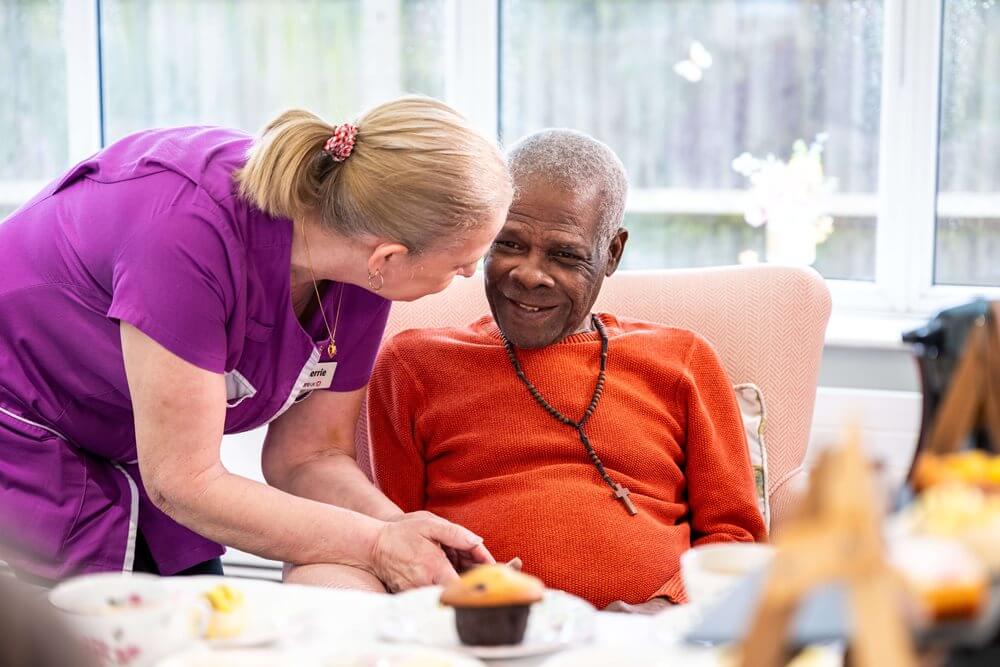
Illustrative image. Photographs of this home have not yet been added.
Direct Approach Care Limited
Residential Care
17 October 2025
Direct Approach Care Limited
3 beds
Costs and who runs this home
This is the only care home Direct Approach Care Limited runs in England.
Average care home fees in the North West: £882 a week for residential care and £1,196 for nursing care (2024-25 averages). Self-funders usually pay more. See our care home costs guide.
- This home lists dementia care, which usually costs more than standard residential care. See dementia care home costs. NHS Continuing Healthcare may apply where someone's needs are primarily health needs.
- How to pay for a care home explains the council means test, what counts as capital and the funding you can ask to be assessed for.
About Direct Approach Care Limited
Direct Approach Care Limited is a residential care home located in Lancashire, North West. Its registered care categories include dementia, learning disabilities, mental health, older people, physical disabilities, and younger adults. The home has 3 beds. CQC records an overall rating of Inadequate, published in February 2026. The home is operated by Direct Approach Care Limited.
Specialist Care
Fees and availability
We have not verified a current weekly fee for this home. Ask for a written quote based on the room and care needed, including any extra charges.
Check current vacancies, the admission assessment and visiting arrangements directly with the home.
Care and inspection details
Checked against the CQC register on 20 September 2026. This is a check of published information, not a visit to the home.
- Registered service
- Care home service without nursing; Domiciliary care service
- Registered capacity
- 3 places — this is not a vacancy count
- Registration checked
- Registered · PR5 6ZE
Registered care categories
Caring for adults over 65 yrs; Caring for adults under 65 yrs; Caring for children; Dementia; Learning disabilities; Mental health conditions; Physical disabilities.
These describe the registration. The home must assess whether it can meet the individual person's needs and whether a place is available.
CQC ratings in more detail
Overall rating shown by CQC: .
Assessment published 18 February 2026. Assessment date recorded: 17 October 2025.
Read CQC's assessment overview
The following is CQC's published account of its assessment, published 18 February 2026. References to “we” mean CQC. It describes findings at that time.
Date of assessment 30 October to 6 November 2025.
Direct Approach Care Limited is a care home providing respite care for up to 3 young people with learning disabilities and autism. At the time of our assessment there were 2 young people on respite care and 1 young person in a longer term placement. This was the first assessment of this service which registered in December 2023. This unannounced inspection took place to review the quality of care and compliance with legal regulations.
We assessed the quality statements for the key questions of safe, effective, caring, responsive and well-led. We found the provider was in breach of the regulations in relation to safe care including safeguarding, governance and oversight, duty of candour and safety of the premises.
We assessed the service against ‘Right support, right care, right culture.’ This guidance supported judgements about whether the provider guaranteed people with a learning disability and autistic people respect, equality, dignity, choice, independence, and access to local communities that most people take for granted. We found the service had demonstrated an understanding of this guidance and were meeting them.
Improvements were needed regarding the safe management of medicines, safe transitions, risk management, safeguarding, lessons learned, positive behaviour support plans, recruitment, induction for staff, the safety of the premises, infection prevention control, duty of candour, and governance of the service.
People’s medicines had not been managed safely, lack of effective oversight of medicines had meant incorrect medicines had been administered to 1 person for a prolonged period.
Transitions between hospital and the home were not safe because the person’s needs were not reassessed when they returned to the service, and their medicines were not reconciled.
Risk management plans to guide staff in the use of physical interventions were not individually detailed, staff had received training but were not supported to know what specific intervention a person needed. People were at risk of harm from disproportionate and/or unnecessary restraint.
Opportunities to learn lessons to avoid reoccurrence of incidents had been missed because recording of safety incidents and staff debriefs were either not done or did not have sufficient detail to allow for analysis and review.
Recruitment practices were unsafe, recruitment files did not include the documentation required by the regulations. A sponsored staff was working beyond their permitted hours. New staff had not received the robust induction included in the provider’s policy.
Some aspects of the premises were unsafe; not all bedroom doors were fire doors or had intumescent strips. One bedroom door was missing. Some radiator covers were missing. One window did not have a restrictor in place, and it was possible to climb out of it. Cleaning chemicals were not stored securely. Regular legionella checks had not been recorded.
Some fire safety checks had been completed on a regular basis by staff, this included fire drills. Records relating to fire drills needed to improve to include who was present.
We observed poor infection prevention control (IPC) practices.
People, their families and other agencies had been involved in assessments and care planning. Reassessments and reviews had not always been done by the provider or had not been recorded. Care plans and risk management plans were in place but lacked some details necessary to sufficiently guide staff. Some staff were unable to access the risk assessments in the electronic care records and did not have access to paper records in the office.
Rotas showed people received the level of support they were assessed as needing. We observed sufficient staff to be on duty when we visited. People were supported to make decisions about day-to-day things such as clothing, food and drink and how they spent their time.
We observed staff were kind and respectful in their interactions. Staff spoke positively about the people they were supporting and were committed to enabling them to have a good experience.
People’s individual experiences, strengths and preferences had been recorded. People were encouraged to build on their skills and develop independence by staff.
People were responded to in a timely manner because the provider had developed communication guides for staff who understood how to recognise people’s verbal and non- verbal communication.
People received person-centred care and staff understood what was important for them. People were supported to access activities they liked in the community and in the home. People were supported to access care and treatment, and the provider sought to identify and overcome any obstacles to this.
Staff had access to an on-call system if they needed support out of hours. However, not all staff felt comfortable using this.
The registered manager’s oversight of the quality of care, care records, governance and the premises was either not in place or not robust enough to provide assurance the service was properly and safely managed. Leadership had not fully embedded the values of the service. Lack of clear guidance for staff in key areas of risk management and lack of candour in relation to safety incidents meant there was a risk of a closed culture developing.
Governance systems had not been followed; people were at risk of harm because the registered manager did not have effective oversight of quality issues. They did not identify the concerns we found during this assessment.
Staff gave us mixed views of the leadership in the home. While some staff felt confident a similar number of staff did not feel confident raising any concerns or issues with the registered manager because they did not feel they would be responded to appropriately. Staff did not feel free to speak up.
Some staff raised concerns about the registered manager using discriminatory language about staff. Some comments we heard during this assessment could have been seen to be discriminatory.
Feedback from other professionals identified concerns regarding the overall quality of management at the home. Three social workers identified it was often difficult to get clear information about health matters or documentation to support their assessments. During our assessment we found some difficulties accessing information we requested.
The registered manager made efforts to cooperate with the assessment process and acknowledged the concerns we had identified.
In instances where CQC have decided to take civil or criminal enforcement action against a provider, we will publish this information on our website after any representations and/ or appeals have been concluded.
We have asked the provider for an action plan in response to some of the concerns found at this assessment.
- Safe
- Effective
- Caring
- Responsive
- Well-led
Questions prompted by these ratings
- Safe: What changes have been made to medicines, staffing and safeguarding since this rating?
- Effective: How are staff training, nutrition and health outcomes checked now?
- Responsive: How are care plans, activities and complaints adapted to each resident?
- Well-led: What has changed in management, checks and oversight since this rating?
These are questions for your visit, not a claim about conditions today.
Contains Care Quality Commission information under the Open Government Licence v3.0. Ratings and registration details can change after the date checked.
5 Questions to Ask on Your Visit
When visiting Direct Approach Care Limited, consider asking...
- 1.What specific dementia training do staff receive and how recently?
- 2.How do you support a resident who becomes distressed or confused?
- 3.How does the home keep a record of a resident's life history and personal preferences?
- 4.How do you involve families as dementia progresses and communication becomes harder?
- 5.What happens when a resident's dementia reaches an advanced stage?
5 Things to Look For on Your Visit
When you visit Direct Approach Care Limited, look out for...
- 1.Is the environment calm, uncluttered and easy to navigate?
- 2.Do staff speak to residents with patience and dignity, even if they repeat themselves?
- 3.Are there memory cues around the home -- photos, familiar objects, clear signage?
- 4.Do residents seem settled and safe, or agitated and unsupervised?
- 5.Is there meaningful activity happening, or are residents just sitting quietly with nothing to do?
Could the NHS fund Direct Approach Care Limited's fees?
The average nursing home costs £1,535 per week. That's £79,820 a year. NHS Continuing Healthcare could cover all of it. No means test, no contribution from you.
Location
15 Goldcrest Drive, Bamber Bridge, Preston, PR5 6ZE

Direct Approach Care Limited
CQC overall rating
Assessment date: 17 October 2025
Helpful Guides
Have a question about this care home?
Ask in our Community Forum and get a real answer from someone who's been through it.
Share what's on your mindFind Out If Direct Approach Care Limited Is Right for You
Start the conversation and request a callback from this home.
A free daily companion for someone with dementia
Shows the date, weather, family photos, and a daily question. Set up in 10 minutes.
Other Care Homes Near PR5 6ZE
Listings with similar recorded care types and specialisms are shown first. Confirm care needs and availability directly with each home.
Dovehaven Grove
Poplar Grove, Bamber Bridge, Preston, Lancashire
Residential care
0.3 miles away (straight-line distance)
Mather Fold House
Hoghton Lane,, Higher Walton,, Preston
Residential care
0.8 miles away (straight-line distance)
Long Lane Farm
Kellet Lane Bamber Bridge, Preston, Lancashire
Residential care
1.0 miles away (straight-line distance)
Dixons Farm
Wigan Road, Preston, Lancashire
Residential care
1.2 miles away (straight-line distance)

Lynbrook
106 Todd Lane North, Lostock Hall, Preston, Lancashire
Residential care
1.2 miles away (straight-line distance)

The Bungalow
47 Todd Lane North, Lostock Hall, Preston, Lancashire
Residential care
1.3 miles away (straight-line distance)