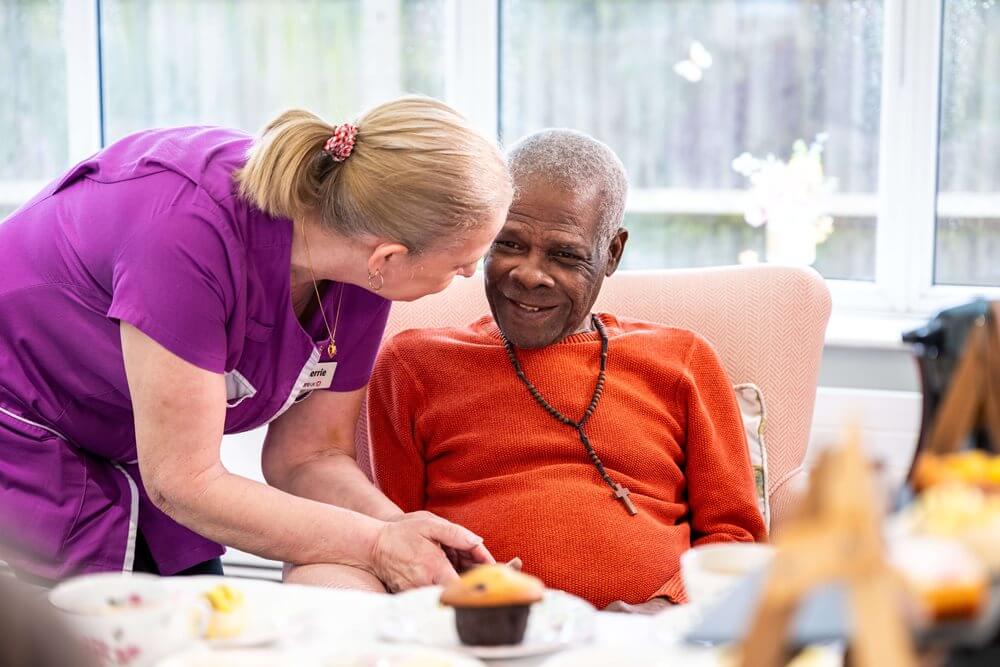
Illustrative image. Photographs of this home have not yet been added.
Oak House
Residential Care
18 June 2026
Hollybank Trust
6 beds
Rating history
- Nov 2015
- Nov 2016
- Jul 2019
- Jul 2026
Improved from Requires Improvement to Good in 2016.
Source: CQC inspection reports. Contains CQC data licensed under the Open Government Licence v3.0.
Costs and who runs this home
Run by Hollybank Trust, which runs 8 care homes in England: 6 rated Good and 2 Requires Improvement.
- How to pay for a care home explains the council means test, what counts as capital and the funding you can ask to be assessed for.
About Oak House
Oak House is a residential care home located in Barnsley, Yorkshire and The Humber. Its registered care categories include learning disabilities, physical disabilities, and sensory impairments. The home has 6 beds. CQC records an overall rating of Good, published in July 2026. The home is operated by Hollybank Trust.
Specialist Care
Facilities & Amenities
Fees and availability
We have not verified a current weekly fee for this home. Ask for a written quote based on the room and care needed, including any extra charges.
Check current vacancies, the admission assessment and visiting arrangements directly with the home.
Care and inspection details
Checked against the CQC register on 21 September 2026. This is a check of published information, not a visit to the home.
- Registered service
- Care home service without nursing
- Registered capacity
- 6 places — this is not a vacancy count
- Registration checked
- Registered · S70 4AG
Registered care categories
Learning disabilities; Physical disabilities; Sensory impairment.
These describe the registration. The home must assess whether it can meet the individual person's needs and whether a place is available.
CQC ratings in more detail
Overall rating shown by CQC: .
Assessment published 30 July 2026. Assessment date recorded: 18 June 2026.
Read CQC's assessment overview
The following is CQC's published account of its assessment, published 30 July 2026. References to “we” mean CQC. It describes findings at that time.
About the service
The service is a residential care home. There were 6 people using the service at the time of our assessment.
Who the service is for
This is a specialist service for people with a learning disability, and/or autism. The home was based within a community setting and people had their own bedrooms and bathrooms, and shared communal kitchen and lounge areas.
Key findings
We carried out this assessment on 21 and 22 July 2026. This service was previously rated as good. We carried out this assessment to confirm whether the rating of good remains accurate. This report does not provide detailed information on areas where we found practice continues to meet a good standard. Instead, our findings focus on any areas where the service needs to improve or where we found exceptional practice.
An assessment has been undertaken of a specialist service that is used by autistic people or people with a learning disability. We have assessed the service against ‘Right support, right care, right culture’ guidance to make judgements about whether the provider guaranteed people with a learning disability and autistic people respect, equality, dignity, choices, independence and good access to local communities that most people take for granted. The service was meeting the principles of Right support, right care, right culture’.
People can only be deprived of their liberty to receive care and treatment with appropriate legal authority. In care homes, this can be done through a procedure called the Deprivation of Liberty Safeguards (DoLS), which is part of the Mental Capacity Act 2005 (MCA). We checked whether the service was working within the principles of the MCA and how they managed DoLS within the service. We found that staff and management worked within the MCA. DoLS authorisations were appropriately applied for and overseen. People were not subject to unlawful or excessive restrictions they had choice, control and freedom over their lives. Capacity assessments were completed appropriately, and where people were unable to make decisions, best interest decisions were made with the involvement of relevant family members and professionals.
The service had effective systems in place to monitor incidents, manage risks and learn from events to improve safety. People were protected from harm through robust safeguarding procedures; staff were trained in relation to safeguarding people and staff told us there was a positive culture where concerns could be raised confidently. Risks were assessed and managed through detailed care plans, and regular environmental and fire safety checks were completed. People were supported by enough staff, with staff being safely recruited, trained and supported to meet people's needs. Medicines were generally managed safely, although a medicines storage temperature issue was identified during the inspection and was immediately addressed. Similarly, furniture requiring securing to walls was identified and promptly made safe.
People’s needs were thoroughly assessed, with detailed care plans covering health conditions, risks, nutrition and support requirements. Staff worked closely with healthcare professionals to ensure care was delivered in line with specialist advice and best practice. The service supported people to achieve their goals and maintain independence through personalised adaptations, accessible information and tailored equipment.
People received personalised, person-centred care that reflected their individual needs, preferences and communication styles. Staff used detailed communication guidance to support people to make choices and remain involved in decisions about their care and daily lives. People and relatives were involved through regular meetings, and complaints or concerns were listened to and responded to appropriately. Relatives told us they felt listened to, although further opportunities could be explored to evidence how feedback was gathered and used to improve the service. People were supported to take part in a wide range of activities and community opportunities, helping to promote inclusion, independence and meaningful experiences. Staff adapted their communication methods, including supporting people to learn sign language, to ensure equitable access to activities and decision-making.
The service had clear values focused on people's rights, equality, choice and independence. Staff told us there was a positive culture where they felt supported, worked well as a team and were able to approach the registered manager openly. Although staff supervision had not always been completed in line with the providers own policy, this had been identified and plans were in place to address it. There was a clear management structure and effective governance systems to monitor the quality and safety of the service, including regular audits and oversight from the leadership team. Staff and relatives spoke positively about the leadership of the service. The management team demonstrated a commitment to continuous improvement, responding positively to feedback and implementing quality improvement plans to drive ongoing development.
- Safe
- Effective
- Caring
- Responsive
- Well-led
Contains Care Quality Commission information under the Open Government Licence v3.0. Ratings and registration details can change after the date checked.
5 Questions to Ask on Your Visit
When visiting Oak House, consider asking...
- 1.What happens if my relative's care needs increase significantly -- will they have to move?
- 2.How do you handle concerns or complaints from families?
- 3.What does the monthly fee cover and what will cost extra?
- 4.How do you keep families informed about their relative's day-to-day wellbeing?
- 5.What happens if my relative is unhappy here?
5 Things to Look For on Your Visit
When you visit Oak House, look out for...
- 1.Do staff greet residents by name and stop to chat?
- 2.Are residents dressed, up and occupied, or sitting alone in front of a TV?
- 3.Does the home smell fresh and feel clean without being clinical?
- 4.Do residents look comfortable and at ease, or anxious and withdrawn?
- 5.Does the manager answer your questions openly or deflect?
Could the NHS fund Oak House's fees?
The average nursing home costs £1,535 per week. That's £79,820 a year. NHS Continuing Healthcare could cover all of it. No means test, no contribution from you.
Location
Darley Cliffe, Upper Sheffield Road, Barnsley, South Yorkshire, S70 4AG
Oak House
CQC overall rating
Assessment date: 18 June 2026
Helpful Guides
Have a question about this care home?
Ask in our Community Forum and get a real answer from someone who's been through it.
Share what's on your mindFind Out If Oak House Is Right for You
Start the conversation and request a callback from this home.
A free daily companion for someone with dementia
Shows the date, weather, family photos, and a daily question. Set up in 10 minutes.
Other Care Homes Near S70 4AG
Listings with similar recorded care types and specialisms are shown first. Confirm care needs and availability directly with each home.
Ariya House
70 Vernon Road,, Worsbrough,, Barnsley
Residential care
0.4 miles away (straight-line distance)
Shaftsbury House
53 Mount Vernon Road, Barnsley, South Yorkshire
Residential care
0.4 miles away (straight-line distance)
Ward Green Lodge
High Ridge, Ward Green, Barnsley, South Yorkshire
Residential care
0.4 miles away (straight-line distance)
Autumn House
2 Station Road, Worsbrough, Barnsley, South Yorkshire
Residential care
0.6 miles away (straight-line distance)

Riverside Care Home
Camborne Way, Barnsley
Residential care
1.6 miles away (straight-line distance)
The Grange and Elm Court
80 Grange Lane, Barnsley, South Yorkshire
Residential care
1.6 miles away (straight-line distance)