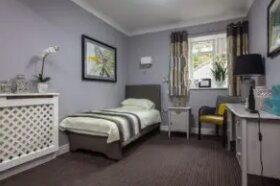
Illustrative image. Photographs of this home have not yet been added.
Autism Together - 60 Manor Place
Residential Care
8 July 2026
Autism Together
2 beds
Rating history
- Oct 2015
- Oct 2017
- Aug 2026
Rated Good at every inspection since 2015.
Source: CQC inspection reports. Contains CQC data licensed under the Open Government Licence v3.0.
Costs and who runs this home
Run by Autism Together, which runs 16 care homes in England: 13 rated Good and 3 Requires Improvement.
- How to pay for a care home explains the council means test, what counts as capital and the funding you can ask to be assessed for.
About Autism Together - 60 Manor Place
Autism Together - 60 Manor Place is a residential care home located in Wirral, North West. Its registered care categories include learning disabilities. The home has 2 beds. CQC records an overall rating of Good, published in August 2026. The home is operated by Autism Together.
Specialist Care
Fees and availability
We have not verified a current weekly fee for this home. Ask for a written quote based on the room and care needed, including any extra charges.
Check current vacancies, the admission assessment and visiting arrangements directly with the home.
Care and inspection details
Checked against the CQC register on 20 September 2026. This is a check of published information, not a visit to the home.
- Registered service
- Care home service without nursing
- Registered capacity
- 2 places — this is not a vacancy count
- Registration checked
- Registered · CH62 4TX
Registered care categories
Learning disabilities.
These describe the registration. The home must assess whether it can meet the individual person's needs and whether a place is available.
CQC ratings in more detail
Overall rating shown by CQC: .
Assessment published 27 August 2026. Assessment date recorded: 8 July 2026.
Read CQC's assessment overview
The following is CQC's published account of its assessment, published 27 August 2026. References to “we” mean CQC. It describes findings at that time.
Manor Park is a care home providing personal care to people. At the time of our assessment there were 2 people using the service.
This is a specialist service for people with a learning disability and/or autistic people.
We assessed the service against ‘right support, right care, right culture’ guidance to make judgements about whether the provider guaranteed people with a learning disability and autistic people received respect, equality, dignity, choices, independence and good access to local communities most people take for granted.
We carried out this assessment between 29 July 2026 and 7August 2026. The service was previously rated as good. We carried out this assessment to confirm whether the rating of good remains accurate. This report does not provide detailed information on areas where we found practice continues to meet a good standard. Instead, our findings focus on any areas where the service needs to improve or where we found exceptional practice.
The provider service had effective systems to keep people safe and promote learning, with audits of incidents and environmental checks driving continuous improvement. Staff described an open culture where learning was shared, and people were supported safely through proactive risk management and up-to-date risk assessments.
The registered manager promoted an open and transparent culture where people, staff and others felt confident to raise safety concerns and report incidents. Concerns and incidents were thoroughly investigated, and learning was shared across the staff team to support continuous improvement and help keep people safe.
Staff understood their responsibilities to safeguard people from abuse and knew how and when to report concerns to the relevant people and agencies. A staff member told us, “We make sure people are always protected and kept safe from discrimination. If someone was being abused, I would report this directly to the manager.”
The provider operated in line with the Mental Capacity Act 2005, with appropriate oversight of Deprivation of Liberty Safeguards (DoLS) authorisations and no evidence of unlawful restrictions.
Risks to people had been assessed, and staff had access to current information and guidance to manage these effectively while promoting people's safety and wellbeing. A relative told us, “I feel [family member] is very safe there."
Regular health and safety checks of the premises were undertaken, and equipment and safety systems were serviced and maintained to ensure they remained safe and in good working order.
Staffing levels were sufficient to meet people's needs, recruitment processes were safe, and staff were fully trained and competent. Staff received appropriate training, supervision and support to enable them to meet people's needs effectively. Training was refreshed regularly to ensure staff delivered evidence-based care in line with current best practice. A relative said, “The staff training appears to be good, and they have learnt a lot which is put into practice.” A staff member told us, “The training is very effective and refreshed regularly."
Medicines were administered safely in line with best practice, medicines stocks, balances and records showed people consistently received the medicines prescribed to them. However, tighter controls required on creams and bottled medication which was stored on the floor in a plastic container which was not lockable. Consideration required for developing a protocol for the use of epileptic medication, and the use of body charts for all prescribed topical cream prescription medication.
The provider had effective processes for assessing, planning and reviewing care to ensure people's needs were met. Assessments were regularly updated and informed personalised support plans, with people and their relatives involved wherever possible. The registered manager regularly reviewed people’s care and support to ensure people continued to achieve positive and consistent outcomes. However, recording people’s, family and staff involvement in reviewing and updating care plans should be demonstrated in the care plan review process.
Staff delivered evidence-based support using recognised approaches, including positive behaviour support (PBS), stopping over medication of people with a learning disability and autistic people (STOMP) principles and guidance from health professionals. Support was regularly monitored against agreed outcomes to ensure it remained relevant and effective. The provider promoted people's rights through a commitment to consent and decision-making, with capacity assessments completed where required and best interest decisions clearly recorded, including who was involved and the rationale for decisions made.
The provider demonstrated a caring culture where people were treated with kindness, compassion and dignity. Positive and respectful relationships between people and staff were evident, with staff providing support in a patient, compassionate and person-centred way. New staff were supported to get to know people well, helping to build trusting relationships and deliver personalised care. The provider respected people's privacy and independence and considered opportunities to further enhance these. People were encouraged to maintain relationships with family and friends, take part in meaningful activities and pursue their interests. Staff actively promoted independence by supporting people to participate in everyday life skills, creating an inclusive environment which respected individuality and promoted well-being.
The provider delivered person-centred support tailored to people's individual needs, preferences and aspirations. The provider sought and valued feedback, with relatives reporting they felt involved in their relatives' support. Staff encouraged meaningful involvement in decisions about their daily lives and support. Equality, diversity, human rights and inclusion were actively promoted, with staff demonstrating a good understanding of how to identify and address inequalities to ensure people received fair, responsive and personalised support which met their individual needs.
The provider demonstrated a person-centred culture, with staff showing a clear understanding of the service's values and a commitment to supporting people to live meaningful, enjoyable and fulfilling lives.
Effective governance systems were in place to monitor quality and safety, with regular audits, action plans and provider oversight arrangements driving improvement. Business continuity plans supported preparedness and a coordinated response to emergencies. The provider demonstrated a commitment to learning, innovation and continuous improvement, with a culture focused on enhancing outcomes and experiences for people.
- Safe
- Effective
- Caring
- Responsive
- Well-led
Read Autism Together - 60 Manor Place's CQC record and reports.
Contains Care Quality Commission information under the Open Government Licence v3.0. Ratings and registration details can change after the date checked.
5 Questions to Ask on Your Visit
When visiting Autism Together - 60 Manor Place, consider asking...
- 1.What happens if my relative's care needs increase significantly -- will they have to move?
- 2.How do you handle concerns or complaints from families?
- 3.What does the monthly fee cover and what will cost extra?
- 4.How do you keep families informed about their relative's day-to-day wellbeing?
- 5.What happens if my relative is unhappy here?
5 Things to Look For on Your Visit
When you visit Autism Together - 60 Manor Place, look out for...
- 1.Do staff greet residents by name and stop to chat?
- 2.Are residents dressed, up and occupied, or sitting alone in front of a TV?
- 3.Does the home smell fresh and feel clean without being clinical?
- 4.Do residents look comfortable and at ease, or anxious and withdrawn?
- 5.Does the manager answer your questions openly or deflect?
Could the NHS fund Autism Together - 60 Manor Place's fees?
The average nursing home costs £1,535 per week. That's £79,820 a year. NHS Continuing Healthcare could cover all of it. No means test, no contribution from you.
Location
60 Manor Place, Bromborough Pool, Wirral, Merseyside, CH62 4TX
Autism Together - 60 Manor Place
CQC overall rating
Assessment date: 8 July 2026
Helpful Guides
Have a question about this care home?
Ask in our Community Forum and get a real answer from someone who's been through it.
Share what's on your mindFind Out If Autism Together - 60 Manor Place Is Right for You
Start the conversation and request a callback from this home.
A free daily companion for someone with dementia
Shows the date, weather, family photos, and a daily question. Set up in 10 minutes.
Other Care Homes Near CH62 4TX
Listings with similar recorded care types and specialisms are shown first. Confirm care needs and availability directly with each home.
Giles Shirley Hall
York Street, Bromborough Pool, Wirral, Merseyside
Residential care
0.1 miles away (straight-line distance)
Autism Together - 32 York Street
32 York Street, Bromborough Pool, Wirral, Merseyside
Residential care
0.1 miles away (straight-line distance)
The Green
1-2 The Green, Bromborough Pool, Wirral, Merseyside
Residential care
0.1 miles away (straight-line distance)
Autism Together - 41 Church Road
41 Church Road, Bebington, Wirral, Merseyside
Residential care
1.0 miles away (straight-line distance)
Nelson's Croft
71 Church Road, Bebington, Wirral, Merseyside
Residential care
1.1 miles away (straight-line distance)
Woodland Grove
14 Woodland Grove, Birkenhead, Merseyside
Residential care
1.7 miles away (straight-line distance)