
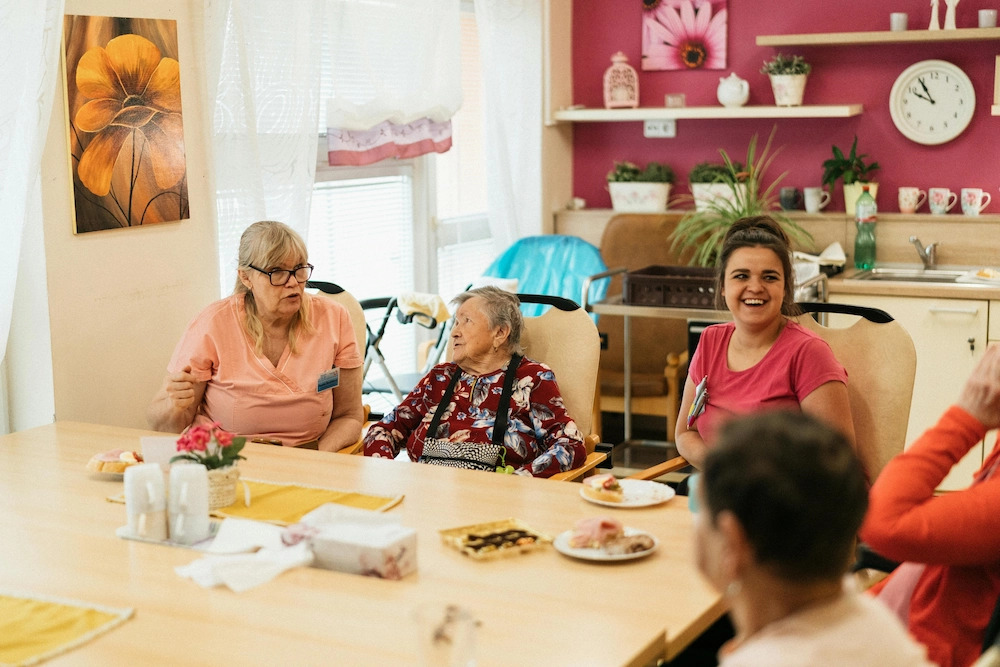
Illustrative image. Photographs of this home have not yet been added.
14 Thornhill
Residential Care
7 May 2026
North East Autism Society
6 beds
About 14 Thornhill
14 Thornhill is a residential care home located in Sunderland, North East. Its registered care categories include learning disabilities and younger adults. The home has 6 beds. CQC records an overall rating of Requires Improvement, published in September 2026. The home is operated by North East Autism Society.
Specialist Care
Fees and availability
We have not verified a current weekly fee for this home. Ask for a written quote based on the room and care needed, including any extra charges.
Check current vacancies, the admission assessment and visiting arrangements directly with the home.
Care and inspection details
Checked against the CQC register on 20 September 2026. This is a check of published information, not a visit to the home.
- Registered service
- Care home service without nursing
- Registered capacity
- 6 places — this is not a vacancy count
- Registration checked
- Registered · SR2 7LA
Registered care categories
Caring for adults under 65 yrs; Learning disabilities.
These describe the registration. The home must assess whether it can meet the individual person's needs and whether a place is available.
CQC ratings in more detail
Overall rating shown by CQC: .
Assessment published 8 September 2026. Assessment date recorded: 7 May 2026.
Read CQC's assessment overview
The following is CQC's published account of its assessment, published 8 September 2026. References to “we” mean CQC. It describes findings at that time.
Date of assessment: 1 June to 23 June 2026. 14 Thornhill is a residential care home that supports up to 6 people with learning disabilities and autistic people. At the time of the assessment there was 6 people using the service. We completed this assessment as part of our routine programme.
We assessed the service against ‘Right support, right care, right culture’ guidance to make judgements about whether the provider guaranteed people with a learning disability and autistic people respect, equality, dignity, choices, independence and good access to local communities that most people take for granted. We found the provider only partly met the principles of right support, right care and right culture. Right care was seen in the way staff treated people day to day. However, right support and right culture were less consistent because communication approaches, management oversight, environmental safety and person-centred planning were not always effective.
We found breaches of the Health and Social Care Act 2008 (Regulated Activities) Regulations relating to consent and governance. The provider has been asked to produce an action plan explaining how these issues will be addressed.
Systems used to support people's care, safety and wellbeing were in place and staff demonstrated a good understanding of the people they supported. Additional evidence submitted demonstrated that Individual Support Plans, Easy Read documentation, STEP plans, healthcare planning systems, governance arrangements, training oversight processes and organisational learning systems were in operation during the assessment period. Staff worked proactively with healthcare professionals, supported people to access healthcare services and activities, and generally provided care that reflected people's preferences and individual needs. The staff team was stable and people benefited from support from staff who knew them well.
However, whilst systems and documentation were present, they were not always consistently recorded, clearly structured or sufficiently robust to provide effective assurance. Care planning, risk management, governance records and decision-making processes did not always clearly evidence how people's needs, preferences, rights and outcomes were consistently assessed, reviewed and monitored. Governance systems had not consistently identified or addressed all of the concerns found during the assessment. As a result, improvements were required to ensure that person-centred care, oversight arrangements and outcome monitoring were consistently evidenced and embedded across the service.
We also found concerns about consent and the use of the Mental Capacity Act. Mental capacity assessments were not completed for specific decisions, and best-interest decisions were not always made consistently. As a result, systems were not always effective in protecting people’s rights, safety and wellbeing.
At the previous inspections in 2016 and 2019 shortfalls were identified in how the service was operated and the registered manager’s oversight of the home. We continued to find systems for monitoring outcomes and improving the service were not effective and lessons were not learnt.
Feedback was not always formally collected or reviewed, and there was limited evidence to show that lessons learned from incidents or feedback had led to lasting improvements.
We saw many examples of compassionate care and positive relationships between staff and people using the service.
People were supported by a caring and stable staff team who knew them well and treated them with kindness, dignity and respect. People were supported to access healthcare and stay connected with family, friends and their local community. Staff worked well with healthcare professionals to meet people’s needs and respond to changes in their health and wellbeing.
- Safe
- Effective
- Caring
- Responsive
- Well-led
Questions prompted by these ratings
- Safe: What changes have been made to medicines, staffing and safeguarding since this rating?
- Effective: How are staff training, nutrition and health outcomes checked now?
- Caring: How do staff protect privacy, dignity and each person’s choices?
- Responsive: How are care plans, activities and complaints adapted to each resident?
- Well-led: What has changed in management, checks and oversight since this rating?
These are questions for your visit, not a claim about conditions today.
Contains Care Quality Commission information under the Open Government Licence v3.0. Ratings and registration details can change after the date checked.
5 Questions to Ask on Your Visit
When visiting 14 Thornhill, consider asking...
- 1.What happens if my relative's care needs increase significantly -- will they have to move?
- 2.How do you handle concerns or complaints from families?
- 3.What does the monthly fee cover and what will cost extra?
- 4.How do you keep families informed about their relative's day-to-day wellbeing?
- 5.What happens if my relative is unhappy here?
5 Things to Look For on Your Visit
When you visit 14 Thornhill, look out for...
- 1.Do staff greet residents by name and stop to chat?
- 2.Are residents dressed, up and occupied, or sitting alone in front of a TV?
- 3.Does the home smell fresh and feel clean without being clinical?
- 4.Do residents look comfortable and at ease, or anxious and withdrawn?
- 5.Does the manager answer your questions openly or deflect?
Could the NHS fund 14 Thornhill's fees?
The average nursing home costs £1,535 per week. That's £79,820 a year. NHS Continuing Healthcare could cover all of it. No means test, no contribution from you.
Location
14 Thornhill Park, Sunderland, Tyne And Wear, SR2 7LA
14 Thornhill
CQC overall rating
Assessment date: 7 May 2026
Helpful Guides
Have a question about this care home?
Ask in our Community Forum and get a real answer from someone who's been through it.
Share what's on your mindFind Out If 14 Thornhill Is Right for You
Start the conversation and request a callback from this home.
A free daily companion for someone with dementia
Shows the date, weather, family photos, and a daily question. Set up in 10 minutes.
Other Care Homes Near SR2 7LA
Listings with similar recorded care types and specialisms are shown first. Confirm care needs and availability directly with each home.

Thorncliffe House
Thorncliffe, 15 Thornhill Park, Sunderland, Tyne and Wear
Residential care
0.0 miles away (straight-line distance)
Thornhill
21 Thornhill Park, Sunderland, Tyne and Wear
Residential care
0.0 miles away (straight-line distance)

No 9
9 Thornhill Park, Sunderland, Tyne and Wear
Residential care
0.0 miles away (straight-line distance)
Thorndale
8 Thornhill Park, Sunderland, Tyne and Wear
Residential care
0.0 miles away (straight-line distance)

Rosehill
31 Thornholme Road, Sunderland, Tyne and Wear
Residential care
0.1 miles away (straight-line distance)
Ashdale - Sunderland
14a Beresford Park, Sunderland, Tyne and Wear
Residential care
0.1 miles away (straight-line distance)