
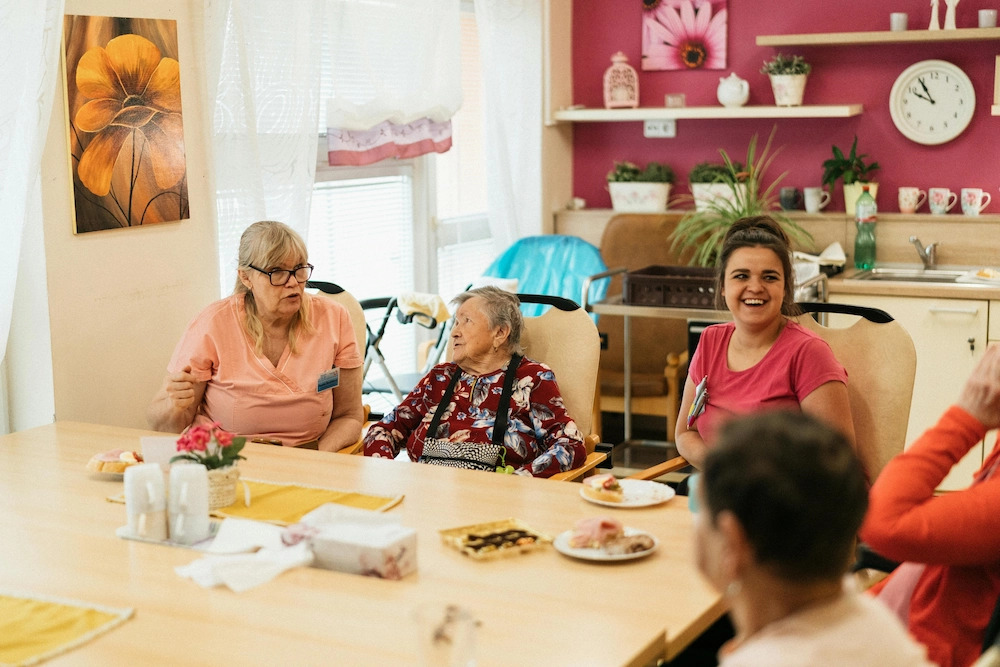
Illustrative image. Photographs of this home have not yet been added.
Meadowbank Residential Care Home
Residential Care
24 July 2026
Cedar House Care Home Limited
22 beds
About Meadowbank Residential Care Home
Meadowbank Residential Care Home is a residential care home located in Windsor and Maidenhead, South East. Its registered care categories include older people. The home has 22 beds. CQC records an overall rating of Good, published in August 2026. The home is operated by Cedar House Care Home Limited.
Specialist Care
Fees and availability
We have not verified a current weekly fee for this home. Ask for a written quote based on the room and care needed, including any extra charges.
Check current vacancies, the admission assessment and visiting arrangements directly with the home.
Care and inspection details
Checked against the CQC register on 21 September 2026. This is a check of published information, not a visit to the home.
- Registered service
- Care home service without nursing
- Registered capacity
- 22 places — this is not a vacancy count
- Registration checked
- Registered · SL6 1DA
Registered care categories
Caring for adults over 65 yrs.
These describe the registration. The home must assess whether it can meet the individual person's needs and whether a place is available.
CQC ratings in more detail
Overall rating shown by CQC: .
Assessment published 21 August 2026. Assessment date recorded: 24 July 2026.
Read CQC's assessment overview
The following is CQC's published account of its assessment, published 21 August 2026. References to “we” mean CQC. It describes findings at that time.
Meadowbank Residential Care Home provides 24-hour support and personal care for up to 22 older people.
Meadowbank Residential Care Home does not provide nursing support but provides care and accommodation for older people, some of whom may be living with dementia.
We carried out this assessment from 6 August to 14 August 2026. This service was previously rated as good. We carried out this assessment to confirm whether the rating of good remains accurate. This report does not provide detailed information on areas where we found practice continues to meet a good standard. Instead, we highlight key themes and people’s experience.
People were supported by staff who knew how to keep them safe. The registered manager and senior leaders at the home knew people well and ensured that care delivery systems, including risk assessments, were in place which were regularly audited.
Action was taken where improvements to care delivery systems were identified. This included involving people and their relatives in managing risks.
Safeguarding systems were in place to safeguard people from the risk of abuse. Staff were trained in safeguarding and were knowledgeable of safeguarding systems and recognising and reporting potential abuse. A member of staff told us, “First I would raise it [a concern] to our manager but we do have the option to go straight to the local authority safeguarding team. We have the number.”
Staff were recruited safely into the home. This included having robust shortlisting and interviewing procedures and documentation, gaining references from previous employers, completing a Disclosure and Barring Service (DBS) check, and checking right to work status. DBS checks provide information, including details about convictions and cautions held on the Police National Computer. The information helps employers make safer recruitment decisions. This meant appointable staff members were of good character to work with vulnerable people.
Staff told us that there was a team in place to ensure people were supported by regular staff. A staff member told us, “We never have a shortage of staff. We have never used agency staff all the time I have been here.”
Safe medication management systems were in place, and people received their medicines safely as prescribed. Staff ensured they followed infection prevention and control practices.
People, their relatives and our observations told us the home was clean and tidy. Staff ensured they followed infection prevention and control practices. A relative told us, “I think it's a really nice place. It's very clean. Parts of the home had recently been decorated, and plans were in place to decorate the remainder.
The registered manager was updating information so that all people were supported by staff who had the skills and knowledge to support them safely. A health care professional told us, “Every member of staff we have encountered has been warm, friendly, highly professional, and clearly so knowledgeable in the care they provide.”
The home worked in partnership with healthcare professionals, this meant that people’s care plans had the information they needed to provide the care people wanted and required. A health care professional told us, “The care home has been engaging well with our service. We are commissioned to provide training to care home staff to empower them so that they can do more for themselves. So far, they have been attending both face to face and virtual trainings.” Another health care professional told us, “I can tell they follow our recommendations as things are healing up as they should. I see that they take pressure relieving cushions around with people, so they have them wherever they are sitting.” A relative told us, “Staff all know them [my relative] and understand their physical and emotional needs. The staff always inform me of developments and I'm happy for him the reside here.”
The home followed the Mental Capacity Act 2005. Where people needed to have restrictions in place, to keep them safe, this was done in their best interests and followed correct legal procedures, known as Deprivation of Liberty Safeguards.
Care plans were person-centred, adequately detailed, and up to date. They contained information about people's life history and background, their interests and people important to them.
There was a team of senior leaders who provided oversight of the home. One member of staff told us, “There is an allocation for each shift, there is always a person in charge.”
Regular audits were completed to identify any issues within the home that needed resolving. There were systems in place to record accidents and incidents and care changed as a result to prevent recurrence.
Staff told us they liked working at the home, were treated fairly and were supported in their role. One member of staff told us, “[I like] the teamwork; the staff have really good [sic] co-operation together. If there is a problem everyone cooperates to solve it.”
The registered manager had sought feedback from people, their relatives, staff and professionals and this was acted upon. A relative told us, “When I have raised minor concerns, they were handled straightway." A member of staff told us, “We have an open-door policy with the manager.” Another told us, “The manager listens to us.”
- Safe
- Effective
- Caring
- Responsive
- Well-led
Read Meadowbank Residential Care Home's CQC record and reports.
Contains Care Quality Commission information under the Open Government Licence v3.0. Ratings and registration details can change after the date checked.
5 Questions to Ask on Your Visit
When visiting Meadowbank Residential Care Home, consider asking...
- 1.What happens if my relative's care needs increase significantly -- will they have to move?
- 2.How do you handle concerns or complaints from families?
- 3.What does the monthly fee cover and what will cost extra?
- 4.How do you keep families informed about their relative's day-to-day wellbeing?
- 5.What happens if my relative is unhappy here?
5 Things to Look For on Your Visit
When you visit Meadowbank Residential Care Home, look out for...
- 1.Do staff greet residents by name and stop to chat?
- 2.Are residents dressed, up and occupied, or sitting alone in front of a TV?
- 3.Does the home smell fresh and feel clean without being clinical?
- 4.Do residents look comfortable and at ease, or anxious and withdrawn?
- 5.Does the manager answer your questions openly or deflect?
Could the NHS fund Meadowbank Residential Care Home's fees?
The average nursing home costs £1,535 per week. That's £79,820 a year. NHS Continuing Healthcare could cover all of it. No means test, no contribution from you.
Location
44 Braywick Road, Maidenhead, Berkshire, SL6 1DA
Meadowbank Residential Care Home
CQC overall rating
Assessment date: 24 July 2026
Helpful Guides
Have a question about this care home?
Ask in our Community Forum and get a real answer from someone who's been through it.
Share what's on your mindFind Out If Meadowbank Residential Care Home Is Right for You
Start the conversation and request a callback from this home.
A free daily companion for someone with dementia
Shows the date, weather, family photos, and a daily question. Set up in 10 minutes.
Other Care Homes Near SL6 1DA
Listings with similar recorded care types and specialisms are shown first. Confirm care needs and availability directly with each home.

Normanhurst Residential Home
26 High Town Road, Maidenhead, Berkshire
Residential care
0.6 miles away (straight-line distance)
Herewards House
15 Ray Park Avenue, Maidenhead, Berkshire
Residential care
1.0 miles away (straight-line distance)
Bramerton
Upper Bray Road, Bray, Maidenhead, Berkshire
Residential care
1.2 miles away (straight-line distance)

Clara Court
21 Courthouse Road, Maidenhead, Berkshire
Residential care
1.2 miles away (straight-line distance)

9 Allenby Road
9 Allenby Road, Maidenhead, Berkshire
Residential care
1.2 miles away (straight-line distance)

16 Homeside Close
16 Homeside Close, Maidenhead, Berkshire
Residential care
1.6 miles away (straight-line distance)