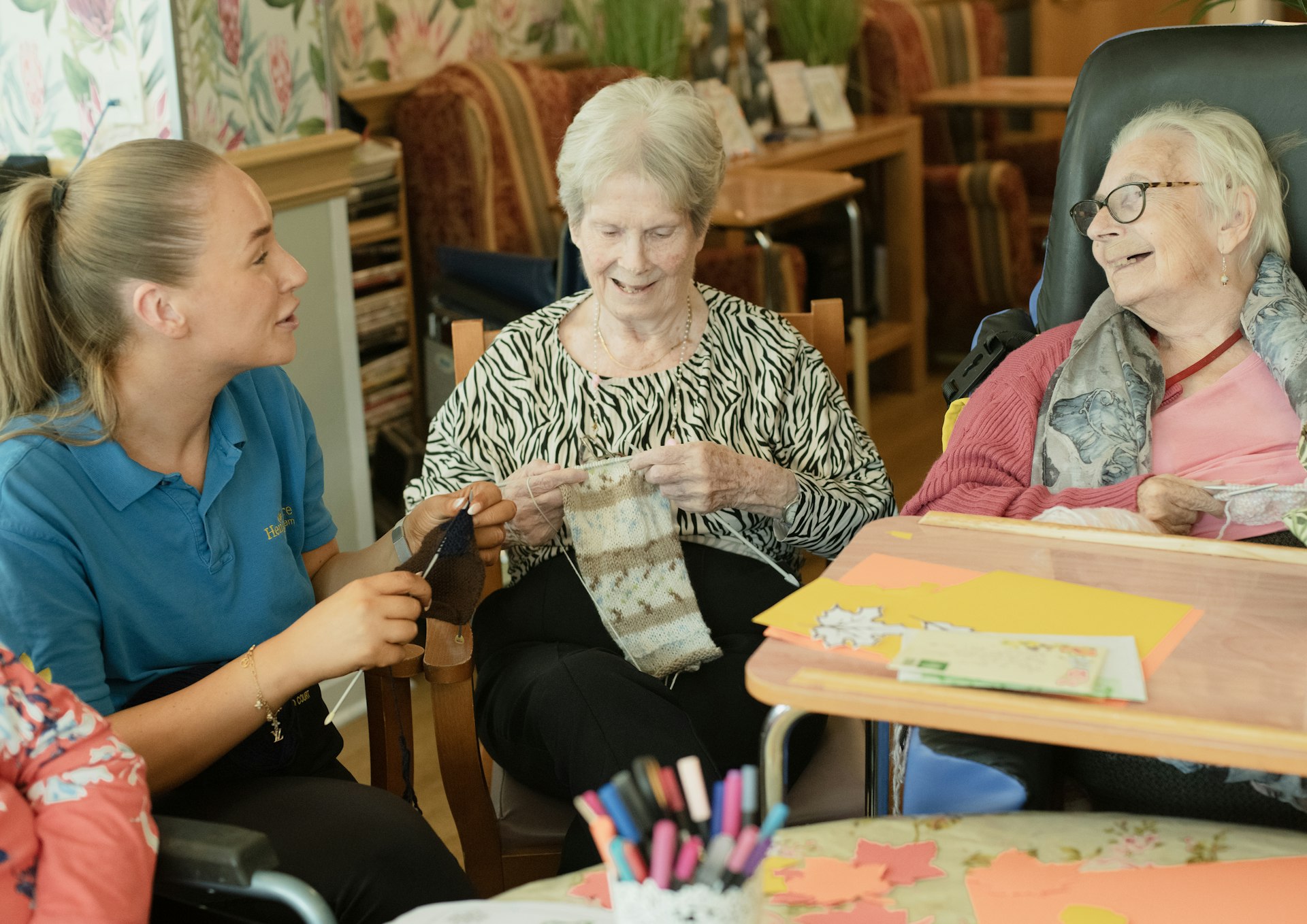
Illustrative image. Photographs of this home have not yet been added.
Kirklands
Residential Care
21 October 2025
Kirklands Care Limited
46 beds
How this home compares nearby
Of 10 care homes for older people within 10 miles, 7 are rated higher by CQC, 3 are the same and none are lower.
3 of these nearby homes have been inspected more recently than this one.
Based on CQC ratings, updated 17 November 2026. How we compare homes | See the nearby homes
Rating history
- Oct 2019
- Jan 2026
Rating dropped from Good to Requires Improvement in 2026.
Source: CQC inspection reports. Contains CQC data licensed under the Open Government Licence v3.0.
Costs and who runs this home
Run by Kirklands Care Limited, which runs 3 care homes in England: 2 rated Good and 1 Requires Improvement.
Average care home fees in the North West: £882 a week for residential care and £1,196 for nursing care (2024-25 averages). Self-funders usually pay more. See our care home costs guide.
- This home lists dementia care, which usually costs more than standard residential care. See dementia care home costs. NHS Continuing Healthcare may apply where someone's needs are primarily health needs.
- How to pay for a care home explains the council means test, what counts as capital and the funding you can ask to be assessed for.
About Kirklands
Kirklands is a residential care home in Cumberland, providing care for older people, including those living with dementia. Further details on how the service is run are set out in the CQC findings below.
Kirklands, in Cumberland, is a residential care home for up to 46 older people, some living with dementia. The CQC found the service overall requires improvement, with breaches relating to safe care, consent and governance. Risk assessments and care plans were inconsistent, medicines and infection control were not always well managed, and some staff did not feel confident raising concerns.
Inspectors found people and families spoke warmly of caring, friendly staff who knew them well, and everyone felt safe. However, leadership lacked a clear shared vision, oversight of quality was weak, and people were not always supported to give feedback or plan for future care needs. An action plan has been requested from the provider.
Source: CQC assessment, 29 January 2026
Specialist Care
Fees and availability
We have not verified a current weekly fee for this home. Ask for a written quote based on the room and care needed, including any extra charges.
Check current vacancies, the admission assessment and visiting arrangements directly with the home.
Care and inspection details
Checked against the CQC register on 20 September 2026. This is a check of published information, not a visit to the home.
- Registered service
- Care home service without nursing
- Registered capacity
- 46 places — this is not a vacancy count
- Registration checked
- Registered · CA13 0EE
Registered care categories
Caring for adults over 65 yrs; Dementia.
These describe the registration. The home must assess whether it can meet the individual person's needs and whether a place is available.
CQC ratings in more detail
Overall rating shown by CQC: .
Assessment published 29 January 2026. Assessment date recorded: 21 October 2025.
Read CQC's assessment overview
The following is CQC's published account of its assessment, published 29 January 2026. References to “we” mean CQC. It describes findings at that time.
Date of Assessment: 26 November to 09 December 2025. Kirklands is a residential care home for up to 46 older people, some of whom may be living with dementia. At the time of this assessment there were 43 people living at the service.
We undertook this assessment following information of concern received about how the service managed people’s care needs, people’s falls risks, how they investigated incidents and complaints and about staffing.
We assessed the quality statements from the key questions of safe, effective, caring, responsive and well-led.
We found three breaches of the legal regulations in relation to safe care and treatment, need for consent, and good governance. The service did not always ensure safeguarding procedures in place were effective. The service did not always ensure people’s risks were recorded and some people’s risk assessments contained inconsistent information. The service did not always ensure people’s consent was gained or recorded where required. The systems in place to assess and manage the quality and safety of the service were not always effective.
The service identified and investigated concerns about safety and took action to keep people safe where required. However, lessons learned from safety incidents were not always shared and discussed with the staff team to continually embed good practice. A lack of information or inconsistent information in people’s care plans and risk assessments meant there was a risk people would not experience a smooth transition between different services. The service had safeguarding procedures in place, and concerns were investigated and acted on. However, some staff told us they did not feel confident to raise concerns or whistle blow.’ Staff provided care to meet people’s needs that was safe, supportive and enabled people to do the things that mattered to them. However, care plans did not always include information about people’s risks. The service did not always assess or manage the risk of infection. However, the service detected and controlled potential risks in the care environment. They made sure equipment, facilities and technology supported the delivery of safe care. The service made sure there were enough qualified, skilled and experienced staff who worked together well to provide care that met people’s individual needs. The service made sure that medicines were safe and met people’s needs, capacities and preferences. However, topical preparations were not well managed, and we found occasional shortfalls in medicines record keeping.
The service did not always have effective procedures in place to ensure people's care plans included detailed and consistent information. The service did not always routinely monitor people’s care and treatment to continuously improve it. The service did not tell people about their rights around consent or respect these when delivering care and treatment. However, the service planned and delivered people’s care and treatment with them, including what was important and mattered to them. The service worked well across teams and services to support people. The service supported people to manage their health and wellbeing to maximise their independence.
The service always treated people with kindness, empathy, dignity and compassion. Staff treated colleagues from other organisations with kindness and respect. The service treated people as individuals and made sure people’s care, support and treatment met people’s needs and preferences. The service promoted people’s independence, so people knew their rights and had choice and control over their own care, treatment and wellbeing. The service listened to and understood people’s needs, views and wishes. Staff responded to people’s needs in the moment and acted to minimise any discomfort, concern or distress. The service had an employee engagement manager who visited the home to promote the wellbeing of staff. However, while some staff felt the management team supported their wellbeing, others did not feel valued or that they could speak confidentially.
The service made sure people were at the centre of their care and treatment choices and they decided, in partnership with people, how to respond to any relevant changes in people’s needs. The service understood the diverse health and care needs of people and their local communities, so care was joined-up, flexible and supported choice and continuity. The service made sure that people could access the care, support and treatment they needed when they needed it. Staff and leaders actively listened to information about people who are most likely to experience inequality in experience or outcomes and tailored their care, support and treatment in response to this. However, the service did not always supply appropriate, accurate and up-to-date information in formats that were tailored to individual needs. The service did not always make it easy for people to share feedback and ideas, or raise complaints about their care, treatment and support. People were not always supported to plan for important life changes, so they could have enough time to make informed decisions about their future, including at the end of their life.
The service did not have a clear shared vision, strategy and culture which was based on transparency, equity, equality and human rights, diversity and inclusion, and engagement. Not all leaders understood the context in which the service delivered care, treatment and support. They did not always embody the culture and values of their workforce and organisation. The service did not always foster a positive culture where staff felt they could speak up, and their voice would be heard. The service did not always value diversity in their workforce. They did not always work towards an inclusive and fair culture by improving equality and equity for people who worked for them. The service did not have clear responsibilities, roles, systems of accountability and good governance. They did not act on the best information about risk, performance and outcomes, or share this securely with others when appropriate. The service did not always focus on continuous learning, innovation and improvement across the organisation and local system. However, the service understood their duty to collaborate and work in partnership, so services worked seamlessly for people.
We have asked the provider for an action plan in response to the concerns found at this assessment.
- Safe
- Effective
- Caring
- Responsive
- Well-led
Questions prompted by these ratings
- Safe: What changes have been made to medicines, staffing and safeguarding since this rating?
- Effective: How are staff training, nutrition and health outcomes checked now?
- Well-led: What has changed in management, checks and oversight since this rating?
These are questions for your visit, not a claim about conditions today.
Contains Care Quality Commission information under the Open Government Licence v3.0. Ratings and registration details can change after the date checked.
5 Questions to Ask on Your Visit
When visiting Kirklands, consider asking...
- 1.What specific dementia training do staff receive and how recently?
- 2.How do you support a resident who becomes distressed or confused?
- 3.How does the home keep a record of a resident's life history and personal preferences?
- 4.How do you involve families as dementia progresses and communication becomes harder?
- 5.What happens when a resident's dementia reaches an advanced stage?
5 Things to Look For on Your Visit
When you visit Kirklands, look out for...
- 1.Is the environment calm, uncluttered and easy to navigate?
- 2.Do staff speak to residents with patience and dignity, even if they repeat themselves?
- 3.Are there memory cues around the home -- photos, familiar objects, clear signage?
- 4.Do residents seem settled and safe, or agitated and unsupervised?
- 5.Is there meaningful activity happening, or are residents just sitting quietly with nothing to do?
Choosing Kirklands?
Everything families in England need to know about paying for, choosing and living in a care home. 11 sections, 6 checklists, 7 letter templates.
£47, 14-day money back guarantee
Location
Sullart Street, Cockermouth, Cumbria, CA13 0EE
Kirklands
CQC overall rating
Assessment date: 21 October 2025
Helpful Guides
Have a question about this care home?
Ask in our Community Forum and get a real answer from someone who's been through it.
Share what's on your mindFind Out If Kirklands Is Right for You
Start the conversation and request a callback from this home.
Other Care Homes Near CA13 0EE
Listings with similar recorded care types and specialisms are shown first. Confirm care needs and availability directly with each home.
Hames Hall Residential Care Home
Gote Road, Cockermouth, Cumbria
Residential care
0.6 miles away (straight-line distance)
Clarendon Grange
Main Road, Great Clifton, Workington, Cumbria
Residential care
4.7 miles away (straight-line distance)
Home Farm
Camerton, Workington, Cumbria
Residential care
5.1 miles away (straight-line distance)
Ava House
16 Loweswater Road, Maryport, Cumbria
Residential care
5.5 miles away (straight-line distance)
Jah Jireh Maryport
74 Main Street, Ellenborough, Maryport, Cumbria
Residential care
5.6 miles away (straight-line distance)
The Dales
Main Street, Ellenborough, Maryport, Cumbria
Residential care
5.6 miles away (straight-line distance)