
When the Money Runs Out in a Care Home
Savings do not have to reach zero. Once capital falls to £23,250 the council can take over, after a needs assessment and a financial assessment. The catch is that it pays its own usual rate, which is often less than a home charges privately, and someone has to cover any difference.
Last updated: October 2026
In this guide
The Short Answer
Nobody is turned out of a care home because their savings ran down. What happens is a change of payer, and it is a process rather than an event.
When capital reaches £23,250, the person can ask the council to fund their care. The council assesses their needs, assesses their finances, and sets a personal budget. From that point it pays the home, and the resident contributes most of their income.
The part families do not expect is the rate. Councils pay their own usual rate for each type of care, and that is frequently less than a home charges a private resident. Where the home's fee is higher, the difference has to come from somewhere, and the rules on where are strict.
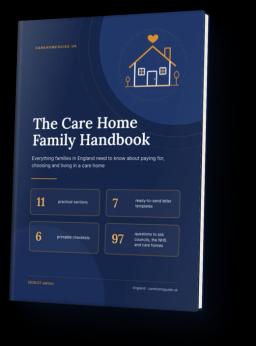
The Care Home Family Handbook
Worried about paying for care? Section 3 of the handbook explains the means test, when the house counts, the 12-week disregard and deferred payments, with a checklist and questions for the council.
See what's inside£47, 14-day money back guarantee
When to Contact the Council
Before the money runs out, not when it has. This is the single most useful thing on this page.
Two assessments have to happen before council funding can start: a needs assessment of the person in care, and a financial assessment of what they can afford to contribute. Neither is instant, and funding is not automatically backdated to the day you first rang. A gap between the savings running out and the funding starting is a gap somebody has to pay for.
A sensible trigger is when there are roughly three to six months' fees left. At the England average for residential care of £1,042 a week, six months is about £27,092, so this is not a small early warning. Work out your own figure from the actual weekly fee and the actual balance.
Ask the council for two things in writing: the date funding would start, and its usual rate for this type of care in this area.
What the Council Will Pay
Council support does not begin at zero. It begins at £23,250, and there is a middle band before capital stops counting at all.
Above £23,250: you pay the full cost
The person is a self-funder and pays the home's full fee. They can still ask the council for a needs assessment, which is free, and should do so before the money gets low.
Between £14,250 and £23,250: a tariff applies
The council can contribute. The person pays an assessed contribution from income, plus a tariff income of £1 a week for every £250, or part of £250, of capital above £14,250.
£14,250 or less: capital is ignored
Capital stops being counted entirely. Income is still assessed, so this is not the same as care being free. The council must leave a personal expenses allowance of at least £31.80 a week (2026/27, England) for personal spending.
Against that, the fees themselves run from £880 to £1,580 a week across the English regions (2024-25), averaging £1,042 for residential care and £1,372 for nursing care. Our care home costs guide has the figures region by region, and how much savings will I lose works the thresholds through with examples.
The Gap, and Who Can Fill It
A council sets a personal budget that must be enough to meet the assessed needs, based on its own usual rate. Councils set those rates themselves and they vary by area and by care type, so there is no national figure to quote. Ask your council for its usual rate for this type of care, in writing. Until you have that number you cannot work out whether there is a gap at all.
Where the home's fee is above the council's rate, the difference is a top-up, which councils usually call a third-party contribution. Who may pay it is tightly controlled:
- •A relative, friend or charity can pay a third-party top-up. The council must check it is affordable and sustainable and record the arrangement in writing.
- •The resident themselves can pay a first-party top-up only in limited circumstances: during a 12-week property disregard, under an appropriate deferred payment agreement, or for qualifying section 117 mental health aftercare. This is the rule families are most often surprised by, and it is why “they can just pay it out of their pension” usually does not work.
- •Nobody has to pay one. A council must offer at least one suitable placement at its own rate with no top-up. If it cannot, it must not ask for a top-up to make up the shortfall.
Think about the long run before agreeing. Stays often last years, so a top-up of £100 a week is £5,200 a year and £26,000 over five. Our full explanation of top-up fees covers negotiating them and what happens if one becomes unaffordable.
Could We Be Asked to Move?
Sometimes, yes. It is worth being straight about how that works, because the mechanism is a contract rather than anybody's judgement about the resident.
The condition that matters
A person's right to choose a particular home applies where four things hold: the home suits the assessed needs, a place is available, it would not cost the council more than the amount in the personal budget for that type of accommodation, and the home is willing to enter into a contract with the council at that rate, on the council's terms and conditions.
That last condition is the one that decides most cases. A home is a business with its own staffing and cost pressures, and it is entitled to decide which contracts it takes. Many homes do accept council rates and keep residents who have spent down. Some do not, or will only do so with a top-up in place.
What happens if the home will not contract at that rate
If no third party can cover the difference, the council still has a duty to meet the assessed needs, and it may propose a different placement to do so. Ask for the proposal in writing, ask what weight has been given to the resident's wellbeing and to the disruption of a move, and ask what alternatives were considered. A move has to be a way of meeting needs, not simply the cheapest option on a list.
Talk to the home early, and openly
The home manager usually knows long before you do how this tends to go, and whether they have council-funded residents already. Ask them directly: do you contract with the council, at what rate, and what would you need in order to keep this placement. Ask what notice the contract requires on both sides. Homes generally prefer a settled resident to an empty room, and a conversation months ahead gives everyone options that a conversation in week one does not.
What Protects You
Someone who has been paying their own way is not a second-class applicant. Statutory guidance says so directly: the rules on choice of accommodation and additional costs apply equally to people entering care for the first time, people already placed by a council, and people who have been self-funders but are on the verge of needing council support because their resources are diminishing.
Three things follow from that, and they are worth naming in the conversation:
- •The choice of home must be a genuine choice across suitable provision, not limited to homes the council already contracts with, and not limited to its own geographical area.
- •The personal budget must be enough to meet the assessed needs. A council must not use a top-up to patch a budget that is too low, and must not ask for one simply because it has no suitable placement available at its rate.
- •Any top-up agreement must be recorded in writing, with the consequences set out if it later fails.
Assessment and care planning are free. A council may not charge for either, whatever the person's savings.
Benefits Change Too
This is the part that catches people out, because it lands in the same month as the funding change and pulls in the opposite direction.
Attendance Allowance, and the care part of PIP and DLA, stop after 28 days in a care home once the council, NHS-funded nursing care or Continuing Healthcare is paying. If the higher rate of Attendance Allowance was coming in at £114.60 a week, that income goes.
While the person is a self-funder, those benefits continue. So the switch to council funding is not purely a gain: the fees are covered but some income disappears. Report the change promptly either way, because an overpayment has to be paid back.
NHS-funded Nursing Care is different again. It is paid to the home rather than to the resident, at £267.68 a week for 2026/27 in England, so an award does not necessarily reduce the invoice. Read our guide to NHS-funded nursing care.
If You Own Property
Owning a house but having no cash left is a different problem from running out of money altogether, and it has its own answers.
Ask about a deferred payment agreement, where the council pays the fees and recovers them from the property later. Eligibility and suitable security are required, and it is not automatic. Note that a deferred payment agreement is also one of the few routes by which a resident may pay their own top-up.
And check first whether the property should be counted at all. If a partner, a relative aged 60 or over, an incapacitated relative or a child under 18 lives there, it is disregarded in full. See what happens if someone still lives in the house, or our guides to funding options and selling a parent's house.
How to Push Back
Most of this comes down to getting decisions written down. Verbal figures cannot be reviewed.
- 1.Ask for it in writing. The needs assessment, the personal budget and how it was arrived at, the council's usual rate for this care type, and any charging decision.
- 2.Ask for a review. Every council has a route to reconsider an assessment or a budget. Ask what it is and what evidence would help.
- 3.Use the complaints process. Then the Local Government and Social Care Ombudsman, which investigates councils and care providers and can recommend remedies including financial redress. See how to complain.
- 4.Get independent advice. Age UK's free advice line is 0800 678 1602. A SOLLA-registered adviser can look at a top-up you are being asked to sustain for years.
Funding information checked 26 October 2026
Council and NHS funding rules here refer to England. The other UK nations have different arrangements, and individual eligibility depends on the relevant assessments. Council rates vary, so figures for your own area have to come from your own council.
- DHSC: 2026/27 capital limits and personal expenses allowance
- Care and support statutory guidance: choice of accommodation, additional payments and the position of former self-funders (Annex A, paragraphs 3, 5 and 6), top-ups and who may pay them, charging for assessment and care planning (paragraph 8.14), and tariff income (Annex B)
- Claiming benefits if you are going into a care home: most benefits stop within 28 days where the stay is funded by the council, NHS-funded nursing care or Continuing Healthcare
- Attendance Allowance rates (checked 26 October 2026)
Cost information
- Weekly fees: LaingBuisson, Care Homes for Older People UK market report, average weekly fees for 2024-25, as reported by Which? on 9 March 2025. Averages across all residents including council-funded places, so self-funders usually pay more.
- This guide does not quote a typical council rate, because councils set their own and no published national figure reflects what yours pays. Ask your council for its usual rate in writing.
Frequently Asked Questions
What happens when care home savings run out?
When should I tell the council the money is running low?
Will the council pay the full care home fee?
Can we be asked to move to a different care home?
Can the person in care pay the top-up themselves?
Does the council take the whole of my pension?
Do my savings have to drop to zero?
What happens to Attendance Allowance when the council takes over?
What if we own a house but no cash?
Can we challenge the council's decision?
The Care Home Family Handbook
Worried about paying for care? Section 3 of the handbook explains the means test, when the house counts, the 12-week disregard and deferred payments, with a checklist and questions for the council.
See what's inside£47, 14-day money back guarantee
Have a question this guide didn't answer?
Ask in our Community Forum and get a real answer from someone who's been through it.
Share what's on your mindRelated Guides
Find care homes in your area
Browse CQC-registered care homes by region, with ratings, inspection dates, care types and contact details. Free to search, no sign-up.
The Care Home Family Handbook
Worried about paying for care? Section 3 of the handbook explains the means test, when the house counts, the 12-week disregard and deferred payments, with a checklist and questions for the council.
See what's inside£47, 14-day money back guarantee