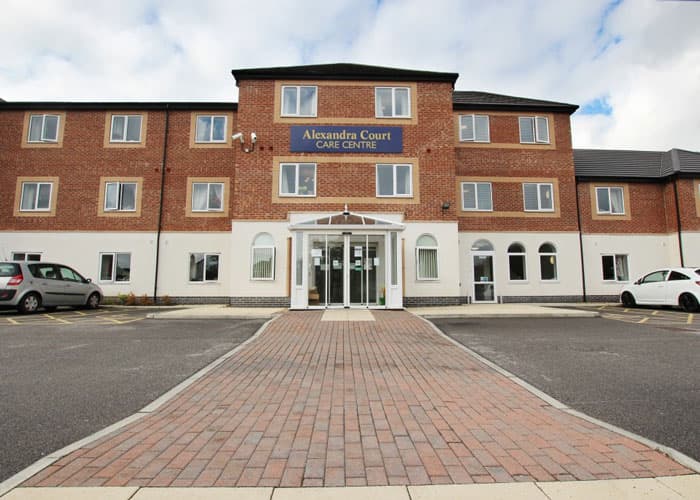
Alexandra Court Care Centre
Residential Care
7 July 2025
Highgate Care Services (2025) Ltd
84 beds
About Alexandra Court Care Centre
Alexandra Court Care Centre is a residential care home in Kingston upon Hull, providing personal care for older people, including some living with dementia. Details of the CQC's most recent findings are set out below.
Alexandra Court Care Centre is a care home providing nursing and personal care for up to 84 people, including some living with dementia. At the time of assessment 68 people were living there. The CQC found the service Requires Improvement overall and identified a breach relating to safe care and treatment, alongside continuing concerns about governance.
Inspectors found staff were often task focused, with inconsistent recording of care such as fluid intake, repositioning and continence support. Families felt poorly informed and involved, activities were limited, and confidence in local leadership was low. Some improvements had been made around notifications and safeguarding, but oversight and quality checks were not yet consistent.
Source: CQC assessment, 16 November 2025
Specialist Care
Facilities & Amenities
Photographs of the home
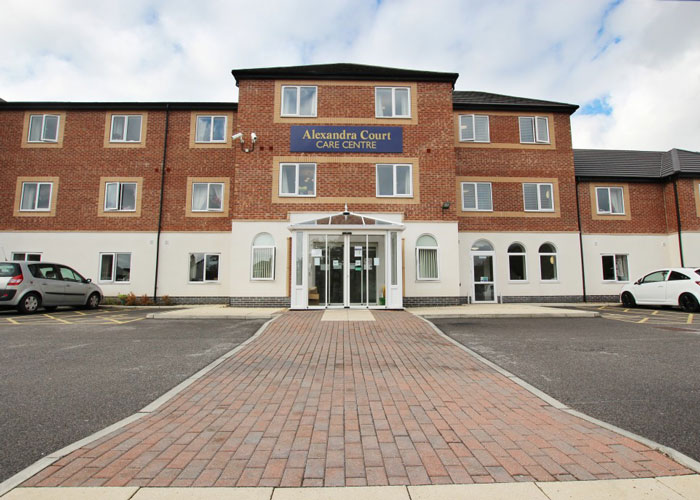
Practical details from the provider
- Bedrooms have en-suite facilities, and residents can bring personal possessions to make the space their own.
- Residents can use gardens, lounges and an on-site beauty salon.
Published on the provider's website, checked 20 September 2026. Confirm arrangements with the home before deciding.
Fees and availability
We have not verified a current weekly fee for this home. Ask for a written quote based on the room and care needed, including any extra charges.
Check current vacancies, the admission assessment and visiting arrangements directly with the home.
Care and inspection details
Checked against the CQC register on 20 September 2026. This is a check of published information, not a visit to the home.
- Registered service
- Care home service without nursing
- Registered capacity
- 84 places — this is not a vacancy count
- Registration checked
- Registered · HU9 3TR
Registered care categories
Caring for adults over 65 yrs; Caring for adults under 65 yrs; Dementia.
These describe the registration. The home must assess whether it can meet the individual person's needs and whether a place is available.
CQC ratings in more detail
Overall rating shown by CQC: .
Assessment published 16 November 2025. Assessment date recorded: 7 July 2025.
Read CQC's assessment overview
The following is CQC's published account of its assessment, published 16 November 2025. References to “we” mean CQC. It describes findings at that time.
Date of assessment: 28 July to 9 October 2025. We visited the service on 28 July and 5 August 2025. Alexandra Court Care Centre is a 'care home.' People in care homes receive accommodation and nursing and/or personal care as a single package under one contractual agreement dependent on their registration with us. CQC regulates both the premises and the care provided, and both were looked at during this assessment. Alexandra Court Care Centre can provide personal care for up to 84 people. At the time of our assessment there were 68 people using the service, some of whom were living with dementia. We carried out this assessment under Section 60 of the Health and Social Care Act 2008 (the Act) as part of our regulatory functions. We checked whether the provider was meeting the legal requirements and regulations associated with the Act. The provider was in breach of the legal regulation relating to people’s safe care and treatment, specifically how risks were assessed and managed. The provider was previously in breach of the legal regulation in relation to good governance. Improvements were not found at this assessment, and the provider remained in breach of this regulation. We requested improvement action plans from the provider in relation to these breaches of regulation. The provider was previously in breach of legal regulations in relation to notifying CQC about incidents and safeguarding. Improvements were found at this assessment and the provider was no longer in breach of these regulations.
Staff did not always listen to concerns about safety and did not always investigate and report safety events. Lessons were not always learnt to continually identify and embed good practice. The provider did not always work well with people and healthcare partners to understand what being safe meant to them and how this could be achieved. Whilst there were policies and processes in place to keep people safe, some processes in relation to the Mental Capacity Act 2005 were not followed closely. Staff did not provide care to meet people’s needs which was safe, supportive and enabled people to do the things which mattered to them. People’s care was not always delivered in line with their care plans. Whilst there were sufficient members of staff on shift, deployment of staff could have been managed more effectively around mealtimes. Members of staff were often task focussed and did not engage with people proactively. The provider did not always make sure medicines and treatments were safe and met people’s needs, capacities and preferences.
People’s care was not always assessed and reviewed effectively and, as a result, there were instances where care was not always delivered in line with people’s care plans. There were inconsistencies in how people’s fluid intake was monitored and reviewed. We observed people’s mealtime experience and found some improvements were required. People’s care plans and daily care notes did not always accurately reflect care provided. There were inconsistencies in recording of repositioning for people and there were also gaps in recording continence care for people.
Members of staff were task focussed and did not always interact with people or have conversations with them. There was limited evidence of people being supported to get involved in activities. We did observe an activity session taking place on the day of inspection but information from care notes did not evidence activities and engagement were the norm. Staff morale in the care home was low as a result of inconsistent management and leadership.
Care was not always person-centred and members of staff were focussed on completing tasks rather than on people. Staff did not always involve people in decisions about their care or tell them what had changed as a result. People's families told us they did not have access to people's care plans and did not feel listened to or involved. People had ReSPECT forms in place but conversations and discussions had not always taken place with people and their families about end-of-life planning.
The provider’s core values were clearly articulated and displayed on their website with the organisational vision defined as ‘Kindness is key’. Our observations in the care home and people’s experience highlighted inconsistencies in understanding these values at an operational staffing level which impacted on the quality of care and support provided. At the time of the inspection there was limited confidence in the leadership and management in the care home. When we spoke to people and their families about the management team, the responses were mainly negative about the style of management and delivery of care. Oversight and governance by the local management team was not effective. Regular management walkarounds, audits and quality checks were not completed consistently. The provider had developed new governance documents which were in the process of being implemented and reviewed. These new governance systems needed to be embedded, reviewed and sustained by the new management team.
- Safe
- Effective
- Caring
- Responsive
- Well-led
Questions prompted by these ratings
- Safe: What changes have been made to medicines, staffing and safeguarding since this rating?
- Effective: How are staff training, nutrition and health outcomes checked now?
- Caring: How do staff protect privacy, dignity and each person’s choices?
- Responsive: How are care plans, activities and complaints adapted to each resident?
- Well-led: What has changed in management, checks and oversight since this rating?
These are questions for your visit, not a claim about conditions today.
Contains Care Quality Commission information under the Open Government Licence v3.0. Ratings and registration details can change after the date checked.
5 Questions to Ask on Your Visit
When visiting Alexandra Court Care Centre, consider asking...
- 1.What specific dementia training do staff receive and how recently?
- 2.How do you support a resident who becomes distressed or confused?
- 3.How does the home keep a record of a resident's life history and personal preferences?
- 4.How do you involve families as dementia progresses and communication becomes harder?
- 5.What happens when a resident's dementia reaches an advanced stage?
5 Things to Look For on Your Visit
When you visit Alexandra Court Care Centre, look out for...
- 1.Is the environment calm, uncluttered and easy to navigate?
- 2.Do staff speak to residents with patience and dignity, even if they repeat themselves?
- 3.Are there memory cues around the home -- photos, familiar objects, clear signage?
- 4.Do residents seem settled and safe, or agitated and unsupervised?
- 5.Is there meaningful activity happening, or are residents just sitting quietly with nothing to do?
Could the NHS fund Alexandra Court Care Centre's fees?
The average nursing home costs £1,535 per week. That's £79,820 a year. NHS Continuing Healthcare could cover all of it. No means test, no contribution from you.
Location
340 Southcoates Lane, Hull, North Humberside, HU9 3TR

Alexandra Court Care Centre
CQC overall rating
Assessment date: 7 July 2025
Helpful Guides
Have a question about this care home?
Ask in our Community Forum and get a real answer from someone who's been through it.
Share what's on your mindFind Out If Alexandra Court Care Centre Is Right for You
Start the conversation and request a callback from this home.
A free daily companion for someone with dementia
Shows the date, weather, family photos, and a daily question. Set up in 10 minutes.
Other Care Homes Near HU9 3TR
Listings with similar recorded care types and specialisms are shown first. Confirm care needs and availability directly with each home.

Country Court
North Country Court, Southcoates Lane, Hull, Humberside
Residential care
0.1 miles away (straight-line distance)

Wilton Lodge - Care Home
402 Holderness Road, Hull, Humberside
Residential care
0.5 miles away (straight-line distance)
Churchill House
745 Holderness Road, Hull, North Humberside
Residential care
0.7 miles away (straight-line distance)
Birkdale Court
Birkdale Way, Hull
Residential care
0.7 miles away (straight-line distance)
Maybury Court Residential Home
802-808 Holderness Road, Hull, Humberside
Residential care
0.8 miles away (straight-line distance)
Kingston upon Hull City Council - 220 Preston Road
220 Preston Road, Kingston-upon-Hull, Humberside
Residential care
0.9 miles away (straight-line distance)