
How to Appeal a CHC Decision
A refusal is not the end of the road. There are three stages: local resolution with the ICB, an Independent Review Panel through NHS England, and the Parliamentary and Health Service Ombudsman. Each has its own time limit and its own limits on what it can look at.
Last updated: November 2026
In this guide
The Short Answer
If your relative has been refused NHS Continuing Healthcare, there are three stages available to challenge it, in order. First, local resolution with the Integrated Care Board (ICB) that made the decision. If that does not resolve it, an Independent Review Panel arranged by NHS England. If you remain unhappy with how the whole process was handled, the Parliamentary and Health Service Ombudsman.
Each stage has its own time limit, and each one can only look at certain things. None of them exists to re-run the clinical assessment from scratch, so the strongest appeals are the ones that say exactly what went wrong with the original decision, not just that the family disagrees with the outcome.
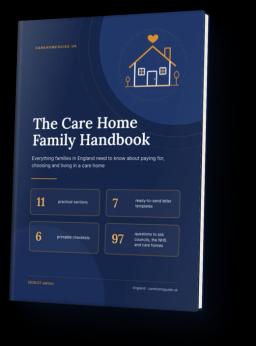
The Care Home Family Handbook
The handbook's NHS funding section walks you through the Checklist, all 12 domains, Fast Track and how to challenge a refusal, with ready-to-send letters.
See what's inside£47, 14-day money back guarantee
Stage 1: Local Resolution
Every ICB must have a published local resolution process. You have six months from the date you are given the eligibility decision to ask for a review. This six month figure comes from NHS England's Local Resolution Best Practice Guidance, which ICBs follow to meet the National Framework's requirement that they publish a fair, transparent process with clear timescales. Check the wording in your own decision letter, since the exact deadline is set by the ICB's own process rather than written into the National Framework as a number.
The ICB is expected to deal with a review request within three months of receiving it, and to aim to give you an outcome in that time. That is an expectation rather than a guarantee.
The process usually runs in two steps. First, an informal discussion, often by phone, where the ICB explains how it reached the decision and you can raise what you think was missed or misunderstood. If that does not resolve things, a formal Local Resolution meeting follows, with a senior ICB representative from outside the original multidisciplinary team involved, so the review is not simply the same people confirming their own decision.
Be specific about what you are challenging: which domain scores you disagree with, what evidence supports a different score, and why the original assessment got it wrong. A general complaint that your relative needs more care is far weaker than a domain by domain argument.
Stage 2: Independent Review Panel
If local resolution does not change the decision, you can ask NHS England for an Independent Review (IR). NHS England will not normally accept an IR application until the ICB has completed local resolution, so this stage comes after, not instead of, stage one. The exception is where going through local resolution would cause undue delay, in which case NHS England can agree to go straight to an IR.
- ✓Once you request the application form, you have six weeks to return it for the application to proceed
- ✓NHS England says the process typically takes three to six months from there
- ✓New evidence is only allowed if it would have been reasonable for the ICB to have obtained it already but did not. This is also your last opportunity to add anything, nothing further can be introduced later in the process
- ✓The panel is independent of the ICB that made the original decision
Stage 3: The Ombudsman
Once the NHS process has run its course, usually local resolution followed by an Independent Review, you can complain to the Parliamentary and Health Service Ombudsman (PHSO) if you remain unhappy with how your case was handled. The Ombudsman is independent of the NHS entirely.
You normally need to bring the complaint within 12 months of the final response, though the Ombudsman has some discretion to look at a complaint made later if there is good reason for the delay.
The Ombudsman looks at whether the process was handled properly, not at scoring the Decision Support Tool domains again. If it finds fault, it can recommend a remedy, including financial redress.
What the Independent Review Panel Cannot Look At
NHS England is explicit that the Independent Review process cannot consider:
- •the content of the eligibility criteria itself
- •the type or location of any care package offered
- •the treatment or services received
- •an ICB's refusal to carry out a full assessment after a negative Checklist
- •the calculation of any redress payment
Those go through the NHS complaints procedure instead. See our guide to complaining about a care home for how that route works.
Sources
- NHS England, Local Resolution Best Practice Guidance (June 2022): the six month window to request a review (paragraph 11) and the three month ICB target (paragraph 12), building on the National Framework's requirement that ICBs publish a local resolution process (paragraph 215).
- NHS England, NHS Continuing Healthcare: independent review process (version 3, July 2023): the six week window to return the application form, the three to six month typical timescale, what the IR process can and cannot look at, and the rule on new evidence.
- Parliamentary and Health Service Ombudsman: the 12 month window to bring a complaint, and that the organisation's own process must normally be completed first.
- National Framework for NHS Continuing Healthcare and NHS-funded Nursing Care (DHSC, July 2022, revised and corrected July 2023).
This guide covers England. Scotland, Wales and Northern Ireland have separate continuing care arrangements.
Frequently Asked Questions
How long do I have to request a review after a CHC refusal?
How long does local resolution take?
Can I go straight to the Independent Review Panel?
What can the Independent Review Panel not do?
Can I introduce new evidence at the Independent Review stage?
What does the Ombudsman do?
The Care Home Family Handbook
The handbook's NHS funding section walks you through the Checklist, all 12 domains, Fast Track and how to challenge a refusal, with ready-to-send letters.
See what's inside£47, 14-day money back guarantee
Have a question this guide didn't answer?
Ask in our Community Forum and get a real answer from someone who's been through it.
Share what's on your mindRelated Guides
Find care homes in your area
Browse CQC-registered care homes by region, with ratings, inspection dates, care types and contact details. Free to search, no sign-up.
The Care Home Family Handbook
The handbook's NHS funding section walks you through the Checklist, all 12 domains, Fast Track and how to challenge a refusal, with ready-to-send letters.
See what's inside£47, 14-day money back guarantee