
Fast Track CHC for End of Life Care
A separate, faster route into NHS Continuing Healthcare for someone whose condition is deteriorating rapidly. No Checklist, no Decision Support Tool, and a care package that should usually be in place within 48 hours of the form being received.
Last updated: November 2026
In this guide
The Short Answer
If your relative's condition is deteriorating quickly and may be entering a terminal phase, there is a separate route into NHS Continuing Healthcare that bypasses the standard Checklist and full assessment entirely. It is called the Fast Track Pathway, and most families have never heard of it until a clinician mentions it, or until they ask.
A clinician who knows the person's care, usually a hospital consultant, a GP, or a hospice doctor or nurse, completes a short form setting out why the criteria are met. There is no scoring exercise and no multidisciplinary team meeting required first. Once the NHS integrated care board (ICB) receives the completed form, it should act urgently: the time taken to agree and commission the care package should not usually exceed 48 hours.
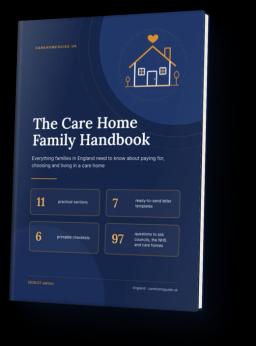
The Care Home Family Handbook
The handbook's NHS funding section walks you through the Checklist, all 12 domains, Fast Track and how to challenge a refusal, with ready-to-send letters.
See what's inside£47, 14-day money back guarantee
What Fast Track Is
NHS Continuing Healthcare (CHC) is NHS funding for the full cost of someone's care where their primary need is a health need. Getting there normally means a Checklist, then a full assessment using the Decision Support Tool (DST) with a multidisciplinary team. That process can take weeks.
The Fast Track Pathway Tool exists for people who do not have weeks. Where a clinician completes it properly, with clear reasons why the person meets the criteria, it is in itself sufficient to establish eligibility. No Checklist and no DST are required.
Fast Track can be used in any setting: hospital, a person's own home, or a care home where they wish to remain.
Who It's For
The test has two parts: the person has a rapidly deteriorating condition, and that condition may be entering a terminal phase.
Both parts are read more broadly than most families assume.
- • “Rapidly deteriorating” is not meant to be read narrowly as a specific or short time frame of life remaining.
- • “May be entering a terminal phase” is not intended to be restrictive to only situations where death is imminent.
In other words, Fast Track is not reserved only for the final days of life. Someone can have few symptoms at the moment of assessment yet still meet the criteria if the nature of their condition makes rapid deterioration clearly foreseeable. The decision is the clinician's to make, based on the person's needs rather than a diagnosis or a prognosis expressed in weeks.
How to Request It
Fast Track has to be completed by an “appropriate clinician”: a registered nurse or registered medical practitioner who is responsible for the person's diagnosis, treatment or care. In practice, this usually means:
- ✓The hospital consultant managing the person's primary condition
- ✓A GP who knows the person's condition well
- ✓A hospice doctor or nurse, where one is already involved
If you believe Fast Track might apply but no clinician has raised it, ask the one who is responsible for the person's care to consider completing the form. You cannot complete it yourself, but you can ask for it to be considered, and you can put your reasons in writing so the clinician has something to respond to.
The 48 Hour Rule
Once the ICB receives a properly completed Fast Track Pathway Tool, it must accept and act on it immediately. The National Framework is specific about what that means in practice: commissioning the care package, not just issuing a decision, should not usually take longer than 48 hours from receipt of the completed form.
That is a care package actually being arranged and put in place, not a letter confirming eligibility while care is sorted out later. ICBs are expected to have processes ready in advance, such as arrangements for urgently providing equipment, so that delay in delivering the care package is minimal.
If 48 hours has passed since a completed Fast Track form was submitted and no care package is in place, that is a fair basis to ask the ICB directly what is causing the delay.
If the Clinician Says No
Not every family will have a clinician agree that Fast Track applies, and that is not the end of the road. Ask for the reasoning in writing: it helps you understand the decision, and it gives you something concrete if you want a second opinion.
Fast Track is one route into NHS Continuing Healthcare, not the only one. Where it does not apply, the standard route remains open: a Checklist, and if that is positive, a full assessment using the Decision Support Tool. Many people with advanced or progressive conditions, including dementia, qualify through that route rather than Fast Track.
After Fast Track Is Awarded
Fast Track funding is not indefinite. Once someone is found eligible for NHS Continuing Healthcare by any route, the usual review cycle applies: a review within three months of the decision, then at least annually after that, to check the care plan still fits the person's needs.
For Fast Track specifically, there is an added protection: no one identified through the Fast Track Pathway Tool who is eligible for NHS Continuing Healthcare should have that funding removed without their eligibility being reconsidered through a full Decision Support Tool completed by a multidisciplinary team. Funding cannot simply be switched off because someone has stabilised; a proper reassessment has to happen first, and any proposed change must be explained in writing with the right to request a review.
Sources
- National Framework for NHS Continuing Healthcare and NHS-funded Nursing Care (DHSC, July 2022, revised and corrected July 2023). The Fast Track Pathway Tool, who can complete it, how it is used in any setting, and the 48 hour expectation for commissioning the care package: paragraphs 240 to 269. The three month and annual review cycle that applies once someone is eligible for NHS Continuing Healthcare: paragraphs 201 to 211.
- NHS: Continuing Healthcare, the plain English overview of eligibility and assessment.
This guide covers England. Scotland, Wales and Northern Ireland have separate continuing care arrangements.
Frequently Asked Questions
Does Fast Track mean no Checklist or DST?
Does Fast Track only apply if death is expected very soon?
Can Fast Track be requested at home, not just in hospital?
Who can complete the Fast Track form?
What if the clinician does not think Fast Track applies?
Does Fast Track funding last forever?
The Care Home Family Handbook
The handbook's NHS funding section walks you through the Checklist, all 12 domains, Fast Track and how to challenge a refusal, with ready-to-send letters.
See what's inside£47, 14-day money back guarantee
Have a question this guide didn't answer?
Ask in our Community Forum and get a real answer from someone who's been through it.
Share what's on your mindRelated Guides
Find care homes in your area
Browse CQC-registered care homes by region, with ratings, inspection dates, care types and contact details. Free to search, no sign-up.
The Care Home Family Handbook
The handbook's NHS funding section walks you through the Checklist, all 12 domains, Fast Track and how to challenge a refusal, with ready-to-send letters.
See what's inside£47, 14-day money back guarantee