Carer's Allowance
Carer's Allowance is £86.45 a week if you care for someone 35 hours a week. Check who qualifies, the £204 earnings limit, how to claim and what happens if they move into a care home.
Last updated: October 2026
All figures checked against GOV.UK, mygov.scot and Carers UK on 18 October 2026.
What is Carer's Allowance?
Carer's Allowance is a benefit for people who spend at least 35 hours a week caring for someone with a disability or long-term illness. You do not have to be related to the person or live with them.
It is paid by the Department for Work and Pensions in England and Wales. If you live in Scotland, you apply for Carer Support Payment instead (see below).
The Care Home Family Handbook
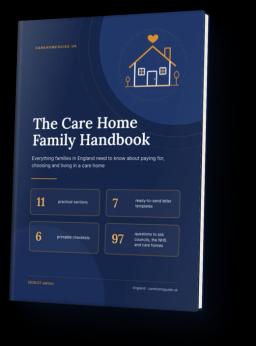
The handbook covers respite and short stays: who pays, booking privately and using a short stay as a trial.
See what's inside£47, 14-day money back guarantee
How much is Carer's Allowance?
Carer's Allowance is £86.45 a week.
It counts as taxable income, so you may pay tax on it if your total income is above your Personal Allowance. You get one payment, even if you care for more than one person.
If you are under State Pension age, you also get National Insurance credits each week you receive it, which help protect your State Pension.
Who can get Carer's Allowance?
You can usually get Carer's Allowance if all of these apply:
- •you are 16 or over
- •you care for someone for at least 35 hours a week
- •the person you care for gets a qualifying disability benefit (listed below)
- •you earn £204 or less a week, after tax, National Insurance and expenses
- •you are not in full-time education, and you study less than 21 hours a week
- •you have been in England, Scotland or Wales for at least 2 of the last 3 years
- •you normally live in England or Wales
The 35 hours can include time spent helping with personal care, cooking, cleaning, shopping, managing medication or keeping the person safe. It does not have to be 5 hours every day, as long as the weekly total reaches 35.
Which benefits must the person you care for get?
The person you care for must already get one of these:
- •Personal Independence Payment (daily living component)
- •Disability Living Allowance (middle or highest care rate)
- •Attendance Allowance
- •Pension Age Disability Payment
- •Adult Disability Payment (daily living component, standard or enhanced rate)
- •Scottish Adult Disability Living Allowance (middle or highest care rate)
- •Child Disability Payment (middle or highest care rate)
- •Constant Attendance Allowance at or above the normal maximum rate with Industrial Injuries Disablement Benefit, or at the basic (full day) rate with a War Disablement Pension
- •Armed Forces Independence Payment
If the person you care for is older and has not claimed Attendance Allowance, it is worth helping them apply first. Without it, you cannot get Carer's Allowance. Read the Attendance Allowance section of our care home costs guide.
The earnings limit
You can work and still get Carer's Allowance, as long as your earnings are £204 a week or less after tax, National Insurance and some expenses.
Expenses you can deduct include half of what you pay into a pension, and some costs of paying someone to look after the person you care for, or your children, while you work.
The limit is a cliff edge. If you earn even £1 over it, you lose the whole payment for that week, so keep a careful eye on extra hours or overtime.

How to claim
You can apply online on GOV.UK. If you cannot apply online, you can apply by post using form DS700, or call the Carer's Allowance Unit to ask for a form.
You can backdate your claim by up to 3 months, so it is worth applying as soon as you qualify.
Have these ready:
- •your National Insurance number (and your partner’s, if you have one)
- •your bank or building society details (not needed if you get State Pension)
- •your latest payslip or P45 if you work or have recently stopped
- •details of any course you are studying
- •details of expenses such as pension contributions
- •the date of birth, address and National Insurance number of the person you care for
Check this before you claim: it can affect the person you care for
Claiming Carer's Allowance can reduce the benefits of the person you care for. If they get a severe disability premium, or an extra amount for severe disability with Pension Credit, it will usually stop once you are paid Carer's Allowance. Their Council Tax reduction may change too.
In some households this means the family as a whole is worse off. Check with a benefits adviser, such as Carers UK or Age UK, before you claim if the person you care for gets means-tested benefits.
Carer's Allowance and your State Pension
Carer's Allowance and State Pension are “overlapping” benefits, so you cannot be paid both in full. If your State Pension is more than the Carer's Allowance rate, you will not receive any Carer's Allowance payments.
It can still be worth claiming. A successful claim gives you an underlying entitlement to Carer's Allowance, even though it is not paid. This can increase means-tested benefits such as Pension Credit or Housing Benefit.
This matters for many older couples, where one partner is caring for the other.
What happens if they go into hospital or a care home?
This is one of the most common questions when someone you care for moves into care.
In hospital
If you still provide 35 hours of care a week, for example by visiting and helping, your Carer's Allowance can continue until their disability benefit stops. If you stop providing 35 hours, it usually ends after four weeks. In some cases it can continue for up to 12 weeks.
In a care home
Carer's Allowance only continues if the person still gets a qualifying disability benefit and you still provide at least 35 hours of care a week. Attendance Allowance, PIP daily living and DLA care usually stop after four weeks in a care home if the council or NHS is paying. They can continue if the person is paying the full cost of their care themselves.
Respite stays
Short breaks, including respite in a care home, are allowed. You keep Carer's Allowance through temporary breaks of up to four weeks in any 26-week period, and the break can be for any reason. The 12-week figure often quoted is the separate hospital rule, which applies where you or the person you care for has spent at least eight of those weeks as a hospital in-patient.
If a non-hospital break runs past four weeks in a 26-week period, no further breaks can be ignored in that period at all. Tell the Carer's Allowance Unit before the break, not after.
If you also get a carer premium or carer addition with means-tested benefits, it can continue for eight weeks after Carer's Allowance stops.
Tell the Carer's Allowance Unit as soon as anything changes, to avoid an overpayment you would have to pay back.
If you live in Scotland: Carer Support Payment
In Scotland, Carer's Allowance has been replaced by Carer Support Payment, paid by Social Security Scotland. It is up to £86.45 a week.
Unlike Carer's Allowance, some students in full-time education can get it. Apply through mygov.scot.
Frequently Asked Questions
Can I get Carer’s Allowance if I work?
Can two people get Carer’s Allowance for caring for the same person?
Can I get Carer’s Allowance if I care for my husband, wife or partner?
Can I get Carer’s Allowance and State Pension together?
Does Carer’s Allowance stop when someone goes into a care home?
How far back can I claim Carer’s Allowance?
Information checked 18 October 2026
Rates change each April.
- GOV.UK, Carer's Allowance (rates, eligibility, how to claim, effect on other benefits)
- mygov.scot, Carer Support Payment
- DWP Decision Makers' Guide, Chapter 60: Carer's Allowance, paragraphs 60045 to 60047 on breaks in care: twelve weeks for hospital treatment, four weeks in any 26-week period for any other reason
- Carers UK, Carer's Allowance and breaks in care
- Age UK, Carer's Allowance
The Care Home Family Handbook
The handbook covers respite and short stays: who pays, booking privately and using a short stay as a trial.
See what's inside£47, 14-day money back guarantee
Have a question this guide didn't answer?
Ask in our Community Forum and get a real answer from someone who's been through it.
Share what's on your mindRelated Guides
Find care homes in your area
Browse CQC-registered care homes by region, with ratings, inspection dates, care types and contact details. Free to search, no sign-up.
The Care Home Family Handbook
The handbook covers respite and short stays: who pays, booking privately and using a short stay as a trial.
See what's inside£47, 14-day money back guarantee