
The First Week in a Care Home: What Families Can Expect
What actually happens after moving day, what you'll feel, and the practical things most families forget.
Last updated: July 2026
Moving a relative into a care home is one of the most significant decisions a family will ever make. And then the move happens, and you drive home alone, and the first week begins.
This guide covers what actually happens in that first week: for your relative, for you, and for your relationship with the care home. It also tells you what is normal, what to watch for, and the practical things most families forget.
What Happens on Moving Day
Most good care homes take a gentle approach on day one. There is no pressure to unpack everything, meet everyone, or join an activity. If your relative wants to spend the day quietly in their room, that is fine. Staff will introduce themselves gradually, show them around at their own pace, and focus on making them feel safe rather than busy.
Within the first two or three days, your relative will usually be assigned a named key worker, a member of staff who takes a lead role in their day-to-day care and is your main point of contact. A formal care plan review, where the home confirms the agreed care arrangements and checks everything is in place, typically happens within the first week. Families are often invited to attend.
The first week is largely about observation. Most residents spend it watching before joining, learning where the dining room is, what time meals happen, who the friendly faces are. Staff encourage without pushing.
What You Will Feel
Almost every family experiences some version of the same emotional mix in the first week: guilt, relief, anxiety, and second-guessing, often all at once.
The guilt is usually the loudest. It tends to arrive just as the relief does: the relief that your relative is safe, that someone else is carrying the weight of daily care, that you can sleep through the night. Feeling relieved does not mean you made the wrong decision. It usually means you had already given everything you had before the move happened.
The anxiety is also normal. Will they eat? Will they be lonely? Did we move too soon? These questions do not have answers in week one. What they reflect is how much you care, not whether you made a mistake.
Second-guessing peaks in the first week for most families. The urge to bring them home can feel overwhelming, especially if your relative is upset or asking to leave. This is the hardest part. It almost always passes.
What Your Relative Will Experience
There is no single pattern for how people adjust to a care home. Some settle quickly, joining activities, eating well, forming friendships within days. Others are withdrawn, tearful, or disoriented. Both are entirely normal.
The most common thing families hear in week one is “I want to go home.” This is an expected response to an enormous life change, and it is not a sign that the move was wrong. For people living with dementia, “home” may refer to a place from decades ago rather than the house they left. Staff are experienced in responding to this with patience and reassurance.
What looks like unhappiness in week one is often the normal grief that comes with any significant transition. Confusion about routines, quiet withdrawal, reluctance to join activities, emotional episodes: these are expected, not alarming.
Relocation Stress Syndrome
Some residents experience what is known as relocation stress syndrome, a recognised response to the physical and emotional demands of moving into residential care. Symptoms include anxiety, confusion, withdrawal, changes in behaviour, and low mood. It is more than homesickness, and it is more common than most families realise. Most cases resolve as the person settles into their new environment, but early awareness matters. If you notice these signs, mention them to the care team rather than waiting to see if they pass.
How Often to Visit in the First Week
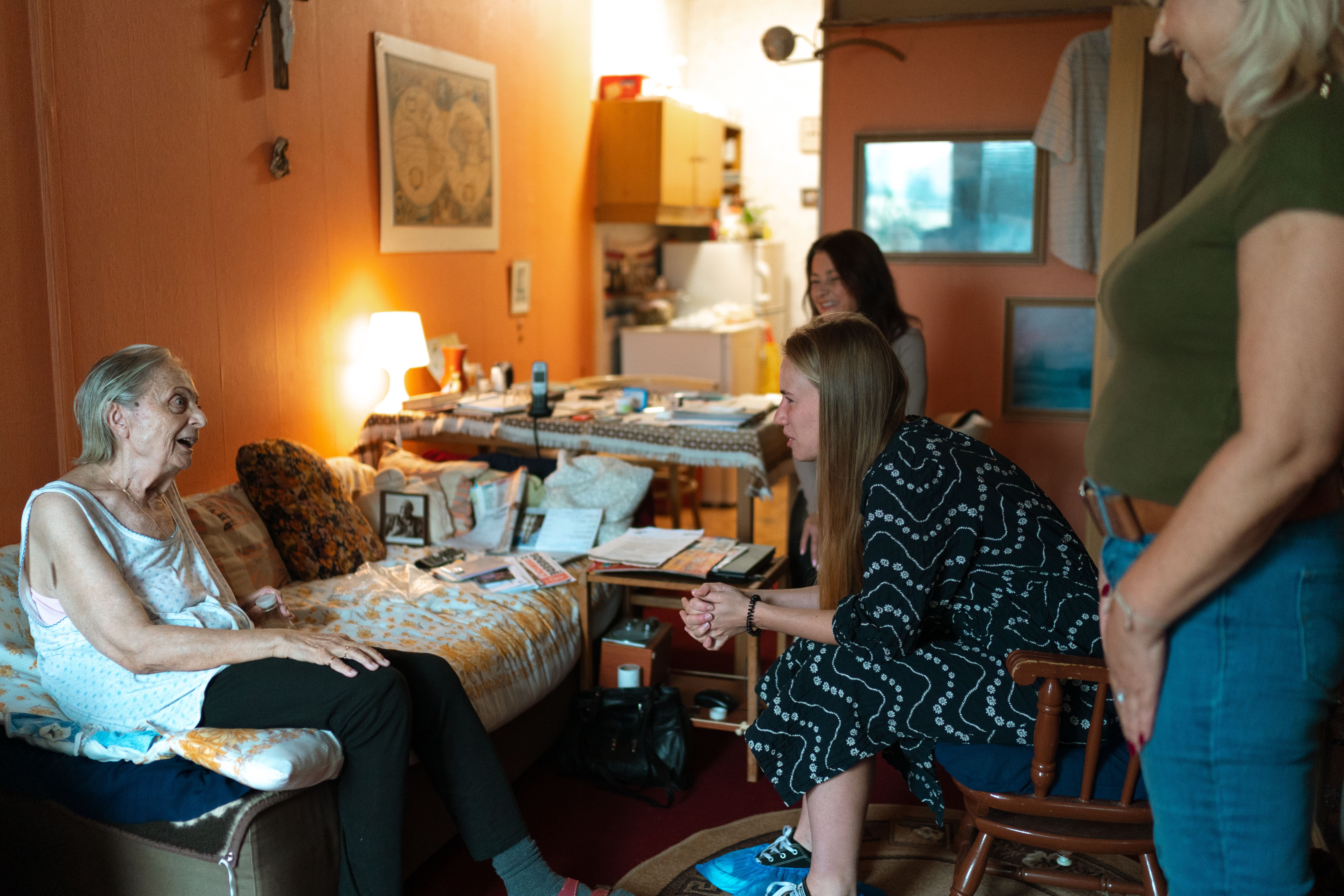
This is the part most families find counterintuitive: visiting every day in week one can actually make settling harder.
When families visit constantly, it disrupts the process of establishing new routines and relationships. Each visit can restart the grief and anxiety of separation rather than allowing it to ease. Care home staff consistently advise fewer, shorter visits in the first week, not because your presence is unwanted, but because space allows adjustment to happen.
One or two visits in the first week is usually enough. Keep them calm and positive. Avoid lingering when your relative seems settled. A clean goodbye is kinder than prolonging the visit out of your own guilt.
From week two onwards, you can gradually increase the frequency. Most families find one to three visits per week sustainable and beneficial in the longer term. Quality matters more than quantity. A focused hour is worth more than a distracted afternoon.
Timing matters too. Avoid visiting just before mealtimes or during structured activities unless your relative specifically wants you there. Mid-morning or mid-afternoon tends to work well.
The hardest thing about this advice is that stepping back feels like abandonment. It is not. It is one of the most genuinely helpful things you can do in the first week.
The Practical Checklist
These are the things families most commonly forget in the rush of moving week.
Clothing and laundry
Label every item of clothing with your relative's name, not just on the collar but in a visible place for laundry staff. Iron-on labels or permanent fabric markers both work. Care home laundry is communal, and unlabelled items get mixed up. Choose simple fabrics without complicated fastenings. Avoid bringing valuables or expensive jewellery; many homes have policies restricting these, and they can go missing.
Admin and finances
Set up a direct debit or standing order for your relative's personal allowance, the weekly amount they keep for small purchases, toiletries, and activities. This is separate from care fees and is easy to overlook. If your relative is moving to a new area, register them with a local GP practice. Confirm that the care home has an accurate and up-to-date medication list.
Room setup
Put up photos and familiar items on day one, not later. These small details make a significant difference to how quickly a room feels like home. Set up the television with familiar channels. Make sure toiletries are accessible and visible rather than stored away. Tell kitchen staff about any specific dietary preferences, not just medical requirements.
Communication with staff
Tell the key worker about your relative's habits, interests, and history. What did they enjoy? What time did they usually wake up? Who are the important people in their life? Care homes gather this information formally, but the informal details matter too. A care worker who knows your relative supported a particular football team, or enjoyed crosswords after lunch, can use that knowledge to build a connection.
Normal vs. When to Worry
Normal in week one:
- Withdrawal and quiet observation
- Crying or emotional episodes
- Asking to go home
- Reluctance to join activities
- Appetite changes
- Confusion about routines
- Tiredness and fatigue
Signs that warrant a conversation with the care team:
- Persistent refusal to eat, accompanied by noticeable weight loss, continuing into weeks two and three
- Extreme agitation or behaviour changes that show no sign of easing after two to three weeks
- Complete social withdrawal by week three or four, with no engagement with staff or other residents
- Unexplained bruising, signs of fear around particular staff members, or anything that raises a safeguarding concern
- Repeated medication errors or health concerns going unaddressed
The timeline matters here. Week one distress is expected. By weeks two and three, you should see small improvements: eating slightly better, joining one activity, recognising familiar faces. By week four, there should be noticeable progress. If there is not, have a direct conversation with the care home manager about what they are observing and what the plan is.
How Long Does Settling In Take?
Be honest with yourself about the timeline: settling into a care home usually takes months, not weeks.
Around 30 to 60 days is when most residents start to find a basic rhythm: knowing the routine, recognising staff, feeling somewhat less like a stranger. Full adjustment, where the home genuinely feels like home, typically takes three to six months. For some people, particularly those with dementia or those who were very resistant to moving, it can take up to a year.
Progress is not linear. There will be good days and difficult days, and the difficult ones in month two can feel as discouraging as those in week one. This is normal. The overall trend matters more than any single day.
Families who give themselves and their relative time, who resist the urge to intervene too quickly or reverse the decision after a hard week, generally find that adjustment does happen. It just takes longer than most people expect.
Talking to the Care Team
The most useful thing you can do throughout the first week and beyond is keep an open line of communication with the care home.
Ask the key worker directly: how is my relative eating? Are they sleeping? Have they joined any activities? How do they seem when you are not there? Staff often see a different side to residents when families are not present, sometimes a more settled one.
If you have concerns, raise them early and specifically. “I noticed my mother seemed more confused than usual on Tuesday. Is that something you have observed too?” works better than a general worry. Good care homes welcome this kind of communication. It helps them do their job better.
If something does not feel right, trust your instincts and ask. You know your relative better than anyone.
Could the NHS pay for your relative's care home fees?
NHS Continuing Healthcare is free care home funding with no means test and no savings limit. Many families don't know about it. The CHC Family Guide explains exactly how to claim it.
Find out in the CHC Family Guide (£37)Have a question this guide didn't answer?
Ask in our Community Forum and get a real answer from someone who's been through it.
Share what's on your mindRelated Guides
Could the NHS pay for your relative's care home fees?
NHS Continuing Healthcare is free care home funding with no means test and no savings limit. Many families don't know about it. The CHC Family Guide explains exactly how to claim it.
Find out in the CHC Family Guide (£37)