
What to Look For When Visiting a Dementia Care Home
A practical guide to help you evaluate dementia care homes. What to observe, questions to ask, and red flags that should make you walk away.
Last updated: May 2026
In this guide
Before You Visit
- Visit multiple homes - at least 2-3 for comparison
- Request CQC inspection reports beforehand and read them
- Call ahead to arrange a visit at a good time
- Consider an unannounced follow-up visit to see normal operations
- Bring a trusted friend or relative to compare notes afterward
- Take notes during the visit
First Impressions
When you arrive, pay attention to the basics:
- Are you greeted warmly by staff?
- Is the home clean, well-maintained, and free of unpleasant smells?
- Does it feel homely rather than institutional?
- Is there natural light and does it feel welcoming?
- Are there windows with views outside?
These first few minutes tell you a lot. Trust your instincts - if something feels off, it probably is.
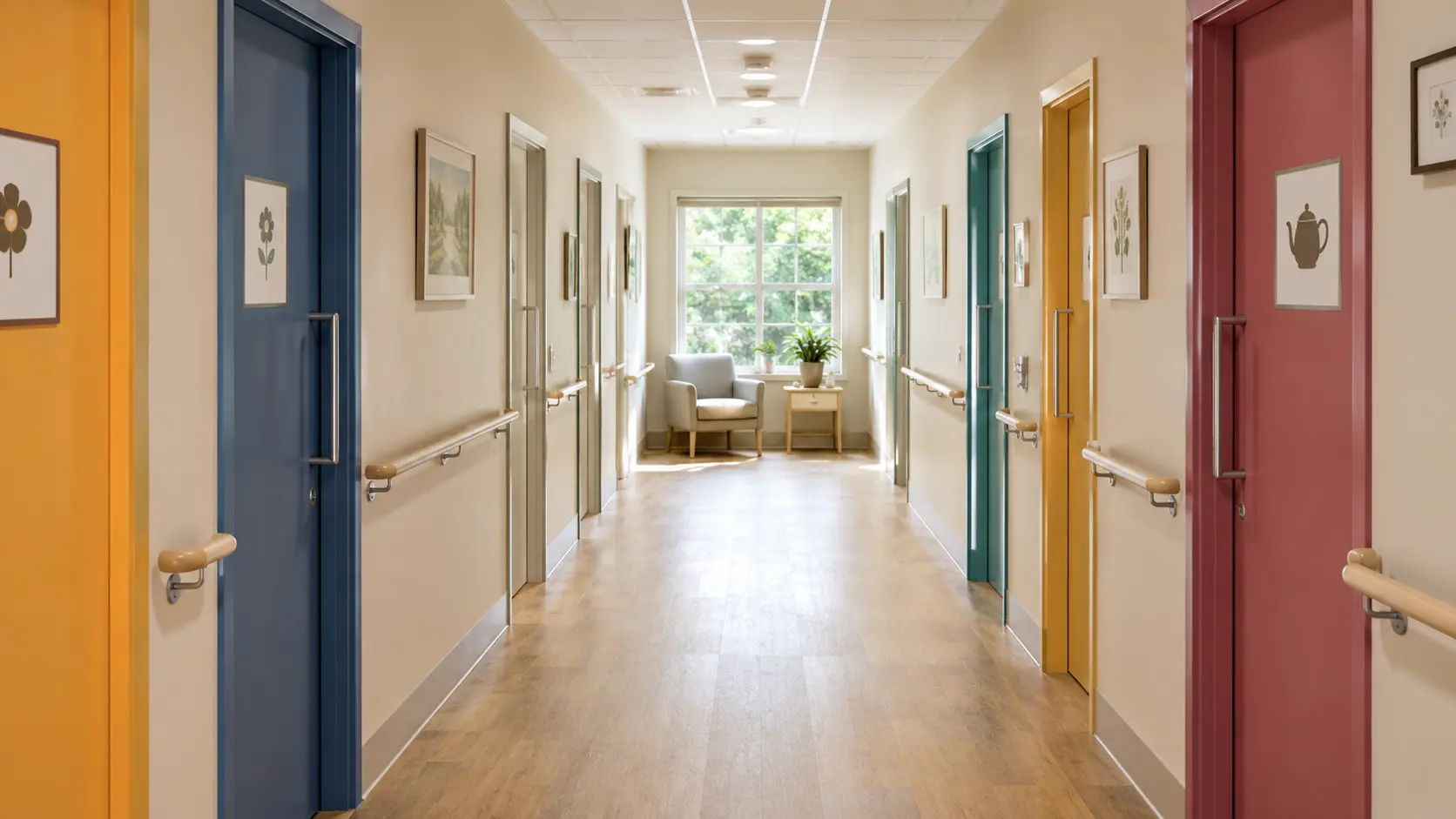
Physical Environment Checklist
A well-designed dementia care home reduces confusion and supports independence. Look for:
Observing Resident Wellbeing
This is the most important part of your visit. Spend time watching before you talk to staff.
Look for:
- Residents who appear clean, well-groomed, and appropriately dressed
- Residents who look content rather than distressed
- Residents who are engaged in activities rather than sitting passively
- Staff speaking directly to residents, not just about them
- Staff who are patient and unhurried
- Staff sitting at the same level as residents when talking
- Residents being called by their preferred name
- Residents who appear to have a real relationship with staff
Watch out for:
- Residents sitting alone and distressed without any staff support
- Staff speaking to residents in a condescending or dismissive tone
- Residents appearing unkempt or in soiled clothing
- Call bells going unanswered
- No visible activities or engagement happening
- Residents appearing restrained in chairs
Observing Staff
- Do staff seem happy and engaged in their work?
- Does the manager interact warmly with residents?
- Do staff knock before entering residents' rooms?
- Do they explain what they are doing before helping residents?
- Do they appear to know residents' preferences and routines?
- Are they responsive when residents need something?
Mealtimes
If you can observe a mealtime:
- Is it unhurried and social?
- Are residents offered choices?
- Does the food look appetising and appropriate?
- Is assistance provided discreetly and with dignity?
- Is adapted cutlery available for those who need it?
- Are drinks accessible throughout the meal?
The Outdoor Space
- Is there safe access to outdoors?
- Are paths clear and well-maintained?
- Is there seating and shade?
- Can residents go outside independently if it is safe to do so?
Red Flags
Leave if you see any of the following:
Questions to Ask Before Choosing
About Dementia Care
- What specific training have all staff received in dementia care?
- How would you support someone who gets up at 3am confused and distressed?
- How would you handle it if a resident refuses to wash or change clothes?
- Do you use personalised care plans? How often are they reviewed?
- What happens if someone's needs change significantly - can they stay?
About Daily Routines
- How flexible are your daily routines?
- Can residents sleep later if they want to?
- Can they choose when to have personal care?
- How do you support people who are restless at night?
About Staffing
- What is your staff-to-resident ratio during the day and at night?
- Do you have a key worker system?
- What is your staff turnover rate?
- Do you use agency staff? How do you brief them on residents' needs?
About Activities
- What activities are available and how are they personalised?
- Is there a dedicated activity coordinator?
- Can residents continue their hobbies?
- Can residents still visit places outside the home?
About Health and Medical Support
- Can residents keep their own GP?
- How are medications managed and reviewed?
- Does the home have a nurse on staff?
- How often do residents have health reviews?
About Behaviour
- How do you support someone whose behaviour changes or becomes challenging?
- Do you use any form of restraint? Under what circumstances?
- Would you ever ask someone to move if their behaviour becomes difficult?
About Visiting and Family
- Are visitors welcome at any time, including mealtimes?
- How do you keep families informed?
- How are concerns and complaints handled?
About Costs
- What is included in the weekly fee?
- What is charged separately?
- How often do fees increase and by how much?
- What happens to fees if the resident goes into hospital?
- What are the terms for ending the contract?
Using CQC Reports
Before visiting, download and read the home's most recent CQC inspection report from cqc.org.uk. Pay particular attention to:
- The overall rating and individual domain ratings
- Any enforcement actions or repeated concerns
- The Caring and Safe ratings specifically
- How old the report is (an inspection from 3 years ago may not reflect current standards)
If the report flagged any concerns, ask the home directly: "I noticed in your CQC report that [specific area] needed improvement - what have you done about that?"
Check CQC Ratings on CareHomeGuide
Every care home on CareHomeGuide shows the current CQC rating and links to the full inspection report. Use our search to compare ratings across homes in your area.
Search Dementia Care HomesFrequently Asked Questions
How many dementia care homes should I visit before deciding?
We recommend visiting at least 2-3 homes for comparison. This helps you understand the range of what is available and makes it easier to spot both good practice and red flags. If possible, make an unannounced follow-up visit to at least one home to see normal daily operations.
What time of day is best to visit a dementia care home?
Mid-morning (around 10-11am) is often a good time as residents are up, dressed, and activities may be starting. However, visiting during a mealtime can also be valuable as you can observe how staff support residents with eating. Ask the home when would be a good time to see daily routines in action.
Can I make an unannounced visit to a care home?
Yes. While it is polite to arrange an initial visit, you are entitled to make unannounced follow-up visits. A good care home will welcome this. If a home refuses unannounced visits or seems uncomfortable with them, this could be a warning sign.
What questions should I ask about dementia training?
Ask: What specific dementia training have all staff received? How often is training updated? How would you support someone who becomes distressed at 3am? How do you handle residents who refuse personal care? The depth and confidence of answers tells you a lot about the home's expertise.
How do I know if residents are genuinely happy?
Look for residents who appear engaged rather than passive, clean and appropriately dressed, interacting naturally with staff, and participating in activities. Watch for genuine smiles and relaxed body language. Staff who know residents' names and preferences, and speak to them (not just about them), indicate good care.
What are the biggest red flags when visiting?
Residents sitting alone in distress without staff attention, staff speaking to residents dismissively or condescendingly, strong unpleasant smells, residents appearing unkempt or in soiled clothing, no evidence of activities or personalisation, and staff who seem burned out or unfriendly. Trust your instincts - if something feels wrong, it probably is.
Could the NHS pay for your relative's care home fees?
NHS Continuing Healthcare is free care home funding with no means test and no savings limit. Many families don't know about it. The CHC Family Guide explains exactly how to claim it.
Find out in the CHC Family Guide (£37)Have a question this guide didn't answer?
Ask in our Community Forum and get a real answer from someone who's been through it.
Share what's on your mindRelated Guides
Could the NHS pay for your relative's care home fees?
NHS Continuing Healthcare is free care home funding with no means test and no savings limit. Many families don't know about it. The CHC Family Guide explains exactly how to claim it.
Find out in the CHC Family Guide (£37)