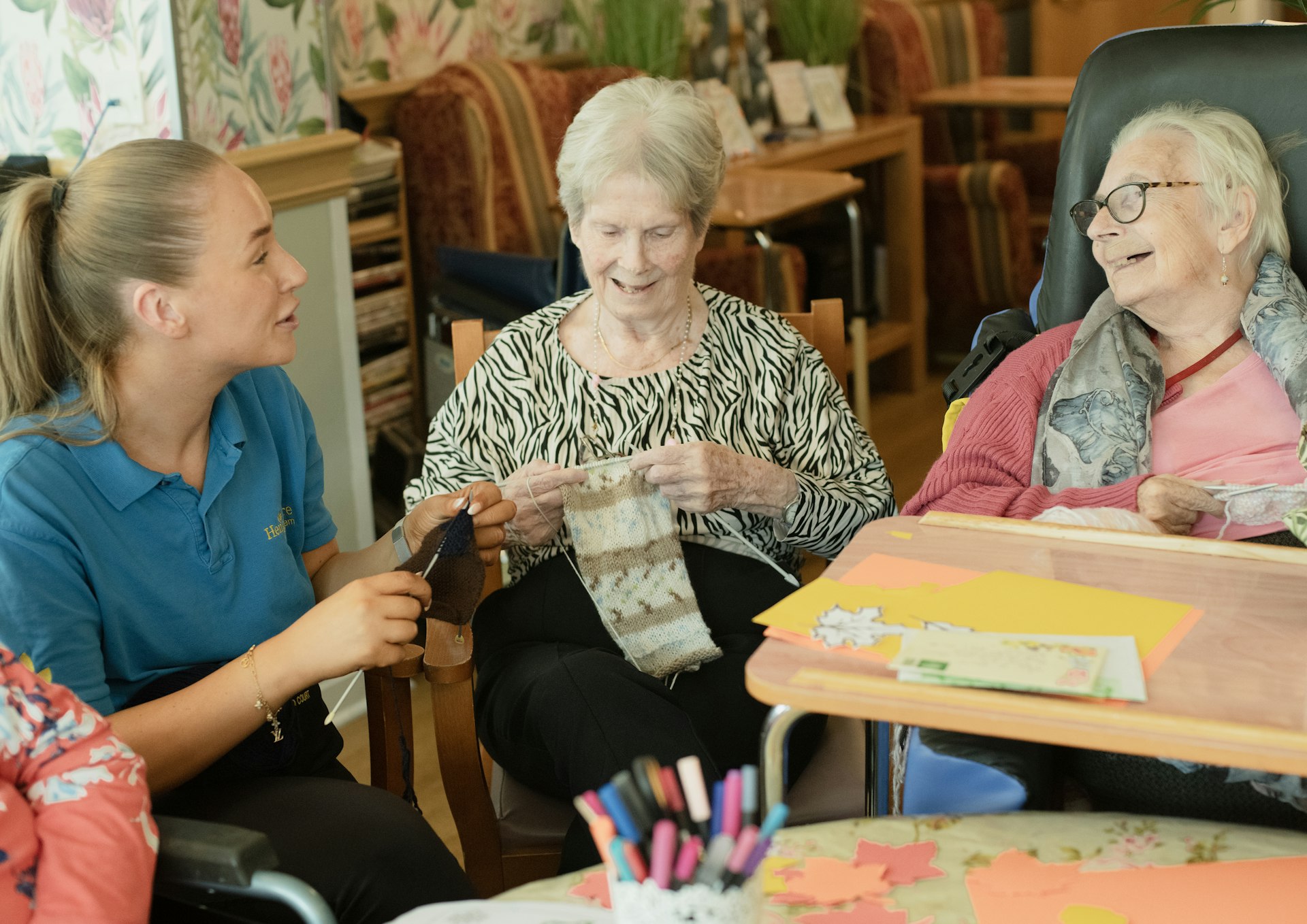
Care Home vs Nursing Home
A care home provides personal care (help with washing, dressing, medication, and daily living) from trained carers. A nursing home does all of that but also has registered nurses on site 24 hours a day for people with complex medical needs. The difference matters because it affects the type of care someone gets, how much it costs, and who pays for it.
Last updated: September 2026
People use these terms interchangeably all the time, and honestly, even some professionals muddle them up. But there is a real difference, and it matters, because it affects the type of care someone gets, how much it costs, and who pays for it.
The Short Answer
Care Home (Residential)
Provides personal care: help with washing, dressing, eating, medication, and day-to-day living. Staff are trained carers.
Nursing Home
Everything a care home does, plus on-site nursing care from registered nurses, 24 hours a day. At least one qualified nurse always on duty.
That's the core difference. One has nurses, one doesn't.
What Personal Care Looks Like
In a residential care home, staff help with things like:
- Getting up in the morning and going to bed at night
- Bathing, showering, personal hygiene
- Getting dressed
- Eating and drinking (including help at mealtimes)
- Taking medication (given by trained carers, not nurses)
- Moving around the home safely
- Social activities, trips out, company
Residents in care homes are generally able to manage day-to-day life with support. They might be frail, have mobility issues, or have early-stage dementia, but they don't need ongoing medical treatment or clinical monitoring.
What Nursing Care Adds
A nursing home does all of the above, but also provides:
- Clinical care from registered nurses around the clock
- Management of complex medical conditions
- Wound care, catheter care, PEG feeding
- Administering injections and IV medications
- Post-operative recovery care
- Monitoring of conditions that could deteriorate quickly
- Palliative and end-of-life care
If someone has had a stroke, has advanced dementia with complex needs, has a condition like Parkinson's that needs close medical management, or is recovering from major surgery, a nursing home is usually the right setting.
Signs That Someone Needs Nursing Care
- ✓They need oxygen therapy or have a tracheostomy
- ✓They have pressure sores that need professional wound management
- ✓They need help with a stoma, catheter, or PEG feed
- ✓Their dementia is advanced with choking risk, frequent falls, or communication difficulties
- ✓They're receiving palliative care
The Cost Difference
Nursing homes cost more because you're paying for qualified nurses on site 24/7. As a rough guide:
Residential Care Home
£800–£1,000
per week on average
Nursing Home
£1,100–£1,400
per week on average
Who Pays For What
Self-funders (assets over £23,250)
If your assessable capital exceeds the limit, you usually fund your own social care. NHS funding follows separate needs assessments. In England, FNC pays a standard £267.68 weekly in 2026/27 for eligible registered nursing care when CHC does not apply. Check whether the quoted fee already excludes that payment.
Council-funded residents
May receive council support after needs and financial assessments, while still contributing from income or capital. The personal budget must cover suitable care meeting assessed needs. A top-up may apply if you choose a more expensive option when an appropriate placement is available within the budget.
NHS Continuing Healthcare (CHC)
CHC funds an agreed package of assessed health and social care needs for a person found to have a primary health need. This includes accommodation where the package is provided in a care home. It is not means-tested; eligibility depends on assessed needs, rather than a diagnosis alone.
What About Dementia?
This confuses a lot of people. Dementia care isn't automatically nursing care. Someone with mild to moderate dementia who needs support with daily living but is otherwise physically well can be perfectly suited to a residential care home - ideally one with a dedicated dementia unit.
Someone with advanced dementia who has complex physical health needs alongside cognitive decline, difficulty swallowing, frequent infections, or challenging behaviour that needs clinical management, is more likely to need a nursing home.
Making the Decision
Start with the needs assessment
Contact the local authority and ask for one. It's free and they're legally obliged to carry it out.
Talk to the GP
They know the person's medical history and can advise whether nursing care is likely to be necessary.
Visit both types of home
You'll get a feel for the difference quickly. Residential homes often feel more like a house.
Think about the future
If someone's condition is likely to progress, a nursing home or dual-registered home might avoid a disruptive move later.
Funding rules and sources
The funding rules below apply to England. Funding sections checked on 19 September 2026; arrangements differ elsewhere in the UK. Ask for a written needs assessment, funding decision and fee breakdown for your circumstances.
Could the NHS pay for your relative's care home fees?
NHS Continuing Healthcare is free care home funding with no means test and no savings limit. Many families don't know about it. The CHC Family Guide explains exactly how to claim it.
Find out in the CHC Family Guide (£37)Have a question this guide didn't answer?
Ask in our Community Forum and get a real answer from someone who's been through it.
Share what's on your mindRelated Guides
Could the NHS pay for your relative's care home fees?
NHS Continuing Healthcare is free care home funding with no means test and no savings limit. Many families don't know about it. The CHC Family Guide explains exactly how to claim it.
Find out in the CHC Family Guide (£37)