
Signs It's Time to Consider a Care Home
Most families wait too long. The signs are usually obvious in hindsight, but what stops people acting is rarely practical, it's emotional. This guide names the signs that matter, the barriers that get in the way, and what families who've been through it wish they'd known sooner.
Last updated: March 2026
In this guide
The Most Important Thing to Know First
There is no single right moment. For most families, the decision doesn't arrive as a clear answer. It arrives as a specific incident that breaks through months of managed worry.
A fall. Finding them on the floor and not knowing how long they'd been there. A phone call at 3am. The gas left on again.
The incident itself isn't always the worst thing that's happened. It's the one that makes it impossible to keep telling yourself it's fine.
If you're reading this guide, you're probably already past the "is everything okay?" stage. You're asking a harder question. That matters.
Signs That It's Time
Safety incidents
This is the most common trigger by a significant margin. Not ongoing worry, but a specific event:
- A fall, especially a serious one or repeated falls
- Found on the floor, and you don't know how long they were there
- Left the gas on, flooded the bathroom, left the front door open in winter
- Wandering at night, sometimes leaving the house
- A near-miss with medication: doubled doses, skipped doses, wrong tablets
- Burns on hands from cooking or the kettle
If this has happened once, it will happen again. The question isn't whether it's serious. It's whether you can prevent the next one.
You're not coping
This is the sign nobody wants to admit, but it's one of the most valid reasons of all.
If you haven't slept properly in months. If you're snapping at everyone around you. If you've had to leave work, cut your hours, or stop seeing friends. If your own health is suffering: back problems from lifting, anxiety, depression.
You are not a failure for reaching your limit. Caring for someone with significant needs is a full-time job that requires professional training. Recognising that you've given everything you have is not the same as giving up.
One of the most common realisations families share, usually with hindsight, is this: "I realised I was keeping them at home for me, not for them."
Personal care is breaking down
- They're refusing to wash or bathe and you can't manage it
- Incontinence that the family can't cope with, especially if the person is resistant to help
- Significant weight loss
- Found wearing dirty or soiled clothing for days at a time
When basic hygiene and nutrition start to slip, quality of life is already suffering. This isn't about dignity in the abstract. It's a practical health risk.
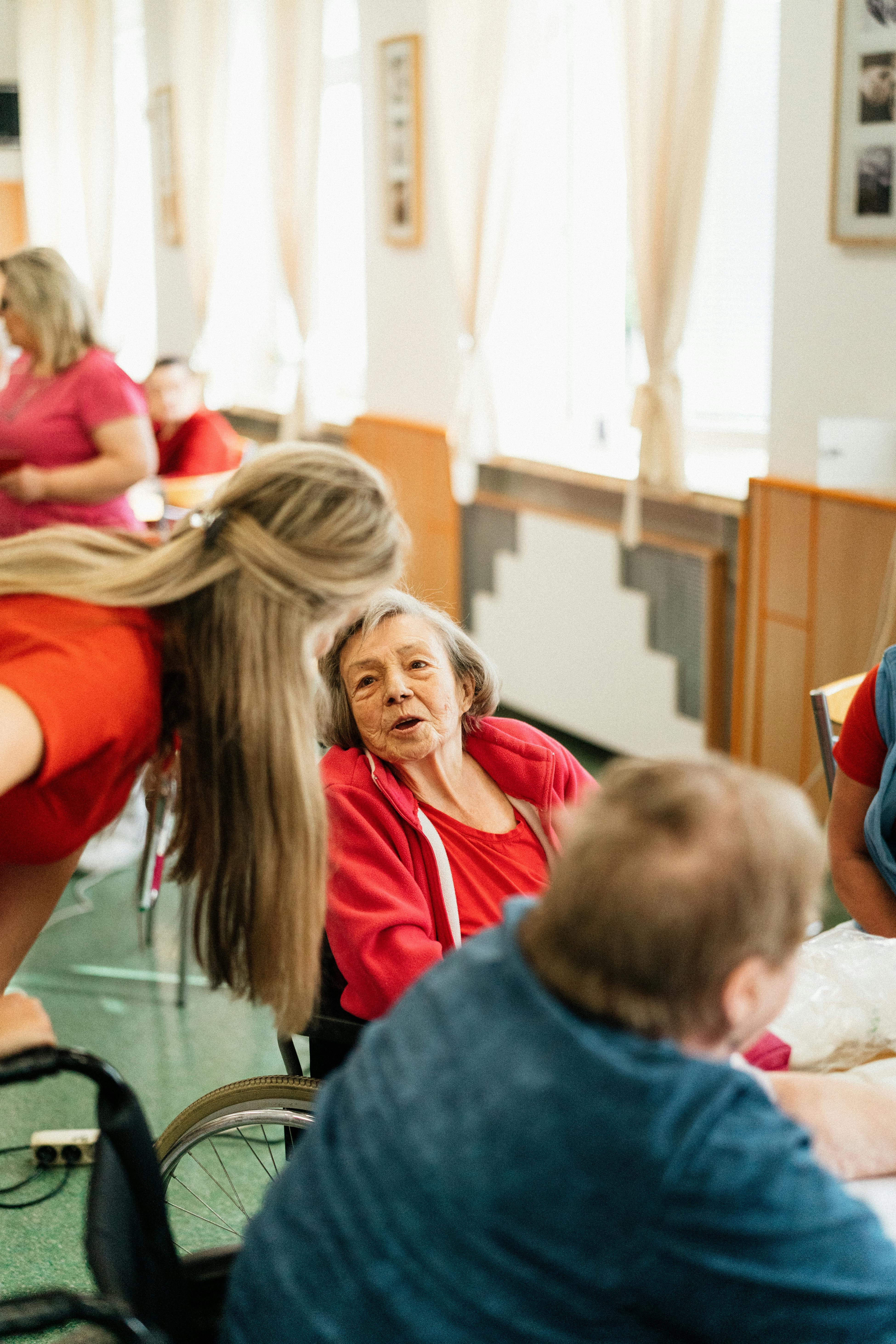
Cognitive decline has reached a tipping point
- They no longer recognise family members reliably
- Phone calls through the night (2am, 3am, 4am), confused about where they are or who you are
- Aggression or paranoia, especially directed at the people trying to help them
- They can no longer follow basic safety instructions
- They couldn't call for help in an emergency
The 3am phone call is one of the most widely shared experiences among families of people with dementia. If it's happening regularly, the person is not safe alone at night. Home care visits don't cover this unless you arrange live-in care.
Medical needs are outpacing what home care can provide
- Multiple hospital admissions in a short period
- Conditions that need monitoring a carer can't provide: catheter care, pressure wounds, complex medication
- The GP, district nurse, or hospital discharge team has raised the question of a care home
- The community care team has said they can't safely continue
When a professional says it, families often feel it gives them permission to act on what they already knew. You don't need to wait for that permission.
Quality of life has quietly collapsed
This one is harder to see because it creeps up slowly.
If the person spends most of their time alone, scared, or unstimulated, with no activities, no social contact, watching television all day in a house that's become too big and too quiet, that's not living safely at home. That's isolation.
A well-chosen care home with activities, company, and trained staff who know them can genuinely improve quality of life. Many families describe their parent thriving socially in a way they hadn't in years.
Why Families Wait Too Long
Understanding the barriers doesn't make them disappear, but it helps to name them.
"I promised I'd never put them in a home"
This is the most common single barrier. A promise made years ago (sometimes a serious conversation, sometimes an offhand remark) that has stayed with you.
The person you made that promise to probably couldn't have imagined the level of care they'd eventually need. The promise you made was to look after them. Sometimes looking after them means finding people who can do it better than you can alone.
Guilt framed as betrayal
"It feels like giving up." "What kind of son or daughter does this?"
Care home as abandonment is a deeply embedded cultural idea in the UK. It's not true, but it's powerful. The families who come out the other side of this decision almost universally describe reaching the same reframe: it's not giving up, it's a different kind of love.
Gradual decline is hard to see clearly
When you're with someone every day, the comparison point shifts slowly. You adjust to each new normal without noticing how far things have moved.
Family members who visit less frequently are often the ones who see the decline most clearly. If someone who hasn't seen your parent in a few months looks worried, take that seriously.
Fear of their reaction
"She'd never forgive me." "He always said he'd rather die than go in a home."
Many families describe the conversation as the hardest they've ever had. The fear of the reaction (anger, distress, accusation) keeps them from acting on what they know.
It's worth knowing that many people, especially those with dementia, settle faster and more easily than their family expected. The fear of the transition is often worse than the transition itself.
Financial fear
"We'll lose the house." "We can't afford it."
Many families delay because they don't understand the means test. The threshold in England is £23,250 in assets. Below that, the council contributes to costs. Your home is not automatically counted if a spouse, partner, or qualifying relative still lives there.
Financial fear is legitimate, but it shouldn't be based on assumptions. Get a financial assessment before making decisions based on what you think the rules are.
Read our full guide to care home funding →
Family disagreement
The primary carer almost always carries the weight of this decision. Siblings who aren't involved in the day-to-day caring often resist it. They haven't seen what you've seen.
This is one of the most painful parts of the whole process. Being told you're giving up, by someone who hasn't been there at 3am, is genuinely devastating. If you're the one who's been doing the caring, your view carries more weight than anyone else's.
What Families Wish They'd Known
These come up repeatedly when people reflect on the decision:
- •That waiting longer makes the transition harder: the more confused or distressed the person, the harder they adapt to a new environment
- •That care homes can be genuinely good. Many families described expecting the worst and being surprised
- •That the person often settles faster than expected
- •That they should have asked for a carer's assessment sooner. It's a legal right and it's free
- •That the GP is often reluctant to be the one to say it: you may need to push
- •That their own health had suffered more than they realised they only saw it once the caring stopped
- •That the parent can be involved in choosing the home when capacity allows. This reduces resistance and regret
What to Do Next
If you're recognising several of these signs, the next step isn't necessarily a care home right now. It's getting the right information.
Request a needs assessment from your local council's adult social care team. This is free and it's your legal right. It will establish what level of care is needed and what support is available.
Request a carer's assessment for yourself. This is separate and also free. It looks at what you need as a carer, including whether you need regular breaks to keep going.
Speak to the GP. They may not raise it first. Many GPs are reluctant to be the ones to say it, but if you ask directly, they can give a clinical view on whether home care is still safe.
Start looking, without committing. Visiting care homes before there's a crisis gives you time to find the right one, involves your relative in the choice if they're able, and removes the pressure of deciding in an emergency.
Frequently Asked Questions
When is the right time to put a parent in a care home?
There's no single right moment, but common signs include repeated safety incidents, significant cognitive decline, personal care that's breaking down, medical needs that outpace what home care can provide, and a primary carer who is no longer coping. Most families act after a specific incident rather than a gradual realisation.
How do you know when someone can't live alone anymore?
Key signs are repeated falls or safety incidents, inability to manage medication safely, wandering or confusion at night, significant self-neglect, and multiple hospital admissions. If you're asking the question, it's usually because you've already seen several of these.
Is it normal to feel relieved when a parent goes into a care home?
Yes, completely normal. Relief after months or years of intensive caring doesn't make you a bad person. Many carers only realise how much they were carrying once it's lifted. Relief and love are not opposites.
What if my parent refuses to consider a care home?
This is very common. Start by understanding why they're resistant: fear, loss of independence, a promise you made. Don't try to convince them in one conversation. Involve them in visiting homes if they have capacity. Ask the GP to raise it, as some people hear it differently from a professional. If they lack capacity to make the decision safely, a best interests process may be needed. Ask the GP or social worker.
Does my parent have to go into a care home if the council recommends it?
No. A care needs assessment can recommend a care home, but nobody can be forced into one against their will if they have mental capacity to make the decision. If the person lacks capacity, a best interests decision involves the family, GP, and social worker together.
How long does it take to settle into a care home?
Most people take two to six weeks to fully settle. The first few days are often the hardest: confusion, distress, wanting to go home. This is normal and usually improves. Families often find the transition went better than they feared, especially once the person starts to form relationships with staff and join in activities.
Could the NHS pay for your relative's care home fees?
NHS Continuing Healthcare is free care home funding with no means test and no savings limit. Many families don't know about it. The CHC Family Guide explains exactly how to claim it.
Find out in the CHC Family Guide (£37)Have a question this guide didn't answer?
Ask in our Community Forum and get a real answer from someone who's been through it.
Share what's on your mindRelated Guides
Could the NHS pay for your relative's care home fees?
NHS Continuing Healthcare is free care home funding with no means test and no savings limit. Many families don't know about it. The CHC Family Guide explains exactly how to claim it.
Find out in the CHC Family Guide (£37)